
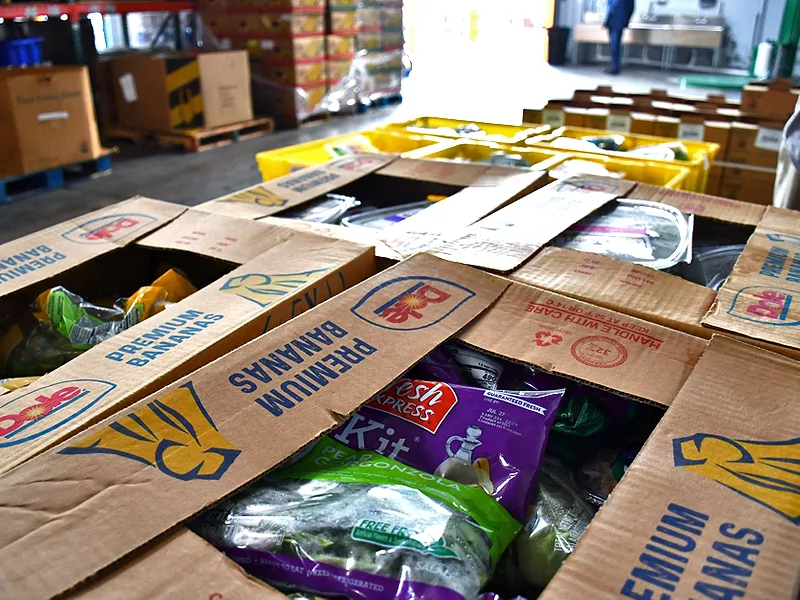
A recent study from the California Association of Food Banks found that many food banks don't have the staff and other resources to handle an increased donations and healthy food options.
Passed in 2016, Senate Bill 1383 aims to reduce organic waste disposal by 75% and edible food disposal by 20%. The state began phase-in requirements for food generators to donate excess food in 2022.
The CAFB research assessed how well the state has accomplished those goals since implementation, but discovered that food banks are split over the bill’s efficacy.
Most food banks are receiving more donations since SB 1383 went into effect. But of the survey participants, 52% reported an uptick in inedible donations and others attribute increased donations and better donation quality to in-house efforts like educating food generators.
It’s easy to be “in the know” about agriculture news from coast to coast! Sign up for a FREE month of Agri-Pulse news. Simply click here.
More food also means there’s more for food banks to manage. The study described a 67% increase in full-time food recovery staff hirings, yet 86% of food banks don’t feel fully equipped to deal with the workload. Most also only received one-time funding, which did not roll out in tandem with SB 1383 implementation.
CAFB recommends state agencies, lawmakers and local jurisdictions identify more permanent sources of funding and ways to decrease administrative pressure. They also suggest the state could develop additional training resources and work closely with local stakeholders to educate on food recovery regulations and the correct kinds of donation.
For more news, go to Agri-Pulse.com.

