
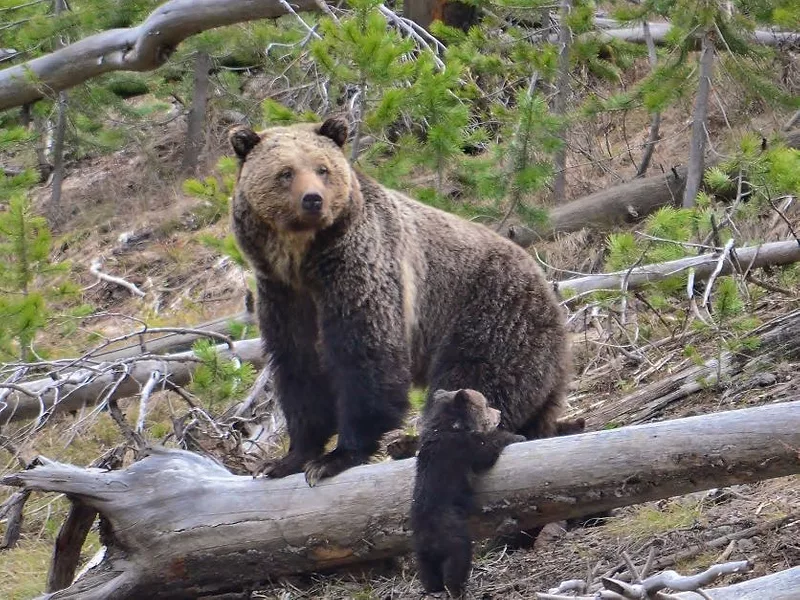
A recent report commissioned by the California Grizzly Alliance suggests California could reintroduce the grizzly bear with a coordinated management plan.
Building on studies from the California Grizzly Research Network, University of Washington and University of California, Santa Barbara researchers found that the state is not currently facing any biological, ecological, economic, legal or policy barriers to reintroducing the species. They mapped out parts of the state’s northwestern forests — including the Klamath Mountains and Trinity Alps — portions of the Sierra Nevada and protected areas of the Los Padres wilderness as introductory habitat options.
The report suggests grizzly bear digging can provide a breadth of ecological benefits, such as vegetation clean up, increasing soil nitrogen levels and improving water infiltration.
The study found the economic impact for beginning repopulation efforts could be small, estimating an annual $3 million management program cost for the first 10 years of implementation. But the report does note the proximity of the outlined ideal grizzly habitat locations to some livestock operations. They said additional research should be conducted to deal with overlap between farms and grizzly habitats.
It’s easy to be “in the know” about agriculture news from coast to coast! Sign up for a FREE month of Agri-Pulse news. Simply click here.
Other uncertainties facing a potential grizzly repopulation program would include increased investments in land management and infrastructure. The researchers also raised concerns with the fragmented habitat landscape and being unable to adequately repopulate as a result.
Peter Alagona, a UCSB environmental studies professor and lead author of the report, said in a statement that the choice to reintroduce grizzlies will be up to Californians.
Last year marked exactly one century since grizzlies became extinct in California. A Senate resolution declared 2024 the “Year of the California Grizzly Bear.”
For more news, go to Agri-Pulse.com.

