
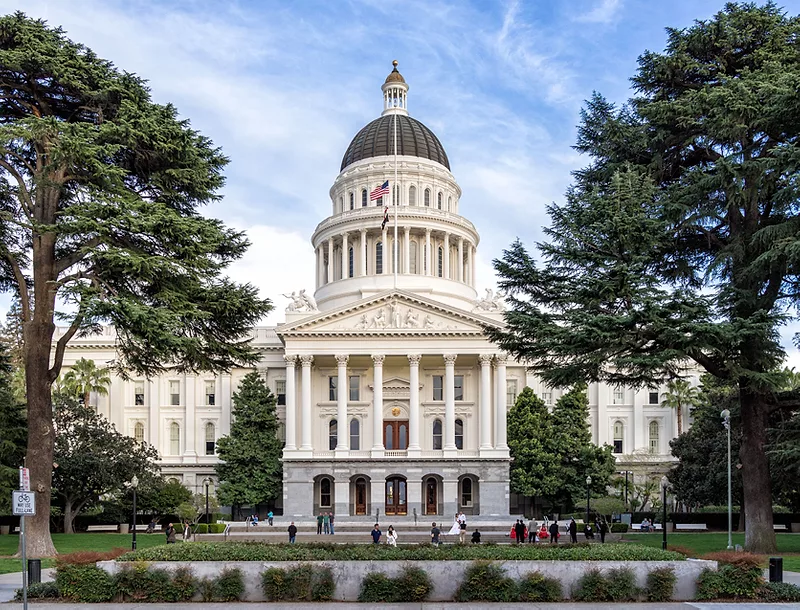
Last year Gov. Gavin Newsom called a special legislative session to approve his bill targeting price spikes at the gas pump. The message behind the session — tackling the state’s rising costs — resonated with Asm. Cottie Petrie-Norris of Irvine. She pushed a measure to reduce fuel prices by approving E15 for use in California.
Yet Senate President Pro Tempore Mike McGuire stalled the bill, arguing the chamber needed a more thorough analysis of the issue and the bill needed more work. That apparently frustrated Newsom, who two weeks later directed the California Air Resources Board to accelerate its regulatory review of the E15 blend.
Now lawmakers have fallen in lockstep behind the administration and a new bill proposing to authorize E15 if CARB fails to meet its summer deadline. AB 30 has cruised through its first committee hearing with nearly unanimous support.
But: Since E15 is not compatible with small engines, boaters and boat makers oppose the bill. The environmental group 350 Bay Area takes issue with the claim of reducing gas prices, since ethanol is 50% less efficient than gasoline, requiring motorists to buy 5% more to travel the same distances.
Foot on the gas: One skeptical Democrat abstained from voting while a dozen other lawmakers backed the bill. Meanwhile, CARB has put in a $2 million budget request in ongoing funding for E15 work. That could increase the bill’s odds of getting through the fiscal gatekeepers of the Appropriations Committee next.
Beijing warns US against striking deals to sideline China
China is ramping up the tough talk even as uncertainty over U.S. trade policy continues amid the swoon in markets. A Chinese government spokesperson says that any U.S. effort to use trade deals to hamstring China’s economic dealings will be met with countermeasures.
The Wall Street Journal reported last week that the U.S. could use trade talks to isolate China and push third party countries to limit Beijing’s involvement in their economies.
China “will take countermeasures in a resolute and reciprocal manner” if such a scenario occurs, a Chinese Commerce Ministry spokesperson told reporters on Monday. “China is determined and capable of safeguarding its own rights and interests,” they said.
Take note: Several countries on China’s doorstep have already launched trade talks with the U.S. Japanese and Indonesian negotiators were in Washington last week, and South Korean officials are slated to meet with U.S. counterparts later this week.
Meanwhile, China has sought to deepen trade relationships with its regional neighbors. During a recent tour of Southeast Asia, President Xi Jinping penned more than 100 cooperation agreements with the Vietnamese, Malaysian and Cambodian governments.
Egg-cellent day at White House
More than 30,000 eggs donated by American farmers were in the spotlight on the South Lawn at the White House Easter Egg Roll Monday.
“This is the largest public event that the White House does every year,” American Egg Board CEO Emily Metz told Agri-Pulse. “To have more than 40,000 people on the lawn celebrating with eggs and coming through the Hen to Home exhibit where they can talk to a real farmer and learn about how an egg gets from farm to table. That’s huge.”
It’s easy to be “in the know” about agriculture news from coast to coast! Sign up for a FREE month of Agri-Pulse news. Simply click here.
Ag Secretary Brooke Rollins visited the Hen to Home exhibit that begins with soybeans grown on United Soybean Board past chair Steve Reinhard’s Ohio farm as chicken feed and ends with a carton filling race.
Beyond eggs: The International Fresh Produce Association displayed fresh cut flowers and allowed attendees to arrange their own bouquets and enjoy carrots.
By the way: President Trump discussed trade and domestic consumption with United Soybean Board members in the White House ahead of the event. USB Chair Phillip Good said the president was “very optimistic” about the industry’s future.
FDA, HHS expected to release plan on food dyes today
Leaders of FDA and the Department of Health and Human Services are expected today to announce the administration’s plan to phase out the use of some synthetic dyes.
Both HHS Secretary Robert F. Kennedy Jr. and FDA Commissioner Martin Makary have been outspoken with concerns about the presence of food dyes in the nation’s food supply and their potential link to chronic health conditions.
Already, the administration has said it would consider rulemaking to eliminate the self-affirmed Generally Recognized as Safe pathway for food ingredients and chemicals. Kennedy has also visited West Virginia and other states to celebrate their efforts to phase out certain food dyes and chemicals in school meals.
“We don’t need synthetic dyes in the food supply, and no one will be harmed by their absence,” said Peter Lurie, president and executive director of the Center for Science in the Public Interest, in a statement responding to the planned announcement. “We will soon see how the government plans to proceed, but I expect that, after discovering that they could survive in the European market without some of these dyes, the industry will choose not to die on this hill and risk offending a vindictive president.”
Plaintiffs claim IRA, BIL funding still frozen
Plaintiffs in a lawsuit against USDA and four other agencies say some Inflation Reduction Act and Bipartisan Infrastructure Law funds are still frozen, even though a judge ordered the money released.
In a filing, the plaintiff organizations say that, to their knowledge, almost all the frozen grant funds mentioned in the suit are still inaccessible, with the exception of a grant from the National Park Service.
The groups claim EPA has continued to say their grants are under review, while the Interior Department and USDA haven’t provided written notification of the court’s order to grantees.
Take note: The judge directed parties to submit status reports by noon Wednesday, according to the case docket.
Listening sessions slated on WOTUS
EPA and the Army Corps of Engineers are moving quickly to gather input for a new rule defining “waters of the United States” under the Clean Water Act.
The agencies are holding six listening sessions to get feedback on how EPA and the Corps should write new regulations to conform with the Supreme Court’s 2023 Sackett decision. That decision limited the agencies’ jurisdiction to “relatively permanent, standing or continuously flowing bodies of water.” To be covered under the law, wetlands must be “indistinguishable” from those bodies of water, the court said.
The first four listening sessions are next week. Input from states will be sought Tuesday, April 29; from tribes on Wednesday, April 30; from industry and agricultural stakeholders on Thursday, May 1; and from environmental and conservation stakeholders the same day.
The other two sessions aren’t scheduled yet. At those, the agencies will hear from local governments and the general public.
Go here to register for all sessions.
AAFCO, K-State introduce new animal feed ingredient review process
The Association of American Feed Control Officials and the Kansas State University Olathe Innovation Campus have introduced a review process for animal feed ingredients.
The Scientific Review of Ingredient Submissions program will replace AAFCO’s former process, which ended when the group’s memorandum of agreement with FDA expired last year.
“This program will offer a fast and accurate scientific assessment of new animal food ingredients that will be accepted by state regulators across the U.S.,” an AAFOC press release said. K-State Olathe developed the process, which was approved by AAFCO membership in January.
Final word
“This is such a sensitive issue for ranchers and landowners that it took pretty much every bit of my 30 years of network building to get us access to land and cattle for this study.” — Ken Tate, a UC Davis professor and Cooperative Extension specialist in rangeland sciences, on his new finding that a single wolf can lead to $162,000 in cattle losses.


