
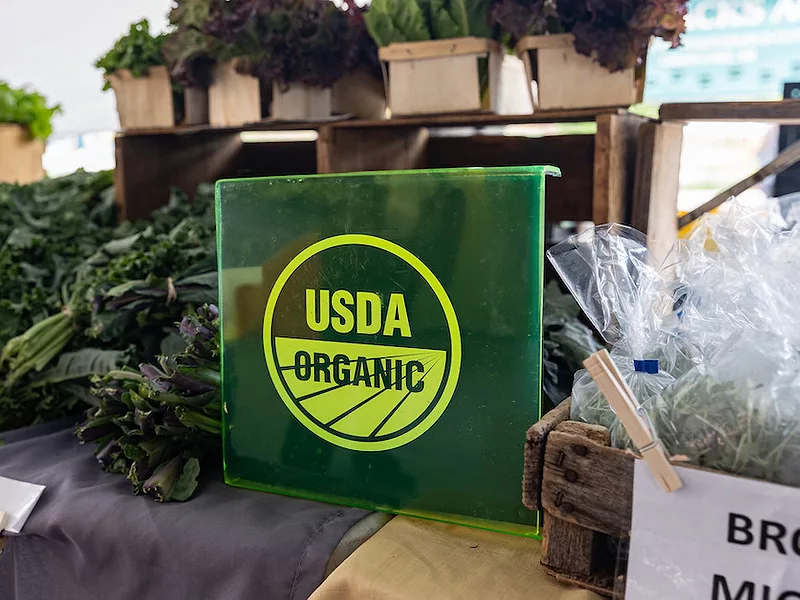
Sales of certified organic products grew 5.2% last year to $65.4 billion, the largest increase since a pandemic-driven spike in 2020, according to the Organic Trade Association’s annual market report.
By comparison, total grocery sales increased 2.5% last year.
The report released Wednesday forecasts continued growth of 5.1% a year through 2029, based on consumer demographic data, although OTA officials told reporters the imposition of new tariffs could raise prices for imports and limit sales.
Organic sales grew 3.4% in 2023, 4.1% in 2022 and 2.3% in 2021 after jumping 12.7% in 2020.
Sales of organic produce also increased 5.2% in 2024 to $21.5 billion and accounted for 30% of all organic food sales.
Sales of organic package salads actually declined by 4.5%, but other categories made up for that drop. But sales of organic berries rose 10.2% in 2024, and sales of bananas also jumped 15.5%
The broad organic grocery category, which includes bakery good, breads, cereal and baby recorded sales growth of 4% and total sales of $15 billion in 2024.
Sales in the beverage segment rose 5.2% to $9.5 billion in 2024, while sales of dairy and eggs increased 7.7% to $8.5 billion, driven in part by the spike in egg prices.
It’s easy to be “in the know” about agriculture news from coast to coast! Sign up for a FREE month of Agri-Pulse news. Simply click here.
Co-CEO Tom Chapman said President Donald Trump’s tariff increase would create “new winners and losers and impacts short term and long term,
While “some businesses may benefit, like farmers,” others in the industry will face “increased costs, and those costs will likely trickle down to consumers. So, increasing consumer pricing will almost always lead to reduced demand, and that would even probably impact those short-term winners.”
Co-CEO Matthew Dillon told reporters the Make America Healthy Again movement led by Health and Human Services Secretary Robert F. Kennedy Jr. has been a “mixed bag” for the organic sector.
Kennedy has had little impact on USDA appointees and the MAHA commission has limited authority and is unlikely to have much of a policy impact, Dillon said.
“We welcome, of course, any conversation around health. We just think that in general the MAHA movement can also have a lot of smoke, a lot of noise, but the actualization of it is also very uncertain,” Dillon said.
For more news, go to Agri-Pulse.com.

