
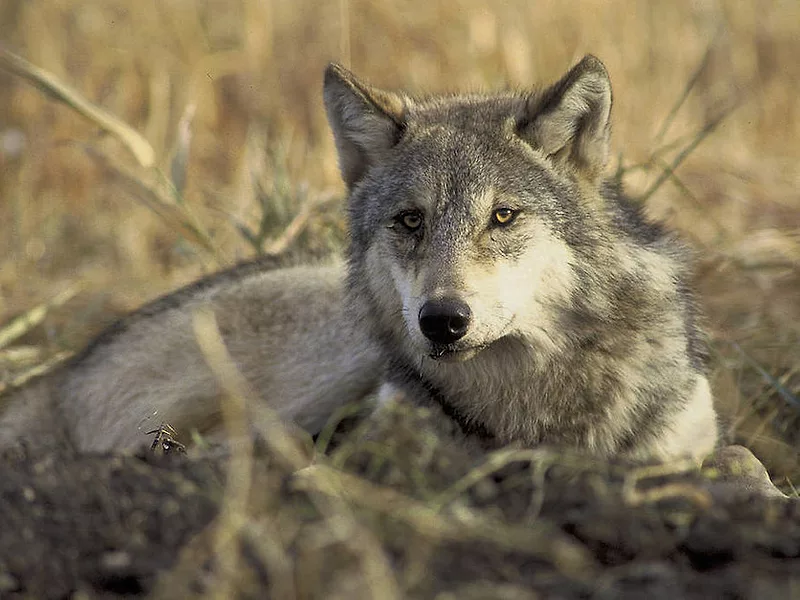
The Trump Administration is proposing to narrow the prohibition against "taking" endangered species by removing regulatory language allowing federal wildlife agencies to consider how species are harmed by habitat destruction.
The proposal would rescind the definition of "harm" in current ESA regulations, potentially limiting enforcers’ consideration of actions affecting the environment around the species, like logging.
Current rules make it illegal to “take” listed species without authorization. The statute defines “take” as to harass, harm, pursue, hunt, shoot, wound, kill, trap, capture or collect such animals.
Previous regulations have assigned definitions to some of these concepts, including “harm.” Under current rules, harm means “an act which actually kills or injures wildlife,” including “significant habitat modification or degradation where it actually kills or injures wildlife by significantly impairing essential behavioral patterns, including breeding, feeding or sheltering.”
“Harm is undefined now, and the service is not intending to redefine it,” said Sandi Snodgrass, a partner at the law firm Holland and Hart. “I’m not sure if they’re even intending to issue guidance on it.”
The rule was proposed by the Fish and Wildlife Service in the Interior Department and the National Marine Fisheries Service in the National Oceanic and Atmospheric Administration. It asserts that existing regulations “do not match the single, best meaning of the statute.”
While some agricultural producers’ activities may affect habitat of endangered species on or near their farms, the change would make it less likely they would face penalties for modifying habitat.
 Daniel Rohlf (Lewis and Clark Law School photo)
To explain their reasoning, agency leaders point to the 1995 Supreme Court decision in Babbitt v. Sweet Home Chapter of Communities for a Great Oregon in which the Supreme Court upheld the FWS regulation using Chevron deference, a doctrine that required courts to defer to agency expertise when laws from Congress are not explicit. The court overturned Chevron last year.
“We have concluded that our existing regulations, which still contain the definition of 'harm' contested in Sweet Home, do not match the single, best meaning of the statute,” they wrote, adding that the regulations’ interpretation of the statutory language “did not properly account for over a thousand years of history, and is inconsistent with the structure of the ESA.”
They added that the ESA defines the broader definition of “take,” and “further elaborating on one subcomponent of that definition — “harm” — is unnecessary in light of the comprehensive statutory definition.”
Daniel Rohlf, a professor of law at Lewis and Clark Law School, told Agri-Pulse that in some ways, this interpretation of harm resembles the approach the Trump Administration is taking to the Migratory Bird Treaty Act, which prohibits “take” of migratory birds. That law was interpreted to include unintentional take, but the Interior Department issued guidance countering it April 11.
Cut through the clutter! We deliver the news you need to stay informed about farm, food and rural issues. Sign up for a FREE month of Agri-Pulse here.
“We are talking about a massive reduction in protections for birds and protections for threatened, endangered species,” Rohlf said.
While the definition for “harm” would be revoked, definitions for some terms would remain, said Deborah Sivas, a professor of environmental law at Stanford Law School. "Harass," for instance, remains. It means "an intentional or negligent act” likely to injure a wild animal “by annoying it to such extent as to significantly disrupt normal behavioral patterns, which include but are not limited to, breeding, feeding or sheltering.”
While the statute is mostly enforced by the FWS and NMFS, some citizens or groups could attempt to drive enforcement through lawsuits. Sivas said that some litigants may now try to build arguments around the definition of “harass” rather than “harm.”
Because such suits are tough to win, ESA enforcement will come mostly from the agencies, she added.
“If the agency narrows the definition of harm and then refuses to really enforce anything beyond that narrow definition, you’ve got a sea change for the Endangered Species Act and how it’s implemented,” she said.
For more news, go to Agri-Pulse.com.

