
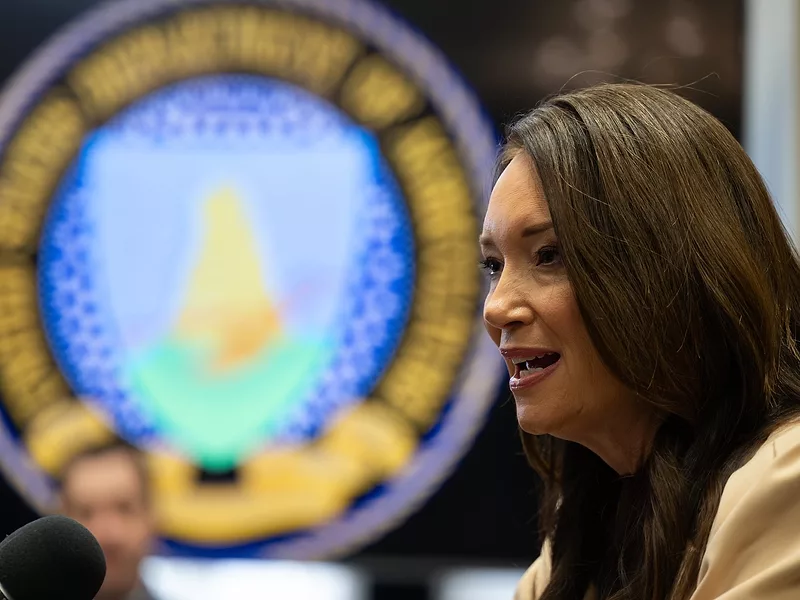
Agriculture Secretary Brooke Rollins told senators Tuesday that the department is working to rehire some staff, primarily in the Farm Service Agency, Animal and Plant Health Inspection Service and wildfire response offices.
The commitment comes after 15,000 employees across the agency accepted buyout offers. Rollins said the agency loses up to 10,000 employees annually through normal attrition, and is working to quickly recruit and rehire staff in key departments.
Members on both sides of the aisle on the Senate Agriculture Appropriations Subcommittee highlighted concerns with staffing cuts to FSA. Rollins said FSA offices are key to the agency and there no plans to close local offices, of which there are about 4,500 total across the country.
Rollins said USDA is working to ensure FSA offices are more efficient with online technical assistance so farmers won’t need to rely on in-person technical assistance as heavily. But that is more of a long-term goal.
“But today we can’t rip that rug out from underneath our farmers and producers,” Rollins said.
FSA lost about 36% of its staff or about 1,123 employees through the buyouts.
Earlier Tuesday, Rollins told members of the National Association of Farm Broadcasting USDA will unveil a reorganization and downsizing plan next week and that it won’t be as “drastic” as many have feared.
Sen. Patty Murray, D-Wash., who serves as ranking member of the Senate Appropriations Committee, also raised concerns about cuts to the Agricultural Research Service. About 20% of that department took the buy-outs. Murray suggested additional ARS staff, including scientists and essential support staff, were cut through previous workforce reduction efforts.
While many ARS scientists have been reinstated, the support staff has not, Murray said. She pressed Rollins to commit to bringing back this staff to “stabilize” research units across the country. Rollins did not directly address the ARS cuts.
“One of my concerns is that you let people go … who knew these jobs and now you’re looking for people to fill these jobs because now we know how essential they are,” Murray said. “That doesn’t seem to me to be very efficient.”
Several senators on the panel also asked Rollins for updates on the $20 billion in weather-related disaster funding authorized by Congress in December. The funding was part of a supplemental disaster aid.
Cut through the clutter! We deliver the news you need to stay informed about farm, food and rural issues. Sign up for a FREE month of Agri-Pulse here.
Rollins said USDA is within days of announcing the application process for producers to obtain that funding. She said the agency will be moving quickly to get that funding out, hopefully by the end of May.
Democrats on the committee also expressed concern about cuts to nutrition assistance programs. Specifically, members pressed Rollins on the Local Food Purchase Assistance Cooperative Agreement, which was cancelled entirely, and the pullback of Commodity Credit Corporation funds for TEFAP.
Rollins repeatedly argued that these programs were meant to be temporary pandemic-era measures. She also said several states still have millions of unspent dollars available through the local foods program.
Democrats said some farmers had already purchased supplies for planting based on LFPA contracts that are now cancelled. Others also pointed out that the need for these programs are still present despite the pandemic ending.
“It was a COVID-era program that, by the way, you still have millions of dollars left that you can use to pay those farmers,” Rollins said. “A lot of that money was never spent. You couldn't spend it fast enough. That's not fair to the taxpayers.”
For more news, go to Agri-Pulse.com

