
The House Agriculture Committee is planning to mark up its portion of the GOP’s reconciliation bill on Tuesday and Wednesday next week, with opening statements beginning on Tuesday night and votes taking place Wednesday.
The bill text is still expected to land as early as this weekend.
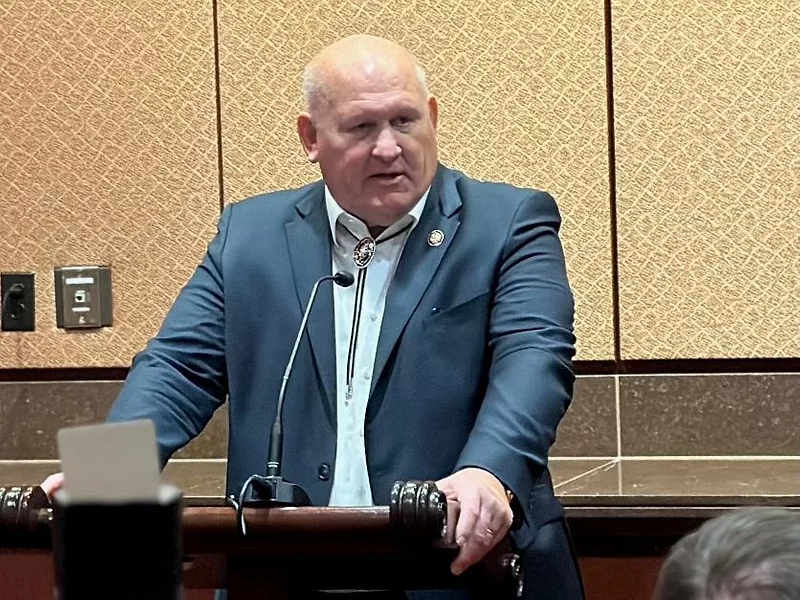
“I don't like to surprise anybody,” committee Chair Glenn "GT" Thompson, R-Pa., told reporters on Wednesday. “Everybody will have it to chew on over the weekend.”
Some other House committees are still finalizing plans to meet their spending reduction targets to pay for the mega-bill’s tax perks. The Energy and Commerce Committee, for example, is still trying to assemble $880 billion by overhauling Medicaid, while Ways and Means Committee Republicans are duking it out over how much to increase the state-and-local-tax deduction, known as SALT.
House Speaker Mike Johnson, R-La., on Wednesday signaled the GOP would drop some of the more aggressive Medicaid cuts under consideration.
But Thompson and others said that delays in other committees are not likely to influence the Ag Committee timeline.
“Each committee certainly is working independently of each other,” Ag Committee member Mark Harris, R-N.C., said, adding that he is “coming back next week with the intention … for markups to happen next week for ag, so I have not heard any differently.”
Rep. Frank Lucas agreed, telling Agri-Pulse that nobody has discussed reducing the Agriculture Committee instructions in light of House leadership’s signal to drop some Medicaid cuts from the Energy and Commerce Committee’s reconciliation plan.
The Agriculture Committee has been tasked with finding $230 billion in savings, but the spending cuts will have to be higher than that to offset the cost of farm bill programs that Republicans want included, like commodity programs and crop insurance.
“The Ag Committee has to come up with the resources somehow to be able to do the next farm bill. That's just a necessity,” Lucas said. Lucas added that the committee had also still not made a final decision on how to handle one of the more controversial provisions around getting states to share some of the costs of the Supplemental Nutrition Assistance Program.
“This is as clear as mud. Everything’s in movement,” Lucas said.
Rep. Derrick Van Orden, R-Wis., has proposed tying states’ cost-share to error rates, to incentivize efficient program management.
Cut through the clutter! We deliver the news you need to stay informed about farm, food and rural issues. Sign up for a FREE month of Agri-Pulse here.
Thompson also said Wednesday that there would be some “additional pay-fors coming forward,” a point Rep. Don Bacon, R-Neb., also made in comments to Agri-Pulse. But neither elaborated on what those might be.
But Thompson is confident the proposals will get to the $230 billion figure.
“The math works,” he noted.
Thompson also stressed to reporters on Wednesday that the SNAP reforms will enhance the program “for those who are struggling in poverty.”
“That's the beauty of what we do. We can. We can do improved program integrity,” Thompson said, “and at the same time, give us pay-fors to do what we need to do.”
On the Democratic side, Ag Committee lawmakers met last week to go over how they will approach the markup. But Hawaii Democrat Rep. Jill Tokuda told Agri-Pulse earlier this week that lawmakers at the time didn’t have a strong idea of what the GOP proposals would look like.
“It really was just preparing for what will we be looking to defend against,” Tokuda. “
Rep. Jim Costa, D-Calif., said Wednesday that Democrats are continuing to “have conversations” ahead of Tuesday and Wednesday’s markup.
“We'll see how that all unfolds,” Costa said.
For more news, go to Agri-Pulse.com.


