
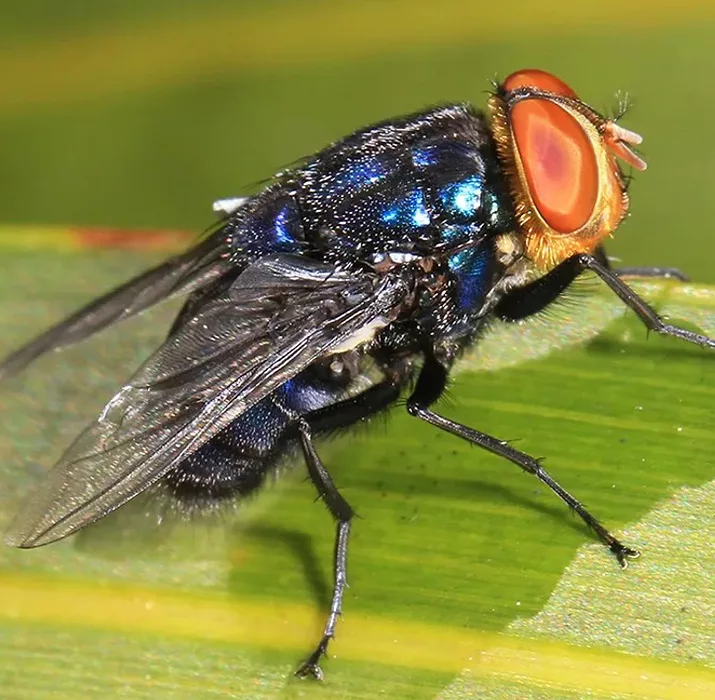
The U.S. has suspended livestock imports across the southern border to prevent the spread of New World screwworm to the U.S.
“Due to the threat of New World Screwworm I am announcing the suspension of live cattle, horse, & bison imports through U.S. southern border ports of entry effective immediately,” Agriculture Secretary Brooke Rollins said in a post to X on Sunday. “The last time this devastating pest invaded America, it took 30 years for our cattle industry to recover. This cannot happen again.”
The U.S. eradicated NWS -- a parasite with larvae that burrows into the flesh of mammals, causing infection -- in the 1960s. It has seen only limited cases since, the last occurring in 2016.
Livestock imports were suspended in November following the detection of NWS in Mexico, but resumed in February under a new protocol that involved inspecting animals before and after arrival in the U.S., among other steps.
Explaining the decision to curtail imports again, USDA pointed to the parasite's northern spread, with cases detected in Oaxaca and Veracruz, according to a statement. Both southern Mexican states abut the state of Chiapas, which sits on the border with Guatemala and was where the country’s first screwworm case in more than 30 years was found in November.
“[A]dditional action must be taken to slow the northern progression of this deadly parasitic fly,” the USDA statement reads. The import suspension will remain in place until “a significant window of containment is achieved,” the statement adds.
USDA says it will evaluate the latest developments and data in two weeks.
Rollins said she and Mexican Secretary of Agriculture and Rural Development Julio Berdegué "have worked closely on the NWS response; however, it is my duty to take all steps within my control to protect the livestock industry in the United States from this devastating pest,” Rollins said in her statement.
The closure comes after Mexico agreed to several measures to step up its fight against NWS, including dropping tariffs on aircraft parts and equipment needed to release sterile flies and by easing flight restrictions on U.S. companies involved in the operations. Rollins had written to Berdegué to press for further action to avoid import restrictions.
USDA acknowledged in its statement that curtailing imports cannot guarantee NWS prevention. The parasite can be transmitted through wild animals that cross the border, for example. But the import restrictions will allow USDA to “reassess whether current mitigation standards remain sufficient,” the statement argues.
It’s easy to be “in the know” about what’s happening in Washington, D.C. Sign up for a FREE month of Agri-Pulse news! Simply click here
The U.S. beef industry hailed the import restrictions and welcomed the effort to mitigate the risk to livestock. The National Cattlemen’s Beef Association, however, argued that the step could have been avoided if Mexico had mounted a more robust response to the outbreak.
“U.S. government officials, NCBA and leaders from affiliated state cattle industry associations have been sounding the alarm for months. Unfortunately, the Mexican government created unnecessary bureaucratic hurdles which rendered prevention efforts ineffective and allowed screwworm cases to spread unchecked beyond control points in southern Mexico,” said NCBA CEO Colin Woodall.
The import restrictions are sure to disrupt livestock supply chains. The U.S. imported more than 80% of its cattle and calves for feeding from Mexico in 2024, even with the end-of-year restrictions, according to USDA’s Economic Research Service. But NCBA insisted that the impacts of a U.S. outbreak would dwarf any economic costs associated with lost imports.
USDA is considering opening a domestic sterile fly facility to bolster its NWS response, a spokesperson told Agri-Pulse last month. The department, however, did not immediately respond to a question on whether it would press ahead with the facility in light of the latest developments.
For more news, go to Agri-Pulse.com.

