
U.S. and Chinese officials have agreed to reduce sweeping tariffs applied to each other’s products for 90 days to let additional discussions play out, the White House said on Monday.
Before Wednesday, the U.S. will reduce the “reciprocal” tariffs applied to China to 10% from 125%. The 20% duty applied over China’s role in the fentanyl crisis will remain in place, however, leaving imports from China subject to a minimum tariff rate of 30%.
In return, China will also reduce its retaliatory tariffs to 10% from 125%. China also agreed to remove any non-tariff trade barriers or restrictions imposed on U.S. products since April 2, when Trump unveiled the reciprocal tariff plan.
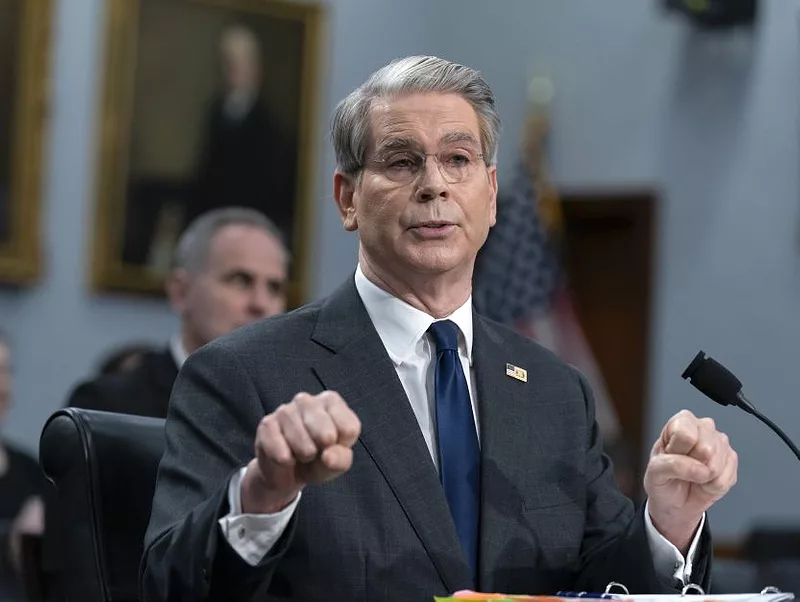
Treasury Secretary Scott Bessent and U.S. Trade Representative Jamieson Greer spent the weekend in Switzerland locked in discussions with senior Chinese officials, including China’s Vice Premier He Lifeng.
In a joint statement from that meeting explaining the tariff reductions, both sides said “that continued discussions have the potential to address the concerns of each side in their economic and trade relationship.”
The two parties also agreed to a “mechanism” to continue discussions in each other’s countries to work on a more lasting solution, with He leading the Chinese negotiations and Bessent and Greer helming the U.S. side.
Bessent told CNBC on Monday that the two sides do not have the next meetings scheduled but that he anticipates it will occur in the next few weeks.
President Donald Trump called the meetings – the first high-level dialogue between the two countries since April 2 – “a total reset, negotiated in a friendly, but constructive, manner.” In a Truth Social post on Sunday, he said both sides want “an opening up of China to American business,” adding, “GREAT PROGRESS MADE!!!”
Trump, however, said on Monday that even if the two sides don't reach an agreement before the 90-day deadline, he wouldn't reinstate the 145% duty rate.
"At 145 you're really decoupling because nobody's going to buy," Trump said during a press conference. He indicated that the duties would "go substantially higher" absent a deal, but not to the 145% rate.
In his CNBC interview Monday, Bessent also touted the progress made over the weekend and argued that a deal Trump secured with China during his first term, which included commitments from Beijing to buy some $80 billion of U.S. food and agriculture products over two years, could serve as a “starting point” for negotiations.
The pandemic hit shortly after those first-term negotiations and China ultimately fell short of its purchase commitments under that Phase One agreement. But some in the Trump administration have suggested it should still hold China to those commitments.
“Knowing that President Trump will enforce any deal, I think will make the Chinese very deliberate in their negotiations and know that whatever they agree to President Trump will enforce,” Bessent said on Monday.
Bessent also suggested that the two sides had made some progress on tackling the fentanyl crisis, which was the rationale for the 20% tariffs imposed on China in February and then raised in March. Among the Chinese officials present in Switzerland over the weekend was a senior official focused on drug policy.
“I think that we saw here in Geneva that the Chinese are now serious about assisting the US and stopping the flow of precursor drugs,” Bessent said.
The treasury secretary stressed, however, that the end goal in negotiations is not to enact an across-the-board economic decoupling from China, but instead a decoupling in “strategic” industries.
“We want American businesses to be able to sell into China,” Bessent said. “We realize that efficient supply chains were not resilient supply chains.”
For some, the outcome from this weekend's negotiations surpassed expectations. In the buildup to discussions, Trump had suggested that 80% might be a more appropriate range for U.S. tariffs.
Wendy Cutler, vice president at the Asia Society Policy Institute and a former acting deputy USTR, said in a LinkedIn post that the tariff cuts were "better than expected" and would be sufficient to restart U.S.-China trade, which had slowed in recent weeks.
"But it’s a temporary agreement putting enormous pressure on negotiators over the next 3 months to hammer out a deal with China," she wrote. "Given the high stakes and complexity of these talks, expect the drama to continue."
For context, the Phase One agreement penned during the first Trump administration took two years to hash out, Josh Lipsky, chair of the international economics program at the Atlantic Council, said in a statement Monday. "And this one is more complex in scope," he adds.
But plenty in the U.S. ag community are hoping for a lasting solution. The U.S. Meat Export Federation President and CEO Dan Halstrom, for example, said in a statement that while he appreciates the outcome from Bessent and Greer's negotiations, he is "hopeful that it is the first step toward restoring access to China for U.S. pork and beef."
The U.S. soybean industry has complained in recent weeks that Chinese retaliatory tariffs have almost shut them out of their largest export market, seemingly overnight. But the temporary tariff relief, while welcome, may not restore full U.S. access to the Chinese market, the American Soybean Association warned on Monday.
It’s easy to be “in the know” about what’s happening in Washington, D.C. Sign up for a FREE month of Agri-Pulse news! Simply click here
"[T]he tariff that remains in place for U.S. soy is far from inconsequential," ASA President Caleb Ragland said in a statement. "Products purchased from our competitors in Brazil and Argentina are not burdened with this extra cost. That means China will turn to South America first for its purchases and only buy U.S. soybeans when it absolutely must."
Ragland also expressed concern that the 90-day reprieve would end in August -- right before U.S. producers begin exporting in earnest.
"We need the administration to continue its negotiations with China to find a long-term, sustainable solution that removes retaliatory tariffs and protects market access for our agricultural products," Ragland added.
Brian Kuehl, executive director of Farmers for Free Trade, an advocacy group, is also eying the end of the summer as a crucial deadline for U.S. and Chinese trade talks.
"The good news about the trade war is that it has happened early in the season, so we haven't been right up on harvest," Kuehl told Agri-Pulse on Monday.
"We don't know if at the end of 90 days, this whole thing is going to snap back and soybeans will again not be shipped to China," he added. "Hopefully we'll have a resolution by then, because ... we definitely don't want to lose that market."
For more news, go to Agri-Pulse.com.

