
The average farm would pay $5,125 more in taxes each year should Congress fail to extend expiring provisions of the 2017 Tax Cuts and Jobs Act, according to an analysis by the American Farm Bureau Federation.
The additional taxes would total $9.3 billion for the ag sector. The biggest impact would come from higher individual tax rates and the expiration of the 20% deduction for pass-through business income. That deduction, known as Section 199A, would rise to 23% under the House-passed budget reconciliation bill.
Lawmakers to consider spending cuts
The White House is expected to send lawmakers a package of spending rescissions later this week. Senate Majority Leader John Thune, R-S.D., told colleagues Monday that the proposed spending cancellations will be high on the Senate’s agenda this month.
Congress has 45 days to act on the rescissions request once it’s submitted to the Hill. Approval only takes a majority vote of both chambers.
“The administration has identified a number of wasteful uses of the taxpayers’ dollars, and we will be taking up this package and eliminating this waste,” Thune said. “We’ll make that a priority.”
Take note: Thune also reiterated GOP leaders’ goal of getting the budget reconciliation bill to President Donald Trump’s desk by July 4. Senate Republicans remain divided over some key issues with the House-passed One Big Beautiful Bill Act.
Trump goes to Supreme Court for relief from RIF order
The Trump administration has asked the Supreme Court to put a hold on a lower judge’s order that stopped USDA and most major federal agencies from pursuing reorganizations and reductions in force.
The request came in an application to stay an injunction issued by the federal judge in the Northern District of California. Solicitor General D. John Sauer said Monday in the administration’s filing that “the general direction and guidance” in a Trump executive order and subsequent memo from OMB and OPM are “unquestionably lawful.”
Plaintiffs in the case include federal employee unions, professional societies, local governments and nonprofits such as the Northeast Organic Farming Association. They will have until next Monday to respond.
Rollins seeks to maintain leases in eight California USDA offices
Agriculture Secretary Brooke Rollins has asked the General Services Administration to rescind lease termination notices for eight California USDA field offices, she says in a letter to Sen. Adam Schiff.
It’s easy to be “in the know” about what’s happening in Washington, D.C. Sign up for a FREE month of Agri-Pulse news! Simply click here
GSA has officially rescinded termination notices for offices in Bakersfield, Blythe, Los Angeles and Salinas, but Rollins also has asked it do the same for sites in Madera, Oxnard, Woodland and Yreka.
Take note: USDA is still discussing “the viability of continuing” a lease for a Forest Service office in Mount Shasta or “if the services provided out of that office can be performed in a more suitable location,” Rollins says in the letter.
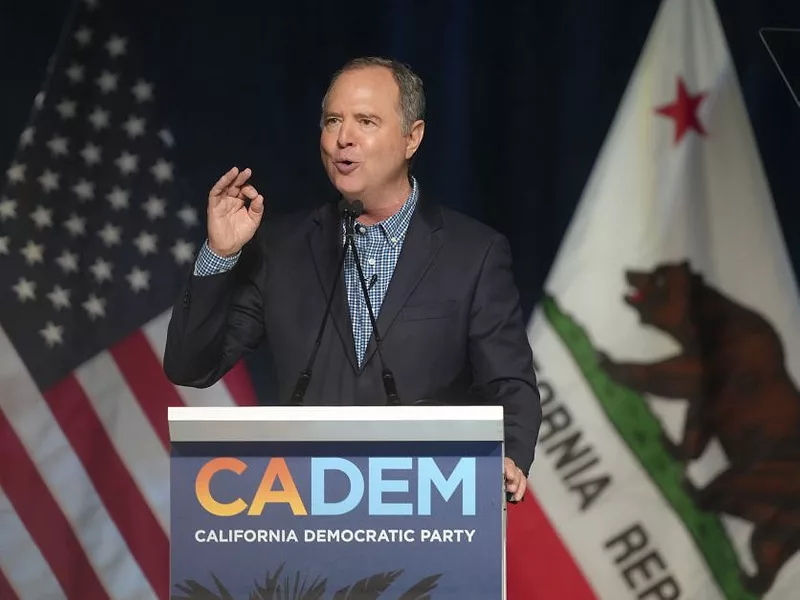
Schiff led members of the California delegation in calling for the offices to remain open, in a letter to Rollins and GSA last month. “I will keep pushing the administration to ensure that critical USDA offices in California continue to operate without interruption,” he said in a news release Monday.
Boren to get confirmation hearing; milk markup scheduled
The Trump administration’s nominee to be USDA’s new under secretary for natural resources and environment will appear at a confirmation hearing today before the Senate Agriculture Committee.
Michael Boren, who would oversee the Forest Service, co-founded Clearwater Analytics, a Boise-based firm that says it “provides the most trusted investment data aggregation, reconciliation, accounting, and reporting.”
Boren has been in a dispute with the Forest Service that “hasn’t been fully resolved” over a cabin he built on land in the Sawtooth National Forest in Idaho, according to E&E News.
Also on tap at Senate Agriculture: The committee will mark up a bill aimed at giving public schools the choice of providing whole milk to students.
Rural electric coops eager to move forward on BEAD plans
Members of the National Rural Electric Cooperative Association are eager to move forward on broadband expansion projects funded through the Broadband Equity, Access and Deployment program, says CEO Jim Matheson.
While NRECA would like to see some streamlining of program requirements, it also would like to see projects move forward as quickly as possible, Matheson told reporters.
“The BEAD program has not necessarily moved as quickly as we would all like,” Matheson said, adding that uncertainty about the program’s future has also frustrated some electric coops.
Take note: Former BEAD program director Evan Feinman told Agri-Pulse in May that amid BEAD’s pause, the Commerce Department was looking at ways to expand satellite broadband’s role in the program.
While Matheson said he doesn’t think that “satellite should be taken off the table,” he emphasized the agency should set strong minimum service standards to “make sure we do it right the first time.”
Rail regulator scraps rate dispute rule that was challenged in court
The Surface Transportation Board has unanimously voted to remove an embattled rule meant to speed up agency reviews of rail rate disputes.
The rail dispute system would have allowed the board to choose one of only two prescribed maximum reasonable rates presented, similar to a model used in Major League Baseball.
However, the 8th Circuit Court of Appeals last year vacated the rule after finding the STB lacks statutory authority to implement it. STB Chair Patrick Fuchs in March announced the agency did not intend to appeal the court’s decision.
Final word
“It’s going to be a very busy month.” – Senate Majority Leader John Thune, R-S.D., after outlining the Senate’s June agenda, which includes getting a budget reconciliation bill to the White House.
Philip Brasher and Noah Wicks contributed to today’s Daybreak.


