
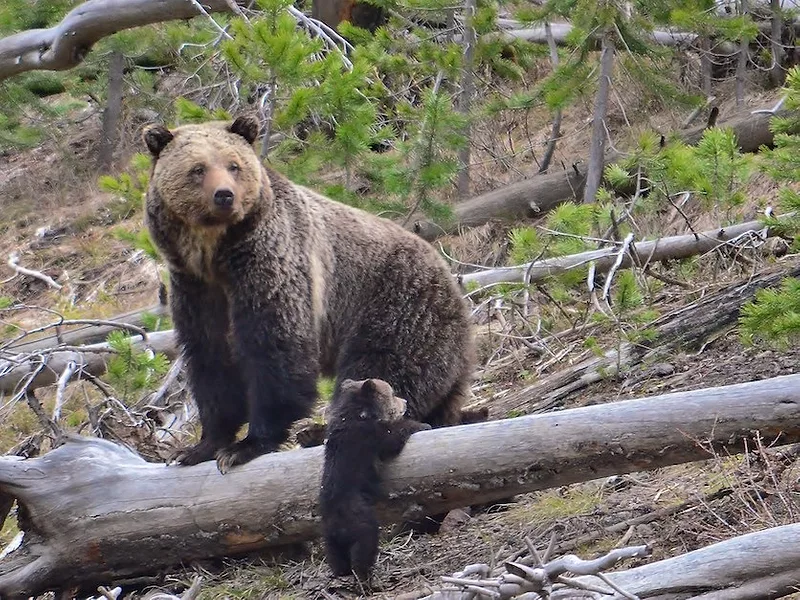
Grizzly bears in the continental U.S. would retain their status as a threatened species under a proposed Fish and Wildlife Service rule that would allow for 'take' of some bears that kill livestock or destroy crops or beehives. However, it remains to be seen whether the Trump administration will move forward with the rule or rewrite it.
The Biden administration released the proposal in early January as part of a settlement with the state of Idaho, which filed a petition in March 2022 seeking to delist grizzly bears from the Endangered Species Act. A settlement requires the agency to finalize a rule by Jan. 31, 2026.
The Trump administration continued accepting comments through May 16 and more than 76,000 were submitted.
The grizzly was listed under the Endangered Species Preservation Act in 1967 but deemed “threatened” in 1975 under the ESA, which replaced the ESPA. The proposal says the status was meant to maintain populations in parts of Washington, Idaho, Wyoming and Montana.
Under a 1993 recovery plan, the agency planned to delist grizzly bear populations in six geographical zones, including the Northern Continental Divide and Greater Yellowstone ecosystems. However, “as bears continue to expand, populations are becoming less separate and distinct, requiring a more comprehensive approach to recovery,” prompting the new proposal, according to a Q&A document that accompanied it.
Grizzly bear populations in the continental U.S. have “significantly expanded since the time of listing in 1975" and the animals can now be found in 6% of their historical range, according to a FWS species status assessment published last October. Still, there are no known populations in Washington's North Cascades or the Bitterroot region of western Idaho and eastern Montana.
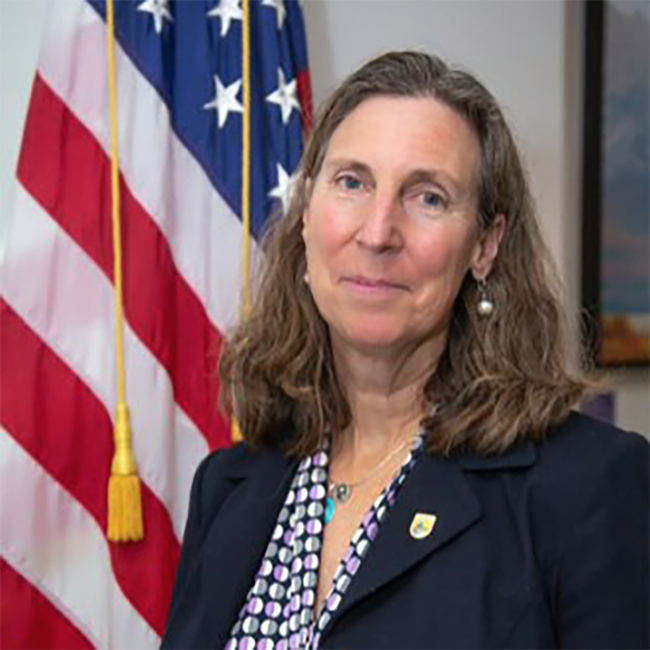 Martha Williams (USFWS photo)
Previous recovery criteria “did not consider long-term genetic health and population connectivity,” then-FWS Director Martha Williams wrote in the proposal. She said the agency’s analysis found that the grizzly bear "is likely to become an endangered species within the foreseeable future primarily due to habitat destruction and modification, human-caused mortality, and the isolated nature of some populations.”
That conclusion forms the foundation for the agency's decision to keep grizzlies listed as threatened, a choice that environmental groups are cheering.
“We think that while we’ve made tremendous progress, we have not reached a true species recovery of grizzly bears,” said Nick Gevock, a campaign organizer for Northern Rockies wildlands and wildlife at the Sierra Club.
Meanwhile, the decision to maintain threatened status drew criticism from agricultural groups.
Critics say rule goes too far
Wyoming Department of Agriculture Director Doug Miyamoto wrote in a public comment that his agency is “incredibly frustrated” with the decision not to delist, adding that FWS is “again raising the bar, which we feel is not warranted.” American Farm Bureau Federation Vice President of Public Policy Sam Kieffer said in a comment that as bear populations have increased, so have run-ins with bears on farms and ranches.
"Not only will the grizzly bear as an apex predator pose a threat to cattle, livestock and local ungulates, but it will significantly impact the families and employees managing land and services in the” North Cascades, Washington Farm Bureau Governmental Affairs Director Caleb Gwerdner wrote in a comment. “Regardless of commodity, employers and employees alike are not interested in working in the presence of a grizzly bear."
It’s easy to be “in the know” about what’s happening in Washington, D.C. Sign up for a FREE month of Agri-Pulse news! Simply click here
The proposal does include provisions that would permit take of grizzlies found to depredate livestock outside recovery zones.
On public lands, livestock depredation must be confirmed by an authorized agency and the bear would need to be determined to pose a demonstrable and ongoing threat. On private lands, a producer could take a bear that attacks livestock if there were “no excessive, unsecured attractants” like carcasses or bone piles, no intentional feeding or baiting of the bear, the bear’s carcass is not disturbed, and the event is reported to FWS within 24 hours.
 Karli Johnson (Montana Farm Bureau photo)
Still, Montana rancher Karli Johnson — a state lobbyist for the Montana Farm Bureau Federation — told Agri-Pulse that while producers like the idea of having additional bear management tools available, they are concerned about what they see as a lack of clarity in the proposal's take provisions.
“Our concern is that it’s still really subjective to what U.S. Fish and Wildlife Service feels,” Johnson said, adding that, "if the rule isn’t executed clearly on the ground and we make the wrong call, it’s a felony.”
Johnson said she has noticed an “exponential” number of younger bears beginning to tread closer to farms and populated areas, which she worries could lead to more depredation incidents.
“I think the biggest challenge now is that, as the population has grown, there’s only so much quality habitat for grizzly bears to be on,” she said.
The Sierra Club's Gevock acknowledges "there are problematic bears that at times need to be removed from the population when they are a threat to human safety and … habitually depredating on livestock.” However, he is concerned that the rule is too lax in laying out when lethal control is necessary, and fears that will lead “to the death of a lot of bears that don’t need to die.”
He said the rule should be tightened and better defined both to protect bears and producers.
Andrea Zaccardi, an attorney for the Center for Biological Diversity, said the agency cancelled public meetings that were scheduled this spring but noted that FWS is still under a court deadline to issue a final rule by next January.
“I don’t think they could legally just scrap it,” she said.
For more news, go to Agri-Pulse.com.
Editors note: A previous version of this article incorrectly stated Andrea Zaccardi worked for Earthjustice. It has been updated to reflect that she works for the Center for Biological Diversity.

