
The Agriculture Department and congressional Democrats are trading barbs over USDA’s administration of a block grant program designed to provide disaster relief to small- and medium-sized farmers.
A department spokesman on Thursday accused Democrats, including the senior member of the House Appropriations Committee, of engaging in “political stunts” and delaying aid to farmers.
“Congressional Democrats are playing politics with disaster aid, withholding critical funding from farmers to manufacture controversy and blame the Trump Administration — when in reality, they’re pushing to misuse taxpayer dollars,” said USDA Director of Communications Seth Christensen.
Christensen was apparently referring to Democratic lawmakers’ criticism of the way Ag Secretary Brooke Rollins has been implementing a block grant program that makes up barely more than 1% of the $21 billion in disaster aid. In response to requests for more specific information from USDA, the department’s communications office sent the same statement from Christensen.
Twenty-nine members of Congress from Hawaii and New England issued a statement Monday accusing Rollins of delaying implementation of the block grant program designed for small states, known as the Farm Recovery and Support Block Grant program.
“This block grant was created specifically to bridge the gap between traditional disaster relief programs and uncovered losses experienced by small farmers who cannot access traditional crop insurance,” they said.
“USDA has dragged its feet for months on implementing this simple program, adding barrier after barrier to our states, and has now set an arbitrary deadline in a clear attempt to rush states into making a decision without sufficient information,” the statement reads.
“USDA is demanding states either accept traditional disaster relief, which has failed most of our small farmers for years, or gamble on an unknown amount of repayment with little to no guidance from USDA,” the lawmakers say. “Once again, this choice would leave so many small farms to fend for themselves after a disaster.”
It’s easy to be “in the know” about what’s happening in Washington, D.C. Sign up for a FREE month of Agri-Pulse news! Simply click here
USDA says it’s “actively engaged” with the small states to finalize aid agreements. The department’s landing page for disaster aid includes two deadlines for states: For those with a final negotiated agreement by May 28, the fully executed agreement would be complete by June 13. For those states with a final negotiated agreement by June 13, the fully executed agreement would be complete by June 30.
The states affected are Alaska, Connecticut, Hawaii, Maine, Massachusetts, New Hampshire, Rhode Island and Vermont.
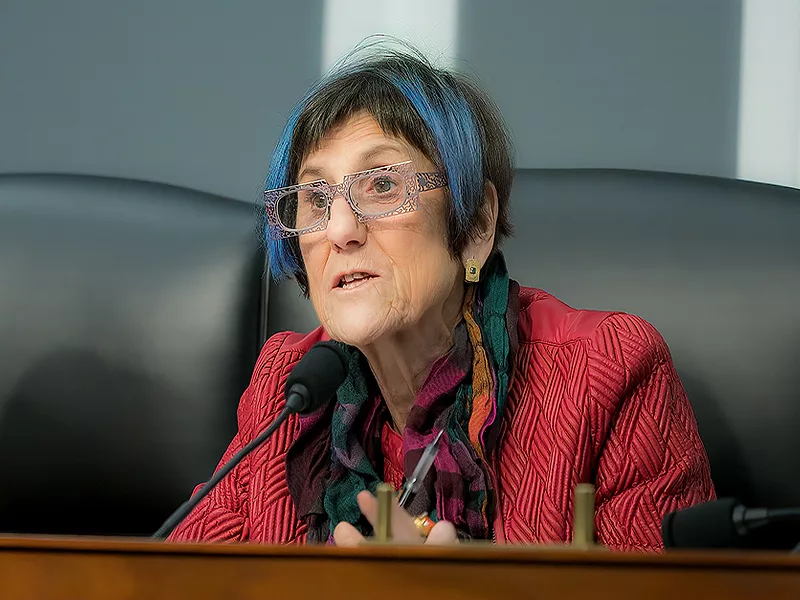
In her own statement, House Appropriations Committee's senior Democrat, Rosa DeLauro of Connecticut, said Rollins is “disregarding the law that Congress passed – legislation I led at the end of last year – to ensure these small farmers have multiple options for recovery. The Farm Recovery and Support Block Grant was designed to cover a wide range of losses, including crops, timber, livestock, and infrastructure.”
Rollins, said DeLauro, “is forcing states to make a rushed decision, without all the necessary information or parameters, that pits one essential relief program against another with no regard for how it impacts our farmers.”
Christensen, however, said Rollins “is working in good faith to deliver relief quickly and responsibly. USDA has met weekly with eligible states, offering flexible options and clear guidance to avoid duplicating existing federal programs.”
However, he added, “Some states, led by partisan officials, have refused to engage. They’re not just denying aid to their own farmers — they’re now delaying relief for producers nationwide.
“Secretary Rollins remains focused on getting farmers the support they need, despite these political stunts,” the spokesman said.
The block grant is funded at about $220 million, but that won’t cover all the losses claimed by small-state farmers for 2023 and 2024. The New England states alone have submitted requests for more than $320 million, according to state Rep. Jaime Foster in Connecticut.
For more news, go to Agri-Pulse.com.

