
For 60 years, the United States spent less than 1% of its budget to try to make the world a better place. Over time, the money spent on foreign aid evolved to address dozens of goals, but it was principally spent on three things: health, humanitarian aid, and hunger. As the Trump administration continues its assault on America’s foreign aid budget and architecture, advocates and congressional allies on both sides of the aisle have raced forward to defend America’s investments in global health and humanitarian assistance, with some success.
But our decades-long legacy of fighting global hunger is receiving no such defense, left to wither in the field—and Americans will suffer as a result.
To be clear, no part of the U.S.’s foreign aid budget emerged unscathed from DOGE’s woodchipper. By best estimates, current humanitarian assistance contracts were cut by 10% in March, with the administration proposing an additional $500 million of clawbacks this week. PEPFAR, our nation’s flagship global HIV/AIDS initiative, saw 20% of its existing budget cancelled. But global agriculture assistance was shredded, losing 81% of a $1.4 billion budget. Of the 20 countries where agriculture work was prioritized, only support for one—Guatemala—remains.
These cuts primarily hurt the nearly 735 million people in the world suffering from chronic hunger, but their impact will also be felt on American fields and store shelves. Around $150 million of our foreign agriculture budget was devoted to global agricultural research every year—efforts to create heartier seeds, more nutritious crops, better fertilizers, and new ways to fight diseases and pests.
That work has massive spillover benefits for America’s farmers and consumers. For instance, some 60 of the wheat grown in this country can be traced back to improved strains developed at labs that were principally funded through foreign aid—strains that have saved farmers billions in losses, while keeping food prices low.
It’s easy to be “in the know” about what’s happening in Washington, D.C. Sign up for a FREE month of Agri-Pulse news! Simply click here
Foreign aid spurred our agricultural productivity in other ways. The International Fertilizer Development Center in Muscle Shoals, Alabama, evolved from a New Deal effort to revive the barren soils of the Dust Bowl. With funding from the U.S. Agency for International Development, it helped pioneer 60-70% of all applied fertilizer innovations in the world today, including those in America. And time and again, investments USAID made to fight agricultural pests and pathogens overseas protected our own harvests when those scourges inevitably threatened our shores, from cattle disease to swine fever to new varieties of crop-destroying aphids.
Investing in global agriculture protects Americans in other ways, too. Global hunger is one of the best-studied precursors of violence and global instability. High food prices have consistently led to riots, mass uprisings, and revolutions, and researchers who studied droughts in sub-Saharan Africa discovered they significantly increased the likelihood of civil war.
Hunger is also wielded as a cudgel by warlords and terrorist groups like ISIS and Al-Shabaab who use access to food to recruit and control populations. And lack of food is one of the key drivers of cross-border migration, as failed harvests have driven mass displacement in Central America and across the African Sahel.
But perhaps the most compelling reason to maintain our investment in global agriculture is: it works. There are no silver bullets in international development, but as the World Bank has said “agriculture has special powers in reducing poverty.”
Economic growth from agriculture has been shown to be two-to-four times more effective in cutting poverty than growth from other sectors like services or industry—in part because most of the world’s poor are farmers. Giving them the tools to grow more allows them to earn life-changing sums and lowers the cost of food for everyone else.
In fact, the U.S. has a spectacular track record for helping countries grow their way out of hunger and extreme poverty. In the 1960s and ‘70s, USAID and the Rockefeller and Ford Foundations developed and introduced improved varieties of wheat, rice, and corn that transformed nations like Mexico and India from food aid recipients into countries that could feed themselves.
What became known as the Green Revolution helped avert an age of perpetual famine and instability, while creating new export markets for American goods. Not only did it safeguard our national interests, it served as a powerful demonstration of American values, saving an estimated one billion lives through our technological prowess and generosity.
In 2009, the U.S. carried that legacy forward by launching Feed the Future, a bipartisan initiative intended to drive similar agricultural transformations in 20 food insecure countries around the world like Bangladesh and Ethiopia. In areas where it was active, poverty, hunger, and malnutrition declined by 20-25% All of that effort—all of that potential—is now in peril.
But it’s not too late for the world’s harvests. Just two weeks ago, Secretary of State Marco Rubio showered praise on the United States’ efforts to fight chronic global hunger, arguing in front of Congress that the know-how of America’s farmers, agribusinesses, and crop researchers was “an amazing thing to provide as part of our toolbox.”
Rubio can save the essential work he praised in those comments by resuming our existing contracts for agricultural development. Barring that, lawmakers should reassert their intent and protect such investments from the Administration’s rescission package and in future budgets.
Sen. Susan Collins, the powerful chair of the Senate Appropriations Committee, has already said she won’t support rescissions for PEPFAR and global health. Vice Chair Sen. Patty Murray criticized the administration's plan to “rip away lifesaving humanitarian aid.” Efforts to fight global hunger deserve the same vigorous defense.
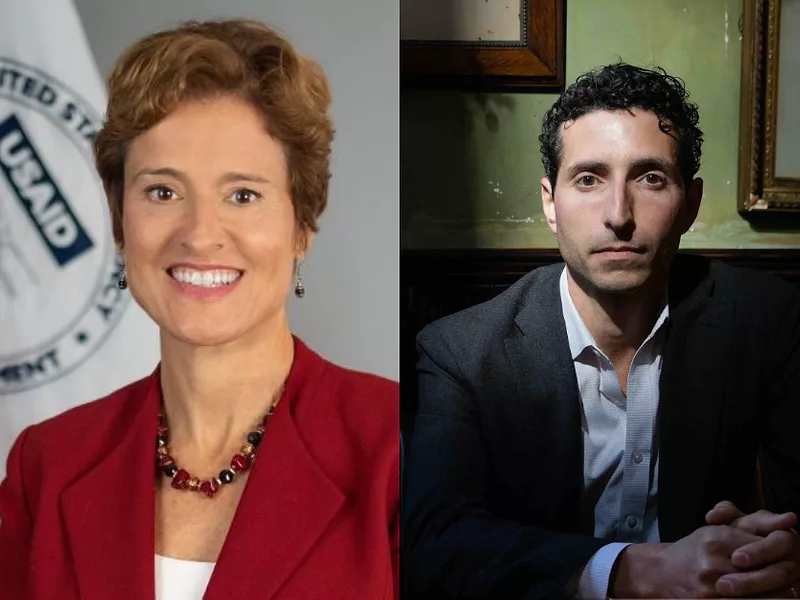
Dina Esposito is a 20-year-veteran of USAID and most recently served as assistant administrator of the Bureau for Resilience, Environment, and Food Security from 2022-2024 and was the deputy coordinator of Feed the Future. Maany Peyvan worked at USAID during the Obama and Biden administrations and served as a senior adviser to Administrator Samantha Power covering food security from 2022-2024.