
The Joint Legislative Audit Committee has approved an audit request to investigate compliance with California pesticide laws, leaning into environmental justice calls while sidestepping industry opposition.
Starting later this year, the State Auditor’s Office will examine how the California Department of Pesticide Regulation and county agricultural commissioners enforce the rules for restricted materials.
The audit will evaluate how commissioners provide technical assistance, administer their duties and enforce applicable rules to pest control advisers. It will review DPR’s licensing for advisers, how often it suspends or revokes those licenses, and if changes are needed to mitigate conflicts of interest.
The auditor’s office will select four counties to dig into more deeply, reviewing the number of restricted material permits issued or denied over the past three years and determining whether that process followed state law and how often alternatives to conventional pesticides were considered. The office will delve into the caseloads to assess staffing metrics and identify any capacity challenges.
Grant Parks, the state auditor, estimates it will take 4,500 hours for his office to complete the audit.
EJs drive oversight push through state auditor
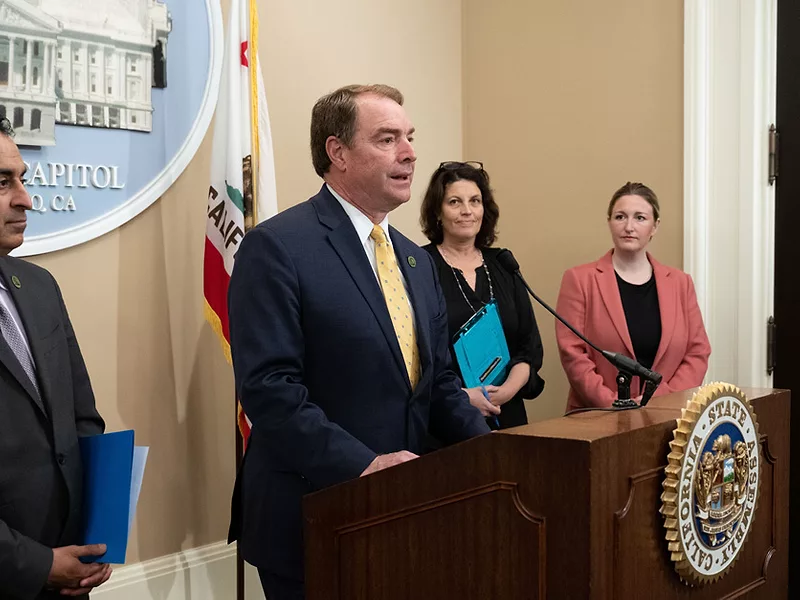
Assemblymember Damon Connolly, D-San Rafael, charged that the state has not conducted a comprehensive review of the most toxic pesticides in perhaps decades.
“This audit will help us better understand the enforcement and oversight relationship between DPR and ag commissioners and whether there are issues that need to be addressed to ensure pesticide use doesn't come at the expense of our communities,” said Connolly.
Through Assembly Bill 2113, the Legislature last year approved the Newsom administration’s proposal to dramatically raise the mill assessment on pesticide sales and drive more revenue for DPR to shore up its structurally imbalanced budget. DPR had initially asked for the authority to raise the mill fee further in the years ahead without legislative approval, leading Connolly to expect DPR would return to the Legislature seeking approval on more increases.
 Grant Parks, state auditor (photo: State Auditor's Office)
“Information from this audit would be vital for that discussion,” said Connolly.
Backing the proposal was Bianca Lopez, founder of the environmental justice group Valley Improvement Projects, which partnered with Connolly last year to push for more pesticide restrictions near schools. Lopez described the regulatory system as antiquated and claimed it has not been reviewed by the Legislature.
“We have seen the repercussions to communities when the pesticide regulatory and enforcement process falls short,” she said.
It’s easy to be “in the know” about what’s happening in Washington, D.C. Sign up for a FREE month of Agri-Pulse news! Simply click here
Lopez cited a 2019 report by law scholars and public health researchers at the University of California, Los Angeles, that charged agricultural commissioners were not doing enough to urge farmers to use alternatives to conventional pesticides.
“What that means is our communities are exposed to unnecessarily high amounts of the most hazardous pesticides allowed for use in California, and our communities show those scars,” said Lopez, adding that regulators have ignored the farmworkers’ concerns over exposure to their children.
Several social justice, environmental and labor groups supported the audit as well.
More costs as DPR implements new rules and programs
Both DPR and commissioners, while not opposed to the audit, pointed out that the information it seeks is readily available and can be shared in a more timely and cost-effective manner.
DPR Chief Deputy Director Leia Bailey explained to the committee that state law requires the department to evaluate each county’s pesticide program at least once every three years. DPR conducts more than 400 oversight inspections annually — that includes assessing the consistency of the enforcement actions and how knowledgeable staff are of the rules.
With restricted material permits, Bailey noted DPR has received 20 appeals to those permits since 2019, leading the state regulator to reverse eight of the commissioner decisions. Environmental justice groups have gone further, asking the judicial system to weigh in by filing a lawsuit against DPR last year over its decision to back six restricted material permits in Monterey County.
Bailey leaned on a 2023 audit by the regional U.S. EPA branch that found the investigations by DPR and commissioners either met or exceeded expectations. DPR has been working with commissioners to address other areas for improvement identified in the audit and intends to propose regulations this year to update its enforcement response “to support statewide consistency and improve outcomes for all Californians,” according to Bailey.
EPA, meanwhile, plans to release the results in September of a broad audit of all four states within its Region 9.
Lindsey Carter, executive director of the California Agricultural Commissioners and Sealers Association, said CACASA has offered to provide the information requested in the audit to Connolly’s office as well as to the Assembly Environmental Safety and Toxic Materials Committee, which oversees pesticide enforcement. She also pointed to annual county work plans and suggested commissioners could speak in detail about restricted materials and the permitting process.
“We feel there is more cost-effective and less time-intensive ways to achieve what the assemblymember is trying to do in obtaining this information,” said Carter. “We welcome oversight. We welcome a look into our programs and are committed to working in whatever capacity that looks like.”
Responding to Connolly’s points on AB 2113, Carter said CACASA stepped out of those discussions and did not opt for any increased revenue for commissioners. She said her members took issue with a 2023 study DPR had commissioned to evaluate ways to increase the mill.
 Lindsey Carter, CACASA (photo: Fred Greaves/ Agri-Pulse)
The consulting firm Crowe LLP recommended a 60% boost and put its support behind a novel and controversial tiered mill system to levy higher fees on materials DPR determines to be more hazardous.
Carter also asked lawmakers to not take resources away from implementing the mill increase and several new regulations the Legislature has passed recently, such as establishing an environmental justice advisory committee.
Farm groups fear slowdown in registrations
Lobbying on behalf of a coalition of agricultural stakeholders, Taylor Roschen argued the audit request was based on outdated studies and assumptions. Along with the 2023 EPA audit, Roschen directed the committee to another audit they had greenlighted and was completed last year. It blasted DPR for inefficient processes that delayed product registrations. DPR, she noted, has promulgated regulations to remedy issues.
Roschen also pointed out that the legislative compromise with the industry over AB 2113 included provisions to subject DPR to greater enforcement, to accountability metrics and to regular oversight hearings.
“Rather than financially and administratively burden DPR and, by extension, those protected and regulated by DPR, we encourage the committee to pursue these questions through oversight hearings and future actions, if necessary,” said Roschen.
Isabella Quinonez, assistant director of policy advocacy at the California Farm Bureau, added that the UCLA report did not acknowledge commissioners already conduct field inspections on at least 5% of all notices of intent for restricted materials. The study, she said, focused heavily on chlorpyrifos through use reports submitted in 2015 to 2017, while Governor Gavin Newsom banned nearly all uses of the insecticide in 2020.
“We urge the committee to let the recent changes take effect before launching another resource-intensive audit,” said Quinonez.
The Western Growers Association and the California Chamber of Commerce also expressed opposition to the audit request.
Connolly countered that the previous audits were limited in scope and asked “very different” questions.
“This audit focuses on the most toxic pesticides used in California and looks at the state-local relationship between DPR and ag commissioners,” he said, reasoning that EPA handled just 11 specific investigations while last year’s audit focused on registrations, and he addressed the AB 2113 concerns. “If you are going to be registering new pesticides at a faster pace, we need to know if the laws and regulations we have on the books to effectively manage these pesticides are working.”
Update: Responding to Asm. Connolly's expectation that DPR will return to the Legislature to request another mill increase in the years ahead, DPR's Leia Bailey shared with Agri-Pulse that the department has no plans for further increases following the negotiated four-year phase-in.
For more news, go to Agri-Pulse.com.

