
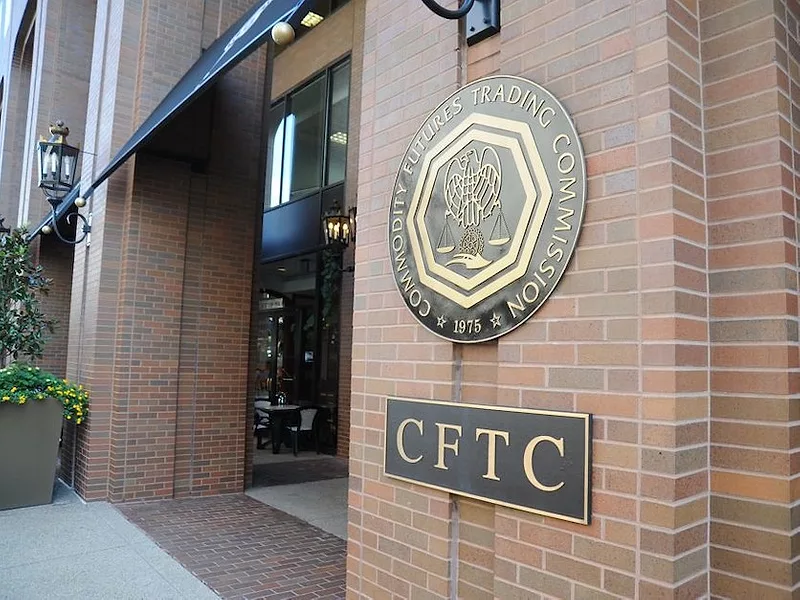
The Commodity Future Trading Commission is weighing the ramifications of allowing 24-hour trading seven days a week. Digital asset traders are driving the idea. Grain hedgers worry extended hours would increase price risk and costs for agricultural trades.
The CFTC, which regulates U.S. derivatives markets, has solicited public comments on the prospect — and risks — of allowing 24/7 trading in commodity futures markets. Some designated contract markets (DCM) and swap execution facilities (SEF) have already extended trading hours, according to the CFTC’s request for comment.
Extending trading hours could come with benefits, namely being able to “enhance market access and innovation,” according to the request for comment. However, the idea also raises “important questions regarding system resilience, market integrity and the ability of the DCM or SEF to fulfill core regulatory obligations,” it went on.
“As I have long said, the CFTC must take a forward-looking approach to shifts in market structure to ensure our markets remain vibrant and resilient while protecting all participants,” Acting Chair Caroline D. Pham said in a release. “One evolving trend is the move to 24/7, 24/6, or 24/5 trading hours.”
Interest in the idea of 24/7 trading appears to be largely driven by digital asset market participants, said Kevin Batteh, a partner and general counsel at Delta Strategy Group. A lot of overseas markets, as well as spot markets in the U.S., have extended hour trading, creating some precedent for such a system, he added.
"As the U.S. looks to implement market structure rules for digital assets, futures and derivatives, I think it’s a logical question to ask,” Batteh said.
But digital assets and agricultural commodities are inherently different, Batteh noted. Digital assets are just that — digital. They don’t get planted or pulled out of the ground, nor do they rely on a harvest cycle. And while the idea of 24/7 trading was sparked by digital asset traders, Batteh said he hasn’t heard of anyone from the agriculture community expressing interest in the idea.

Frayne Olson (NDSU photo)
In futures markets, participants buy and sell legally binding contracts for the purchase of specific commodities at a set date down the road — not all that different from the agreements farmers sign with grain elevators to physically exchange grain, said Frayne Olson, a professor of agribusiness and applied economics at North Dakota State University.“The value of the contract in the futures market is derived or is based from the underlying value of that commodity,” Olson said. “So, when people say, 'Oh, all they’re doing is trading paper' — technically that’s right. They’re trading contracts. But the difference is these aren’t pretend contracts, this isn’t just Monopoly money. These are legally binding contracts.”
It’s easy to be “in the know” about what’s happening in Washington, D.C. Sign up for a FREE month of Agri-Pulse news! Simply click here
What sets futures market agreements apart from other types of deals is that participants don't negotiate based on the quantity of the commodity, or where and when it’s delivered, Olson said. Instead, they negotiate on price. Speculators put money down on what they think prices will look like in the future, while hedgers seek to shift price risks to others.
Olson said current systems operate on two blocks of time — from 7 p.m. to 7:45 a.m., and from 8:30 a.m. to 1:20 p.m.. Trading officially closes at 1:30 p.m., giving market operators a window to not only ensure that the day’s buys and sells add up, but also calculate the price for the last trade of the day.
That closing price is important, because it can help inform the offers buyers and sellers make on the cash market, Olson added. Farmers working out cash contracts with grain elevators tend to use closing prices as starting points in negotiations, he said.
It would be more difficult to pin down a closing price as well as ensure that every trader’s account has the right balance in a 24/7 system, Olson said. Software updates would be more difficult to schedule, and regulators like the CFTC would likely need more staff to be able to monitor and enforce rules.
In a perpetual system, trading would likely become more spread out throughout the day. While Olson expects the total number of trades within a full 24-hour period would go up, he says the amount of people buying and selling at any one point in time would likely drop. That, in turn, increases volatility — which, in this instance, means the speed at which prices shift.
“The fact that prices are moving really, really quickly isn’t necessarily a problem, because it does open up opportunities,” Olson said. “What makes people mad is they miss the opportunities.”
In a public comment, National Grain and Feed Association President and CEO Mike Seyfert warned that “spreading liquidity across a wider trading timeframe would create unnecessary volatility, potentially widen bid/ask spreads, and expand potential for market manipulation.” The cash market does not trade 24/7, which would lead to “additional exposure and risk” for grain companies in the off hours, he added.

Max Fisher (NGFA photo)
“What they want to do is they want to buy that grain and try to make a little margin off of it,” NGFA economist Max Fisher told Agri-Pulse, speaking of grain elevators. “They don’t want the exposure to the whims of the marketplace."
In a public comment, Jonathan Marcus, the senior managing director and general counsel of CME Group, which operates the Chicago Board of Trade, acknowledged that the “move to a 24/7 model appears probable, as our exchanges have maintained 23/5 trading hours for many products for decades and our peers have recently commenced 24/7 trading and clearing of certain futures products.”
But he added that “a broader transition to 24/7 trading in any given market should be driven by market demand to ensure strong participation, liquidity and price discovery.”
"We anticipate that demand is going to differ among asset classes,” Marcus wrote.
Ed Prosser, the senior vice president of special projects at the grain company Scoular, told Agri-Pulse he is already concerned about being able to support present trading hours with current amounts of liquidity and volume. He said others in the agriculture industry feel the same way.
"I think the industry is pretty much unanimous around the idea that we certainly want to think twice about the access we give to the markets,” Prosser said. "And the conversation to this point has been 'are we too wide?’"
Prosser said that he understands digital asset traders may support the concept. But if digital asset markets were to be opened up to 24/7 trading, he’d like to see agricultural markets left alone.
“I don’t want to take away from whatever price discovery needs to happen with the digital assets,” Prosser said. "So I think our first reaction will be to treat us differently if you choose to treat them differently. That’s going to be the ask.”
For more news, go to Agri-Pulse.com
.

