
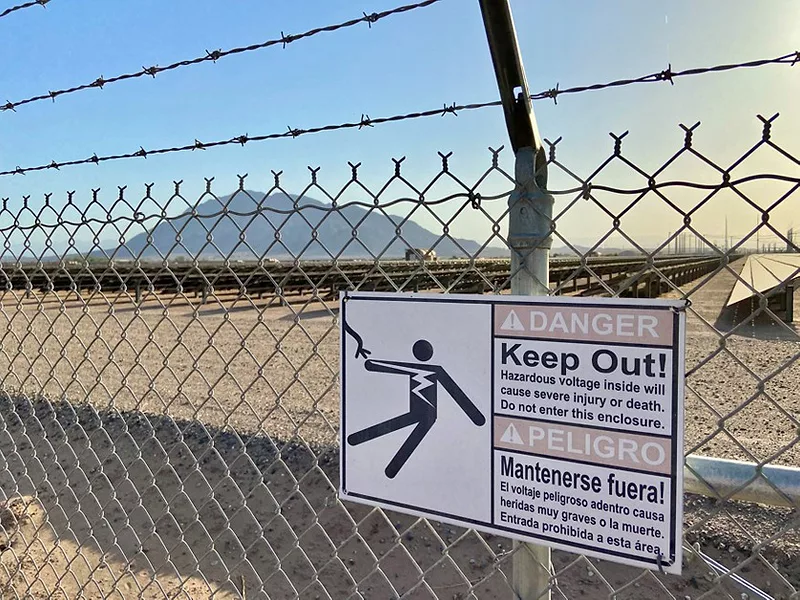
The Imperial Irrigation District board has passed a resolution opposing utility‑scale solar projects on active or historically farmed agricultural land within its service area. More than 13,000 acres in the district have been converted to solar farms, primarily exporting power to urban centers like San Diego, with minimal local benefits.
IID Board Chair Gina Dockstader emphasized that while solar plays a role in the region’s energy future, it “cannot come at the cost of our farmland, food supply or the families who depend on agriculture.”
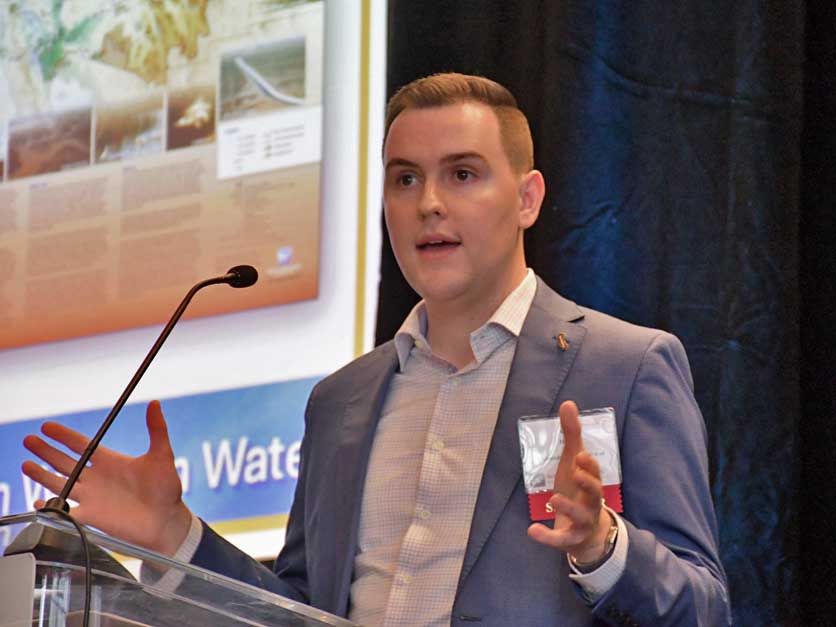 JB Hamby, IID (photo: Brad Hooker/Agri-Pulse)
IID Vice Chair JB Hamby stressed that the district supports renewables — but on nonagricultural lands like desert areas, industrial zones and ground that has not been farmed in many years, rather than prime cropping land. The board’s resolution urges the Imperial County Board of Supervisors and state agencies to prioritize protections for working farmland.
The move coincides with broader efforts at the California Capitol to allow solar development on fallowed farmland under Assembly Bill 1156. Championed by Assemblymember Buffy Wicks, D‑Oakland, AB 1156 would expand solar‑use easements under the Williamson Act to include water‑constrained farmland, enabling the land to enter solar production temporarily — without canceling its agricultural contract. Supporters say fallowing due to groundwater restrictions under the Sustainable Groundwater Management Act has left millions of acres idle and taxed water resources.
AB 1156 cleared the Assembly after Wicks amended it to preserve local control and allow counties to non‑renew solar easements at term’s end. A Senate committee is taking up the bill Wednesday. Environmental and agriculture groups are divided. Rural County Representatives of California shifted support following language to protect local permitting, while the California Farm Bureau and American Farmland Trust have voiced concerns about removing protections for prime soils.
Districts like IID and some farmers see industrial solar on farmland as a threat to food production and local economies, even as others argue fallowed acres are a logical, low‑impact site for clean energy.
Interested in more news on farm programs, trade and rural issues? Sign up for a four-week free trial to Agri-Pulse. You’ll receive our content - absolutely free - during the trial period.
IID has also been engaging heavily in Colorado River conservation negotiations. Under recent “Bucket 1” pilots, the district and Imperial Valley growers have conserved more than 1.2 million acre-feet of water left in Lake Mead — about 350,000 acre-feet in 2023 and 500,000 in 2024 — through voluntary on-farm deficit irrigation programs. According to Hamby, “IID’s efforts provide an example for other states and regions to follow, as we plan for a drier future in the Colorado River basin.” The conservation gains helped California reach about 75% of its commitment under the Lower Basin Drought Contingency Plan.
Looking ahead, all seven basin states must agree on new post-2026 Colorado River operating guidelines by October 1, 2026, or default back to outdated 1970s rules — raising federal intervention risks. Future negotiations will zero in on four alternatives identified in the Bureau of Reclamation’s draft EIS: a Lower Basin plan, cooperative conservation, a hybrid or federal control. Sessions are expected through 2025, with tribal nations, Mexico and NGOs joining the talks. Hamby noted this next chapter will test whether basin leaders can craft enforceable agreements that address shrinking supplies and respect each state’s rights.
For more news, go to Agri-Pulse.com.

