
In a pair of letters published to his Truth Social account Saturday morning, President Donald Trump told European Union and Mexican leaders to expect higher tariff rates starting Aug. 1.
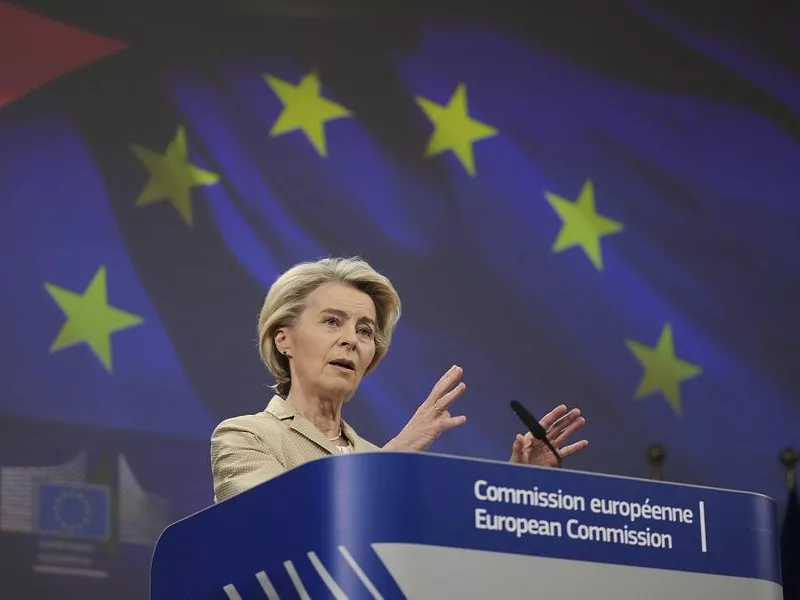
Trump’s letter to European Commission President Ursula von der Leyen said that the bloc’s exports will face a 30% tariff from next month.
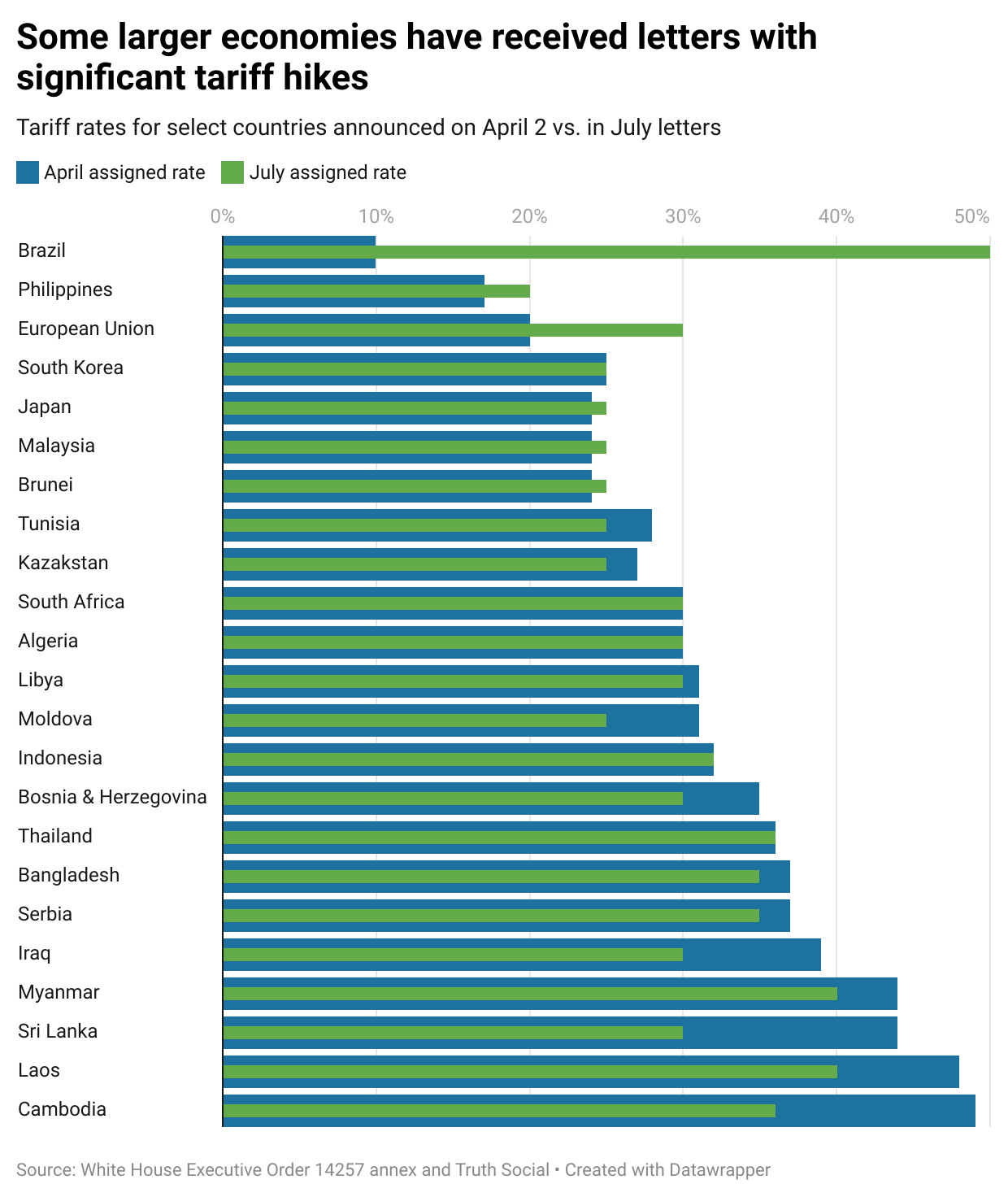
The rate marks a step up from the 20% rate that the president originally assigned the EU under his April 2 “reciprocal” tariff plan, and a significant increase from the 10% baseline tariff EU exports currently face. But the president had also threatened the EU with a 50% tariff in May when he became dismayed at the pace of ongoing trade talks, which he appears to have backed down from.
Mexican exports will also face a 30% U.S. tariff from Aug. 1, the president said, citing Mexico’s failure to take sufficient action to stem the flow of drugs into the United States. The president had already imposed a 25% tariff on Mexican products not covered under a North American free trade agreement, but the 30% rate will supersede the previous rate.
A White House official told Agri-Pulse on Saturday that goods covered by the U.S.-Mexico-Canada Agreement would continue to be exempt from the duties. The same carveout applies to new Canadian tariffs announced earlier this week, the official said.
Both tariffs will be treated separately from any sector-specific tariffs, Trump said in his letters.
Mexico and the EU have both been in active trade talks with the U.S. on a negotiated tariff solution in recent months. An EU spokesperson had indicated on Wednesday that a U.S.-EU deal could be ready “in the coming days.”
Von der Leyen said the EU remains committed to finding a path forward on a deal with the U.S., despite the new tariff hikes. However, in a statement posted Saturday morning, she also left the door open to retaliation.
Cut through the clutter! We deliver the news you need to stay informed about farm, food and rural issues. Sign up for a FREE month of Agri-Pulse here.
“We remain ready to continue working towards an agreement by August 1,” the statement reads. “At the same time, we will take all necessary steps to safeguard EU interests, including the adoption of proportionate countermeasures if required.”
The EU had already prepared a package of retaliatory tariffs in response to the U.S. steel and aluminum tariffs, but paused its adoption to let talks play out.
In her statement, von der Leyen also slapped back at Trump’s accusations that the EU has treated U.S exports unfairly.
“Few economies in the world match the European Union's level of openness and adherence to fair trading practices,” she said.
Berndt Lange, a member of the European Parliament who chairs its Committee on International Trade, was even more direct, calling the new tariff rate "a slap in the face."
"We've been negotiating intensely for more than three weeks - made offers to improve things in mutual interest," he said in a post to X, adding that, "Real willingness to negotiate looks different." Lange said he would support the suspended EU retaliatory tariffs coming into force on Monday, with further retaliatory measures to follow shortly after.
South of the border, Mexican officials have already expressed their displeasure at Trump’s latest negotiating approach. A joint statement from Mexico’s ministries of Foreign Affairs and Economy said that officials met with U.S. officials on Friday and were informed “that, as part of the profound change in U.S. trade policy, all countries would receive a letter signed by the President of the United States establishing new tariffs effective August 1.”
“We mentioned at the meeting that this was an unfair deal and that we disagreed,” the statement reads.
The timing of the two announcements is also raising eyebrows. The president has been posting letters to trade partners on Truth Social all week, but the EU and Mexican letters are both dated with Friday’s date of July 11.
“It might give you a sense of the White House's own fears that the tariff letters to the EU and Mexico bore yesterday's date, but they waited until Saturday morning -- when the markets are closed -- to actually release them,” Justin Wolfers, a professor of economics at the University of Michigan, said in a post to X.
Either way, Wolfers argued that the letters posted so far, which include tariff increases on Brazil, Canada, and now the EU and Mexico, set up duty hikes for Aug. 1 that will dwarf Trump’s April 2 “Liberation Day” announcement.
“[A]verage tariffs on August 1 are set to be higher than they were on ‘Liberation Day,’” Wolfers wrote, adding, “Only a fool would look back to the chaos of early April and conclude that the problem was that the announced tariffs were too small.”
Some smaller economies have seen Aug. 1 tariff rates issued that are below their April 2 rates – including Cambodia, Laos, Sri Lanka, Iraq and Thailand. But many of the larger economies have so far seen higher rates announced.
For more news, go to Agri-Pulse.com.

