
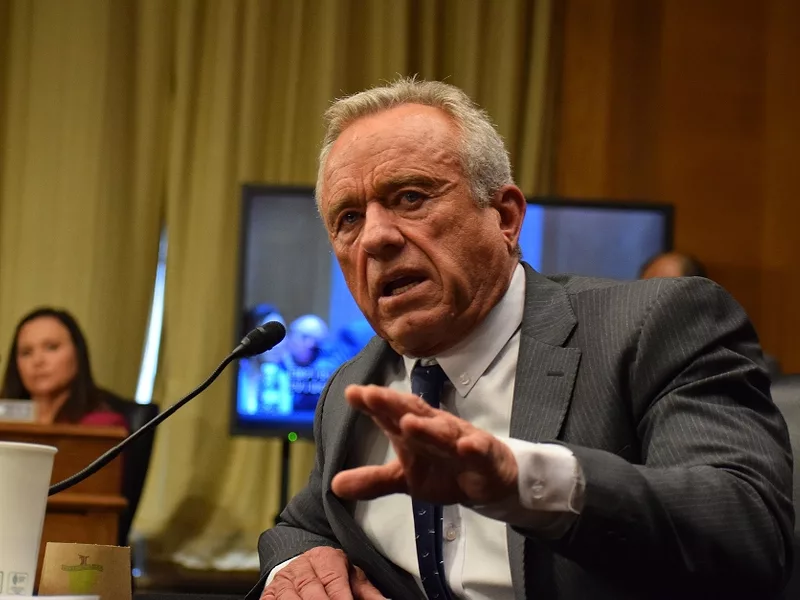
Health and Human Services Secretary Robert F. Kennedy Jr. dubbed modern soil health practices “unsustainable” during a Make America Healthy Again roundtable on Capitol Hill where speakers called for increasing use of precision agriculture technology and expanding public-private partnerships to boost usage of conservation practices.
MAHA advocate and roundtable host Sen. Roger Marshall, R-Kan., confirmed the second Make America Healthy Again report will be released Aug. 12. He was the sole member of Congress in attendance at the Tuesday event.
Farm groups have scrutinized the Trump administration for the lack of input they were given in the development of the first MAHA report, which they say lacked scientific backing, criticized the use of crop protection tools in modern agriculture and clouds consumer confidence in the safety of the U.S. food supply.
The first report also included numerous erroneous citations.
“It’s my belief that soil health is the bridge where agriculture meets MAHA,” Marshall said in his opening remarks Tuesday. “It’s where healthy soil meets healthy food meets healthy people.”
“It's also my belief that we must work as one team to forge public-private partnerships between farmers and federal government policies to achieve healthy soil and healthy, affordable nutrition.”
Kennedy focused on the loss of top soil, noting that it is currently being depleted more quickly than it can replace itself. He said top soil could be eliminated entirely within 50 years.
“We have farming practices now that are unsustainable. They've been dictated, in many ways, by federal policies and we need to transition," Kennedy said. "But we need to transition without mandates, without coercion."
 MAHA Soil Health Roundtable in the Mansfield Room in the U.S. Capitol July 15, 2025. (Agri-Pulse photo)
Agriculture Secretary Brooke Rollins used her opening remarks to emphasize the role USDA’s Natural Resources Conservation Service, which was founded over 90 years ago, plays in supporting farmers through a voluntary transition to regenerative farming practices like no-till, strip-till and planting cover crops.
Marshall said seven of the ten speakers at the event mentioned the importance of using pesticides and fertilizers in modern agriculture production systems.
“His goal and my goal would be to use no pesticides,” Marshall said, referring to his and Kennedy’s vision for agriculture production. “But until we get there, until you give us the technology, he [Kennedy] understands that a farmer has to make a living.”
Lukas Koch, CEO of Kelly Hills Unmanned Systems and a speaker at the event, is already demonstrating how to do more with less through the use of see-and-spray drone technology.
“There's a very bright outlook for using precision agriculture technologies that exist today to transform existing operations, build new operations and help build our soil health for better products for our consumers,” Koch said.
Kelly Hills Unmanned Systems, based in Kansas, operates the nation’s largest contiguous FAA-approved test range dedicated to commercializing agricultural drone technology.
“It's been shown in trials and early adoption techniques that you can use this same type of see and spray and still use those chemicals or products in a much reduced way for higher profits on the farm and better overall food, health and stability,” Koch said. “So I'd say as a positive message of using tools that we have to just solve new problems.”
It’s easy to be “in the know” about agriculture news from coast to coast! Sign up for a FREE month of Agri-Pulse news. Simply click here.
Marshall, an obstetrician and gynecologist by training, stressed that the four pillars of the Make America Healthy Again movement remain: Regenerative agriculture, nutrient dense food, meaningful access to affordable primary care, and addressing the mental health epidemic in youth and young adults.
He told Agri-Pulse he didn't think downsizing at USDA and NRCS would hinder efforts to expand regenerative ag practices.
“I think the federal government's job is to get out of the way. We need to have less rules and less regulations in general, and let the American consumer drive this industry, and the private sectors, especially … the county extension agents, the co-ops, the people that are on the ground out there, to implement them,” he said
“The NRCS people will be vitally important. I appreciate them. They do an incredible job, the ones that are out in the communities.”
More than 15,000 employees left USDA this year after taking buyouts from the department, including 2,400 who worked at NRCS.
Marshall said he hopes to host a similar roundtable in the future with Food and Drug Administration Commissioner Martin Makary, who has been an outspoken critic linking the use of pesticides to cancer.
Other administration officials in attendance included Heidi Overton, deputy director of the White House Domestic Policy Council; Turner Bridgforth, senior agriculture adviser at the Environmental Protection Agency; and Kyle Diamantas, deputy commissioner for human foods at the Food and Drug Administration.
Other panelists at the event included:
- Stanley Culpepper, professor and extension agronomist in the Crop and Soil Science department at the University of Georgia
- Ray Flickner, fifth generation farmer, Flickner Innovation Farming
- Blaine Ginther, co-founder, SureFire Ag
- Orren Holle, past president, Organic Farmers Agency for Relationship Marketing
- Lukas Koch, CEO, Kelly Hills Unmanned Systems and chief technology officer, Heinen Bros Agra Services
- Dariush Mozaffarian, director of the Food is Medicine Institute at the Friedman School of Nutrition Science and Policy at Tufts University
- Bob Quinn, Real Organic Project
- Chuck Rice, distinguished professor of soil microbiology at Kansas State University
- Earl Roemer, founder and president, Nu Life Market
- Carter Williams, managing director, iSelect Fund
For more news, go to Agri-Pulse.com.

