
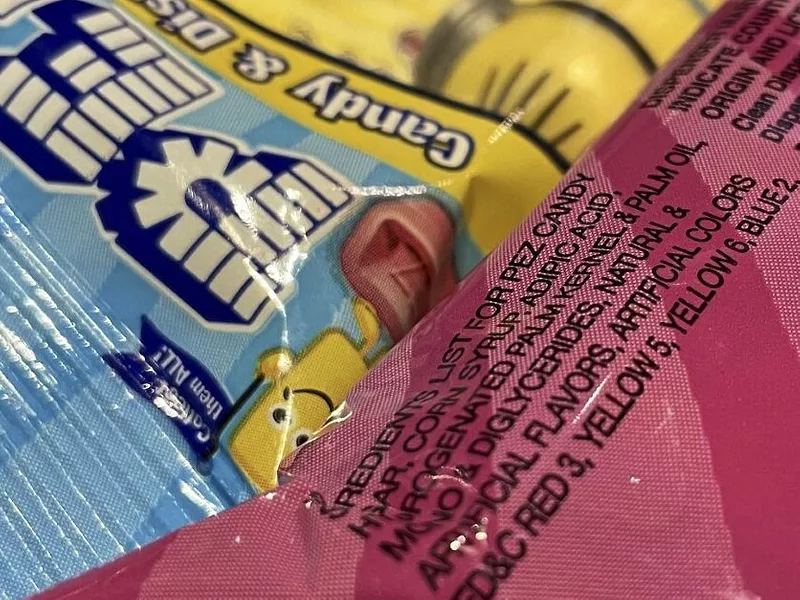
Food companies are falling in line with the Trump administration’s goal to phase out synthetic dyes in food and beverages by making voluntary commitments to stop using them. But the path to a food system reliant on natural dyes will come with challenges in reformulation, federal approvals and product availability.
Food dyes have become a key pillar of the Make America Healthy Again movement championed by Health and Human Services Secretary Robert F. Kennedy Jr. The secretary railed against synthetic dyes and other food additives before his official confirmation, tying these to negative behavioral effects on children.
 Robert F. Kennedy Jr. (Agri-Pulse photo)
 The federal government has yet to set any regulations to phase out all artificial dyes. Instead, the administration launched a strategic plan to transition away from synthetic dyes by the end of 2026 that relies heavily on voluntary buy-in from the food and beverage industry.
State bills, like those passed or under consideration in West Virginia, New York and California have also been influential in pushing the food industry away from synthetic dyes. The West Virginia bill specifically would ban seven synthetic food dyes from school meals starting this August. Those dyes would also be banned across the state in 2028.
In response to this federal and state push, some of the largest food manufacturers have announced plans to reformulate products or transition towards natural dyes.
PepsiCo, Tyson Foods, Kraft Heinz, Kellogg’s, JM Smucker, Nestle and more have all made some commitment to removing select artificial dyes from some of their products. Industry associations, like the International Dairy Foods Association and Consumer Brands Association have also said they would lead efforts to transition the dairy and packaged foods industries away from artificial dyes.
But even as these commitments roll in, industry experts expect significant challenges.
Industry pushes for more natural options
In CBA’s announcement that it would encourage a voluntary transition from artificial dyes, the group urged the FDA to prioritize access to safe and tested natural replacements. These approval processes can often take years, and both consumer and industry groups have warned that cuts to FDA staff could make fast-tracking food chemical approvals and reviews more challenging.
Interested in more news on farm programs, trade and rural issues? Sign up for a four-week free trial to Agri-Pulse. You’ll receive our content - absolutely free - during the trial period.
So far under the Trump administration, FDA has approved four natural dyes to replace synthetic ones. These include butterfly pea flower extract for cereals, crackers and other snacks, galdieria extract blue in several beverages and candies, and calcium phosphate for ready-to-eat chicken products and sugar for coated candies. The agency has also approved use of Gardenia blue in various foods.
During a recent Institute of Food Technologists conference, David Schoneker, president at Black Diamond Regulatory Consulting, pointed out that these approval petitions had been in progress for a while. Other panelists noted the FDA approval process for a new food dye or additive can take up to five years.
“We don’t want anybody taking shortcuts so that they can claim, ‘Oh, we got all these natural colors approved’ without doing the science,” Schoneker said.
On top of the approval concerns, there are other logistical challenges food manufacturers are working through.
Consumers drive what food technologists and manufacturers do, and the primary consumer concern is often taste, said Lisa Navarro, principal at Ramboll.
 Lisa Navarro (LinkedIn photo)
“Taste is king,” Navarro said. “You can have ingredients that we have to remove … but certainly as we in the food industry try to figure out and navigate what our consumers want, we have to maintain that sensory appeal in those products.”
Food and beverage companies have to consider a product's taste, texture, appearance, mouth feel and more, she said. Often, consumers are also resistant to changes in these categories.
On top of these reformulation concerns, manufacturers must consider the supply chain implications. Some companies may have to buy new ingredients from other countries, and have to reevaluate those costs, quality, availability, and if the new ingredient is shelf-stable or not. Switching dyes or additives could also throw off the formula of a product entirely and require more of other ingredients on top of the alternative ingredient.
For example, achieving a blue color can be difficult in some products. A manufacturer could use a natural dye like butterfly peaflower, but that can turn into a more violet hue when an acid is introduced.
“The concept of actually replacing all the synthetic colors by 2026 is not possible,” said Schoneker.
Schoneker added there are simply not enough natural color alternatives available to replace all synthetic dyes. It can take larger quantities of natural dye to reach the shade and vibrancy of artificial colors, which means manufacturers are looking for as much as four times the supply of ingredients.
Products with a red or yellow color can be easier to achieve with natural dyes. These can come from beet juice, red cabbage, radishes, turmeric and more. But increased demand for these dyes could pose supply chain and availability concerns.
Often, food coloring and flavors are different which could pose another challenge for manufacturers. For example, a strawberry-flavored item naturally colored with strawberries would be more brownish than the vibrant red a consumer expects. The food maker may have to substantially increase the level of natural dyes while also altering the flavor ratio to ensure the strawberry product does not taste like beets, or another natural dye source.
“If you have 100 acres of beets to make beet extract today, and your demand goes up by 1,000%, where are you going to get like 10,000 acres of beets?” Schoneker said.
The International Association of Color Manufacturers has also said that a 2027 deadline to transition from artificial dyes is not sufficient for companies that had not already started reformulating products. Instead, the group said a five-year minimum timeline is more likely.
As more companies look for natural, agriculturally-based products like beets, variations in crop yield year-to-year will be important. The industry will also need more acreage dedicated to these crops to support this transition, which the group said could reduce acreage for staple foods.
Natural colors also have a more limited shelf life, and they are less consistent and are more expensive, IACM wrote. Companies often need to use three to ten times more of the natural color in a product, which increases the overall cost.
Companies are exploring ways that can introduce more sustainable, stable natural dyes to support this transition. But it’s unlikely these technologies and supplies will be ready by 2026, Schoneker said.
Food dyes just the beginning
More broadly, food dyes are just one challenge the food industry is working through as state bills also focus on different ingredients.
“Certified colors are being eliminated from the food supply not because they present a health and safety issue, but because MAHA doesn’t like certified colors,” said Martin Hahn, partner at Hogan Lovells, during the IFT conference.
 Martin Hahn (LinkedIn photo)
Increasing state action on MAHA issues, like limiting food dyes, seed oils and more also add to food manufacturers' reformulation challenges by a changing and inconsistent landscape, Hahn said. He cited the similar but slightly different laws in Louisiana and Texas that require foods made with certain ingredients to include new labeling, but the list of ingredients is not exactly the same.
Hahn suggested those state laws could eventually be challenged, but manufacturers should take note of what ingredients are targeted, as it shows what future MAHA action could include.
Based on the first several months of the Trump administration, Hahn said it seems the playbook is urging voluntary action from companies in place of regulatory action. He said the administration also appears to be working with the states to push legislation that backs up the voluntary push.
“I think we’re going to continue to see as they focus on the next ingredient de jour, that they’re going to try to pressure the industry to move away from those particular ingredients on an ingredient-by-ingredient basis,” Hahn said.
For more news, go to Agri-Pulse.com.

