
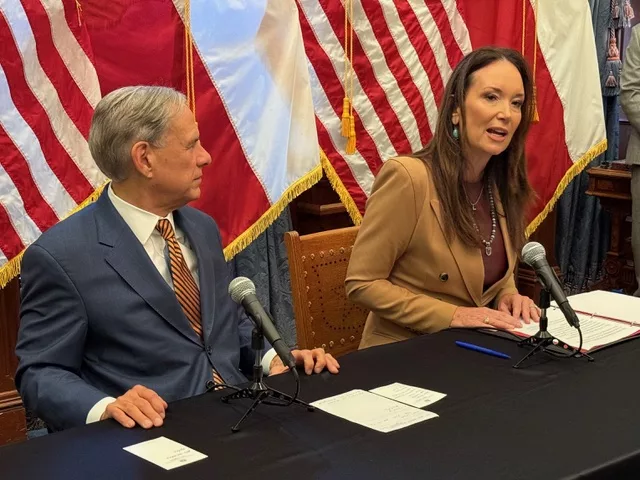
Agriculture Secretary Brooke Rollins announced new steps Friday to prevent New World screwworm from reaching the United States while acknowledging that beef prices could continue to rise amid the suspension of Mexican cattle imports.
Speaking at a news conference at the Texas Capitol with Gov. Greg Abbott, Rollins said the border wouldn’t be reopened until she received assurances that the outbreak of the flesh-eating pest in Mexico is under control.
“We've got a lot of work to do, but we have to protect our cattle industry and our beef industry in this country, and in so doing protect our food supply, and in so doing protect our national security for America,” Rollins said.
“Do we expect beef prices to continue to rise, perhaps, but the safety and the security of our beef and our ranchers has to be at the top of the list.”
Beef prices rose 1.5% in July alone and are up 11.3% since July 2024 amid tight U.S. beef supplies.
She said the pest "endangers our livestock industry, and it threatens the stability of beef prices for consumers across America."
Her latest steps for combatting the pest include spending up to $750 million on a new facility for producing sterile flies in Edinburg, Texas, on the Mexican border. The facility is supposed to produce up to 300 million flies per week. Rollins had earlier announced in June that USDA was setting up a sterile fly dispersal facility in Edinburg.
USDA is putting up to $100 million into new technology for screwworm control, including new types of traps and lures, she said.
“I'm calling on the brightest in the country to build on our existing tools and help us outpace this pest quickly and in the most innovative way possible,” Rollins said.
USDA also is concerned about wildlife bringing the screwworm across the border and to that end Rollins said the department would hire additional mounted officers, historically known as Tick Riders, to patrol the region. The mounted patrols will be “the cornerstone of our surveillance program,” she said.
Don’t miss a beat! It’s easy to sign up for a FREE month of Agri-Pulse news! For the latest on what’s happening in Washington, D.C. and around the country in agriculture, just click here.
Rollins also said Mexico has agreed to “halt animal movement in infected zones, which will help push screwworm back towards Darien Gap [the border area between Panama and Colombia] and away from our doorstep.”
Texas Ag Commissioner Sid Miller, who attended the news conference, told Agri-Pulse that there needs to be evidence that the screwworm population is being pushed back southward before cattle imports can resume.
“If we can show that it's not only stopped, but it's regressing, and we're moving it back, that is the point where we could consider opening up the border, but we have to have full cooperation with Mexico before that can happen,” he said.
Texas cattle feeders have typically relied on Mexican animals for about 15% of their supplies.
Miller’s department has worked with industry to develop a bait that attracts adult screwworm flies by using synthetic chemicals that mimic fresh wounds and is often combined with insecticides to kill the flies. Miller said the bait will be time released and should be effective for up to four weeks.
Colin Woodall, CEO of the National Cattlemen's Beef Association, welcomed Rollins' latest moves.
"Producing flies domestically under American oversight will overcome supply challenges in Mexico and Central America, strengthening our fight against New World screwworm and protecting herds on both sides of the border," he said.
For more news, go to Agri-Pulse.com.

