
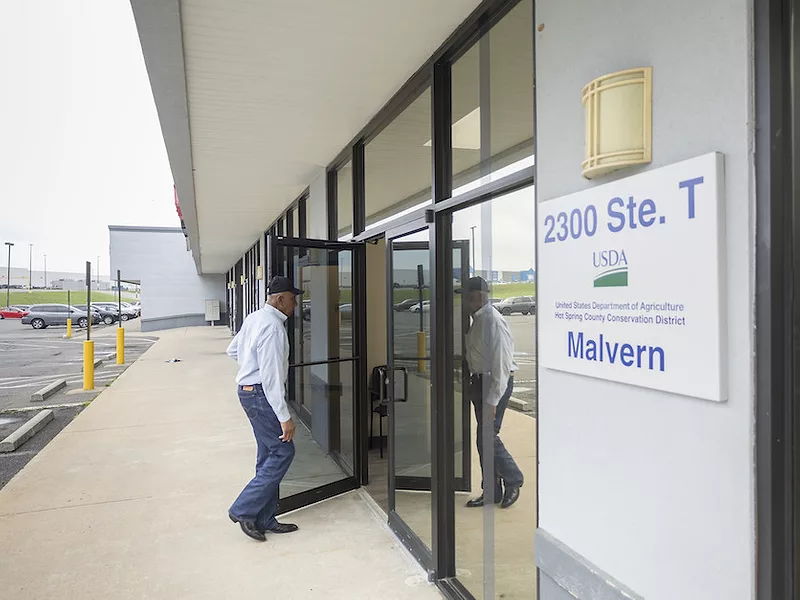
Staff shortages at Farm Service Agency offices are alarming members of the farmer-elected committees that oversee county office operations across the country, who warn that increased responsibilities could lead to delays in program payments for farmers.
In particular, they worry that the addition of 36 million base acres authorized through the One Big Beautiful Act could create logjams at local offices already pressed to do more with less.
“It takes people to add all these acres to different farms and make the changes,” said David Senter, who represents the National Association of Farmer Elected Committees in Washington. “FSA has to be ready to deliver some support and programs to producers. Are we going to have a bloodbath this fall at the end of harvest if we can’t get help out there?”
“NAFEC is very concerned,” he said.
The group, representing county committee members, stated those concerns in letters to Ag Secretary Brooke Rollins and other farm groups. Most recently, in comments on the proposed reorganization of USDA, NAFEC’s executive committee said they’re “very concerned that without adequate staff our farmers and ranchers could experience great delays in the receipt of program funds, conservation funds and emergency funds.”
FSA permanent county staffing has declined 40% since 2002, going from 9,413 employees to fewer than 6,000, which the group says is “an all-time low.”
Agriculture Deputy Secretary Stephen Vaden told reporters at the annual Farm Progress Show Tuesday that USDA has no plans to add permanent or temporary staff at FSA offices.
"We implemented our ECAP program, or emergency commodity assistance program, through FSA. We did it with our current staffing levels," he said.
"We did it to where producers received their money three business days after they submitted the form, and the forms were already preprinted, and all they had to do was sign, in most cases. That is the fastest rollout of any commodity assistance program in USDA's entire history. So, if we were having staffing level issues, how would that be possible? The answer is it wouldn't, and we're not."
But Jim Densberger, a NAFEC executive committee member who grows corn and soybeans on about 1,700 acres in Lancaster County, Nebraska, said that “not having enough people, they're not going to be able to administer any of the farm programs in as timely a manner.”
Interested in more news on farm programs, trade and rural issues? Sign up for a four-week free trial to Agri-Pulse. You’ll receive our content - absolutely free - during the trial period.
Craig Turner, a NAFEC executive committee member in Texas, said of the state’s 180 to 190 FSA offices, 25 lack county executive directors, or CEDs, and three offices have no employees.
Ronnie Wagner, an executive committee member in Massachusetts, said only nine of 15 positions are filled in the seven offices in the state. The largest and busiest office, covering western Massachusetts, has no permanent positions filled, she said.
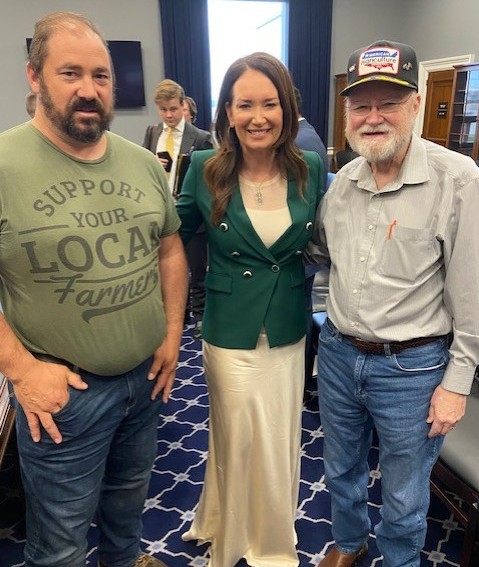 Connecticut farmer Will Dellacamera, Ag Secretary Brooke Rollins, and David Senter, head of the American Agriculture Movement, at an appropriations hearing earlier this year (Agri-Pulse photo)
Senter, Densberger and other committee members who spoke to Agri-Pulse said they’re worried not just about the provision of program payments and base acres, but about the workload inherent in distribution of potential emergency relief funds that might be made available because of tariff impacts.
“They’re going to have to do some emergency dollars … or the wheels are going to fall off in a lot of places,” Senter said. As for the base acre addition, “All of that takes people to add all these acres to different farms and make the changes.”
“It's the biggest expansion in eligible acres in a long time,” he noted.
A county executive director in the Midwest, who asked not to be identified by name or location because they are not authorized to speak to the press, said they’re “curious to see” how FSA will use computer tools to expedite the base acre additions.
But depending on whether there are new tract numbers or other changes, “Hopefully, we don't have a lot of manual calculations that we have to do, because that will take person time.”
In a July 23 letter to farm groups, NAFEC executive committee members said, “With recent buyouts and early retirements, the staffing levels in our counties has never been lower. Already at a breaking point, we are now faced with having to develop base acres on over 36 million new acres, as well as maintain all of the Title 1 programs that ensure a strong farm safety net. Frankly, we need your help if we are to be able to deliver the farm programs in the fast and efficient manner our producers have come to expect and deserve.”
Ag Secretary Brooke Rollins told ag appropriators at a May hearing on the president’s proposed budget for fiscal 2026 that USDA does not plan to close any county offices. She also said the department is working on hiring more people at FSA and wants to provide online help to farmers so they don’t necessarily have to go into their county office.
Rollins also said USDA, which has lost more than 15,000 employees of about 100,000 through voluntary buyouts, is adequately staffed. Of those who left, about 1,100 were FSA employees, or more than one-third of the workforce, according to numbers obtained by Agri-Pulse.
FSA is housed in about 2,300 offices around the country, according to USDA.
The CED also said that while internet solutions, such as farmers.gov, are fine for some, “My concern is for those producers and customers that don't have good internet or they're over 100 miles from their office.”
The CED also noted that FSA has provided temporary help for emergency assistance distribution, “and it sounds like that they're [here] through the end of the calendar year.”
NAFEC says the solution has to come from Congress in the form of more money for staffing. The Trump administration’s fiscal 2026 budget proposed cuts in FSA salaries and expenses of about $260 million – from $1.2 billion to $950 million.
The House ag appropriations bill boosts that to $1.4 billion and the Senate bill includes $1.5 billion. Both bills have cleared their respective Appropriations committees.
“Some of the resolution to our problems is we need to talk to the people in charge of appropriations,” Turner said. “I hate to be the one that says we got to have more money,” he adds, “but they got to have money before they can do anything.”
Turner and others worry that the workload may be unsustainable.
“I understand what the government's trying to do” by cutting back, he says. “I just hope we don't go through a burnout while we're doing it.”
Bob Braden, a NAFEC executive committee member in Iowa, said his area is doing relatively well with staffing, but “we're almost a mockery of the system in some places. It's not like that all over, but at the very least, the directors are worked to the bone.”
The CED who discussed the staffing issues said, “I would say no one's lacking in getting the job done, because we're a can-do agency, but I would definitely say that there are concerns. The inability for us to pull in and get temporary help has been stressful over the past couple years.
"I would say that some of my counterparts definitely are scrambling to try to spread out the workload so they can meet the … program deadlines that we have," the CED continued. "With the unknown of what the additional workload is going to be, it's kind of frightening if they're going to freeze our staffing levels.”
In July, President Donald Trump extended a general federal hiring freeze, which had been due to expire July 15, until Oct. 15.
For more news, go to Agri-Pulse.com.

