
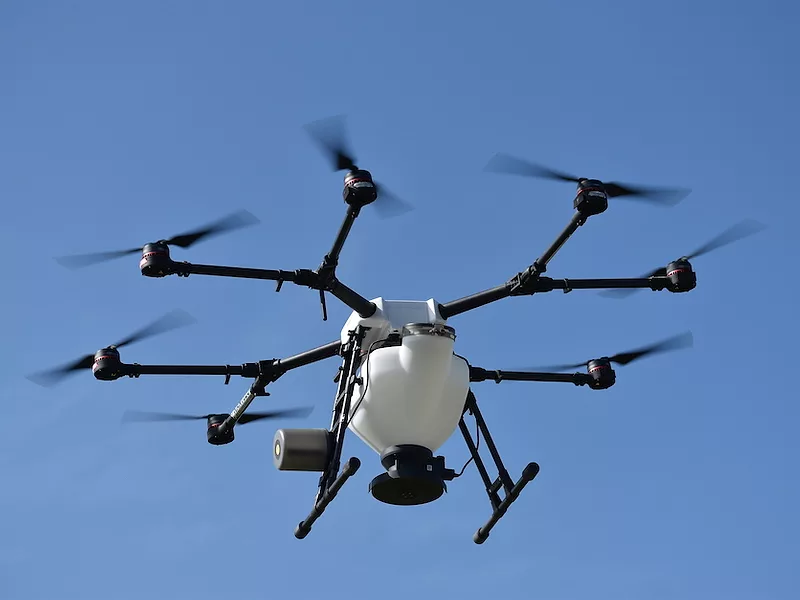
Agricultural drone operators could see simpler licensing processes under a proposed Federal Aviation Administration rule that aims to make it easier for them to pilot devices beyond their line of sight.
Transportation Secretary Sean Duffy released the 731-page proposal last month. Among other things, it would make it easier for commercial pilots to get permission to conduct beyond visual line of sight (BVLOS) unmanned aircraft system operations without individual waivers or exemptions.
“We are making the future of our aviation a reality and unleashing American drone dominance," Duffy said in a press release. "From drones delivering medicine to unmanned aircraft surveying crops, this technology will fundamentally change the way we interact with the world."
Under the new regulations, operators using drones for agriculture, package delivery, aerial surveying, civic interest and recreation could secure an FAA permit faster. Operations with large aircraft would get more scrutiny but could obtain certificates after thorough FAA reviews.
"It is as good for agriculture as it is for anyone,” said Matt Beckwith, the president and advocacy lead for the New Advocate, which works with drone companies. He said the new rule illustrates that the FAA has “started to figure out how to handle drone spraying,” but added that the agency likely still has to figure out rules for other industries.
The agency previously approved exemptions on a case-by-case basis. The proposed rule noted that each petition needed to be looked at individually by FAA, a process that could be “time and resource-intensive for operators.”
Still, the agency issued thousands of such exemptions, many for agricultural spraying operations. Agricultural drone operators had secured more than 1,700 operator certificates by the time the proposal was released last month, it said. Matt Beckwith (LinkedIn photo)
“This proposed rule is intended to level the playing field for operators by offering a well-defined and purpose-built set of regulations for the operation, manufacture and supporting services for BVLOS UAS operations,” it said.
Arthur Erickson, CEO of the drone company Hylio, told Agri-Pulse that the current waiver process is “very narrow and tedious.” He said the new process would effectively give operators a “blanket license” to conduct BVLOS operations, so long as they stick to proper areas and follow other FAA rules.
“You just get this license once, and maybe you renew it on some sort of time period basis … but then you’re good to go,” Erickson said. "You don’t have to keep doing a waiver and exemption process for individual operations."
Cut through the clutter! We deliver the news you need to stay informed about farm, food and rural issues. Sign up for a FREE month of Agri-Pulse here.
Operators would be required to staff two positions under the rule – an operations supervisor responsible for safety and security and a flight coordinator to oversee aircraft operations. Neither would need a pilot certificate, according to the proposed rule.
It also would require operators to identify and mitigate potential hazards along flight paths and to know airspace restrictions along the route.
Under the new framework, the agency would weigh proposals to fly multiple drones on a case-by-case basis, according to a fact sheet.
The rule also sets operational restrictions based on population densities, with freer BVLOS drone operation allowed in more rural areas. Beckwith said this could be frustrating for agricultural operators looking to fly drones above farm ground in zones deemed by FAA to have higher populations.
While the new rules hav Arthur Erickson, CEO at Hylio (LinkedIn photo)e generally gotten a positive response from the agricultural drone industry, spray plane pilots are concerned about giving drones greater airspace access. Hugh Cundiff, the executive director of the North Carolina Aviation Association, wrote in a public comment that drones could “create blind hazards” for pilots that fly low to spray fields.
Paul Deal, a North Dakota aircraft pilot, expressed similar concerns in a comment. He said the rule allows certain drones operating within 50 feet of "shielded areas" like powerlines, substations, railroad tracks, bridges and pipelines to be exempt from needing ADS-B and other detect and avoid devices and "would be granted right-of-way over manned ag aircraft."
He said around half the acres his company sprays has at least one such shielded area. He said he was concerned the proposal would require aircraft pilots to "bear the sole responsibility for detecting and avoiding a collision with a UAS operating within the shielded area," adding that it can be "very difficult or impossible to detect a small UAS with the human eye."
"In the past it has always been the general rule for the FAA that less maneuverable aircraft have right of way over more maneuverable aircraft and it seems foolish to go away with this common-sense approach now," Deal wrote.

