
Ethanol producers are hopeful they can finally win their fight this year to sell a higher mix of the corn-based biofuel across the U.S., and a victory couldn’t come at a better time for corn growers struggling with sagging market prices. But the ethanol legislation still faces significant challenges in Congress.
The industry’s focus is on getting language in the latest defense authorization bill that would allow nationwide sales of a higher-ethanol blend, known as E15.
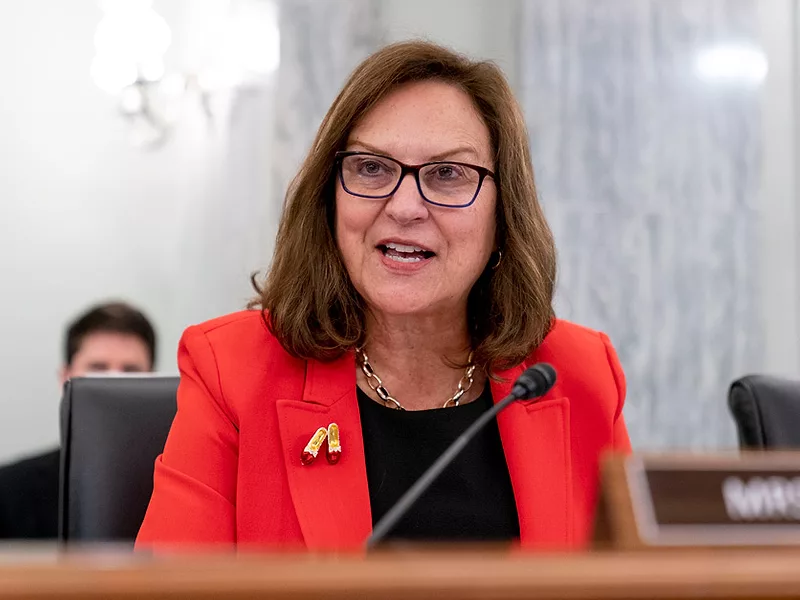
The E15 provision, spearheaded by Republican Sen. Deb Fischer of Nebraska, and backed by Democrats including Tammy Duckworth of Illinois, has been looking for a home after coming close to passage in December 2024 before getting stripped from a must-pass government spending bill in the final days.
Ethanol makers and beleaguered growers facing plunging corn prices and high farming costs, now are seeking to hitch their E-15 hopes to the annual National Defense Authorization Act (NDAA) that must clear Congress by the end of December.
The good news for the biofuel industry is that farm-state allies, including Fischer and Duckworth, sit on the Senate Armed Services Committee, which writes the defense bill.
But the potential roadblocks to the E15 provision include ethanol opponents such as Sen. Sheldon Whitehouse, D-R.I. A proponent of electric vehicles and hydrogen energy, Whitehouse as recently as last week cited studies suggesting that some biofuels are worse for the climate than petroleum, a reputation the U.S. ethanol industry has fought against since becoming a government-mandated motor fuel in 2005.
In order for Fischer’s E15 bill to be attached as an amendment to the NDAA, Whitehouse would likely need to sign off on the measure due to his role as top Democrat on the Senate Environment and Public Works Committee.
Another option for E15 passage could come in the form of an appropriation bill or continuing resolution that will be needed to keep the government funded.
Yet that was the same scenario last year when in the 11th hour, the rug was pulled out from under ethanol lobbyists when lawmakers insisted on passing a so-called clean funding bill with limited unrelated issues included. E15 backers say today’s low corn prices, combined with expectations for a U.S. corn glut this fall, the need for year-round sales of gasoline with a bigger mix of ethanol is crucial. The push comes as farmers face an existential threat from the rise of electric vehicles.
 Geoff Cooper (RFA photo)
“If we don’t bust the door down to year-round E15 it’s going to start negatively impacting our markets,” Renewable Fuels Association President and Chief Executive Officer Geoff Cooper said in an interview. “There’s a lot of pressure on policy makers to figure out how to quickly open new markets for these record supplies of commodities that are going to be harvested and put in storage this fall.”
Sen. Chuck Grassley, an Iowa Republican, told radio talk show AgriTalk on Monday that Agriculture Secretary Brooke Rollins suggested to him last week that E15 “couldn’t be included” in the defense bill.
Cut through the clutter! We deliver the news you need to stay informed about farm, food and rural issues. Sign up for a FREE month of Agri-Pulse here.
Grassley said a push from President Donald Trump could change that outcome. If the president wants E15 in the legislation, it can probably happen, the senator said he told Rollins.
Environmental rules currently preclude sales of gasoline containing 15% ethanol — as opposed to the standard 10% now — during the summer across much of the U.S. Without a nationwide law, refiners say they will face the costly headache of dealing with a two-tiered fuel system after eight Midwestern corn states were approved by federal regulators for year-round E15 sales.
Trump lifted the E15 ban during his first term, though the courts later struck down the move, making it clear that only Congress could move the restriction.
Another headache for E-15 backers is opposition from the American Fuel & Petrochemical Manufacturers, which represents both big and small refiners.
The oil trade group in late July told Republican leaders in Congress that it opposes Fischer’s year-round ethanol legislation as drafted. AFPM cited a list of Trump administration policy plans that it says would stifle a robust refining industry. These include limiting foreign feedstocks used for making renewable fuel as well as a delay in dealing with petitions from small oil refiners seeking exemptions from biofuel-blending rules, citing economic hardship.  Will Hupman (API photo)
That fight over small refinery exemptions, or SREs, is set to intensify now that EPA on Tuesday proposed reallocating as much as 100% of blending quotas to refiners that had previously been waived. The move won praise from biofuel groups, but AFPM called it “nonsense” that would lead to higher costs at the pump for American consumers.
The opposition comes after the American Petroleum Institute has joined forces with farm groups in backing E15 in order to avoid a costly and multi-tiered fuel system that would result from Midwestern states selling the corn fuel all year while the rest of the country was still under the ban.
“We support swift congressional action to bring certainty and consistency to the fuel marketplace,” said Will Hupman, API vice president of downstream policy.
Meanwhile, U.S. ethanol is on track for another year of record exports to countries like Canada that seek low-carbon fuel. “That speaks volumes of the merits of ethanol,” said Emily Skor, head of ethanol trade group Growth Energy.
Skor’s hopeful E15 will pass and boost American farmers.
“If everyone drove on E15 as opposed to E10, that’s almost 2.5 billion bushels of new corn demand right there,” she said.
.webp?t=1762183428)
