
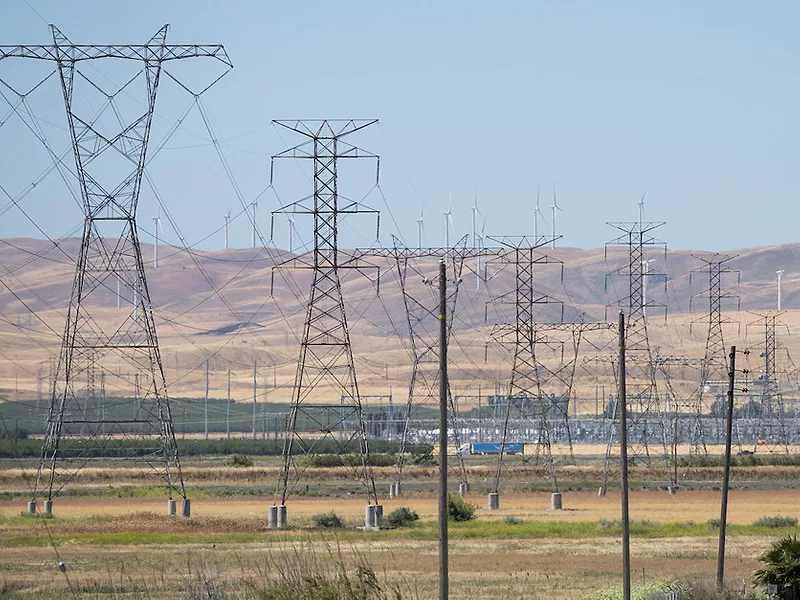
Reps. Jim Costa, a California Democrat, and Blake Moore, R-Utah, are pressing for a comprehensive federal study on how the explosive growth of artificial intelligence data centers is affecting rural communities. Their newly introduced Unleashing Low-Cost Rural AI Act would direct the departments of Energy, Interior and Agriculture to examine the economic, environmental and infrastructural consequences of large-scale AI development in areas outside major metropolitan hubs.
The lawmakers say the surge in construction of massive server farms is straining local utilities, water supplies and land resources while creating a mixed record on job creation and tax revenue.
Costa said the measure reflects mounting concern among local leaders and residents who have watched tech firms build enormous data centers on cheap land in agricultural and sparsely populated counties.
“AI data centers are expanding rapidly and using more energy and water than entire cities. That energy demand is driving up utility costs for consumers,” said Costa. “But at the same time, it’s important that rural communities are not left behind in the new opportunities that AI data centers will provide for agricultural sciences and an improved ability to compete in this modern era.”
Cut through the clutter! We deliver the news you need to stay informed about farm, food and rural issues. Sign up for a FREE month of Agri-Pulse here.
The legislation would require the three federal agencies to collaborate on a report evaluating how the expansion is affecting energy supply, utility rates, grid reliability and environmental resources. It would also look at whether current infrastructure can support future growth without degrading service or disproportionately burdening rural communities. The study is expected to consider renewable energy and battery storage as well as the potential for co-located power generation — such as geothermal, solar, wind or hydroelectric facilities — to offset any adverse effects.
In Sacramento this year, the Legislature has considered several bills to address similar tensions over energy, transparency and cost-shifting. Assembly Bill 222, which stalled in committee, would require data center operators to report annually on their energy consumption and performance and to adopt energy-efficiency performance standards.
Senate Bill 57, now on the governor’s desk, would set a special tariff on large-load energy users, including data centers, to ensure they contribute fairly to grid transmission costs, while prohibiting cost-shifting to residential electricity customers. Also passed, AB 93 would require the centers to report their water usage when applying for or renewing business licenses and would direct the state to develop guidelines and best practices to improve their water efficiency.

