
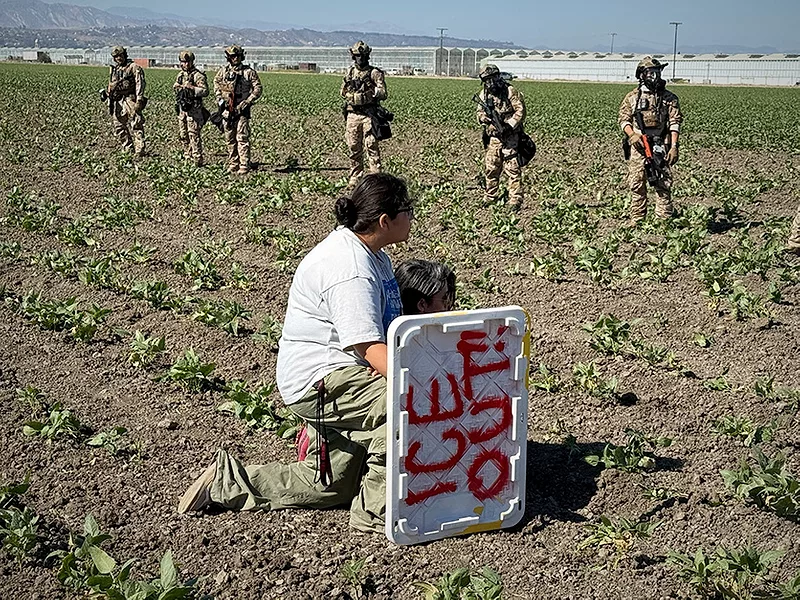
California lawmakers have sent Governor Gavin Newsom two labor bills that would rewrite the rules for employers hiring foreign workers and for immigration-related disruptions in the workplace. Proponents are pushing to protect workers from trafficking and federal immigrations raids, while farm and business groups warn of saddling employers with duplicative rules and conflicting mandates.
Assembly Bill 1362 by Assemblymember Ash Kalra, D-San Jose, would expand California’s registration program for foreign labor contractors to cover nearly all entities recruiting workers abroad. The bill repeals an exemption shielding farm labor contractors from the state’s foreign recruiter rules for the past decade.
“Human traffickers have exploited this loophole, leaving around 345,000 temporary foreign workers coming to California annually without essential labor protections,” said Kalra, during floor debate on the bill. “These workers include H-2A visa holders, who make up the temporary visa category with the most documented instances of human trafficking.”
He described the measure as a necessary and urgent step to protecting temporary immigrant workers, given “rollbacks of worker protections at the federal level and changing border policies.”
AB 1362 would require farm labor recruiters to register, pay fees and comply with existing prohibitions on deceptive practices, like charging workers illegal fees or misrepresenting job terms. Violations could trigger civil penalties and misdemeanor liability.
Stephanie Richard, who directs an antitrafficking initiative at Loyola Law School, the bill’s sponsor, shared the story of an avocado picker on an H-2A visa who took out a $3,000 loan to pay recruiter fees and, after arriving for work, was “crammed into a single room” to live with 34 other guest workers.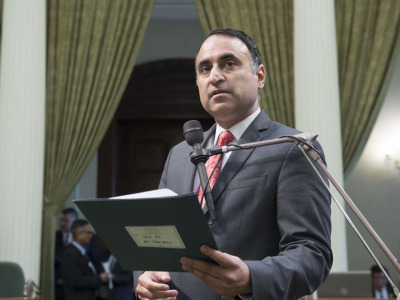 Asm. Ash Kalra, D-San Jose (Office photo)
“He was promised work, but his debt kept him silent,” said Richard. “Too afraid to complain, his employers threatened to call the police and have him deported if he spoke up.”
Hiring delays and more paperwork
Farm employers warn the measure would force contractors who carry a state license to also register as foreign recruiters if they source H-2A workers, pushing more filings into an agency that already struggles to process licenses quickly while extending the timelines into planting and harvest windows.
“The bill would add more administrative burdens to agencies and employers already dealing with flawed registration systems,” said Kimberly Clark, executive director of the California Farm Labor Contractor Association, adding that the bill would not boost protections or enforcement to deter bad actors. “AB 1362 simply creates additional burden for those already doing the right thing.”
Cut through the clutter! We deliver the news you need to stay informed about farm, food and rural issues. Sign up for a FREE month of Agri-Pulse here.
Clark argued that multiple state and federal agencies oversee regulations protecting temporary agricultural workers, with California fostering its own fair housing rules.
Bryan Little, senior director of policy advocacy at the California Farm Bureau, pointed out that Newsom vetoed an identical bill in 2022, citing the redundancy concerns.
“Labor trafficking is a horror, and we should do every reasonable thing to try to stamp it out,” said Little. But AB 1362 places the burden of tackling the problem on “businesses that are being operated legally aboveboard and with a state license.”
Kalra countered that farm labor contractors are only subject to protecting workers once they are in the U.S. and that the recruitment of workers abroad “is largely unregulated.”
“Quite frankly, the farmer that hires them may not know that,” he said, while clarifying that the bill is attempting to target recruiters, not contractors.
The argument gained traction among strong labor allies like Senator María Elena Durazo, D-Los Angeles, despite the veto threat looming over the legislation.
“No matter how many times some version of it gets turned down or vetoed, we owe it to the state that we will protect people who come in to work, and they should not be abused in this great nation of ours,” said Durazo.
New leave for immigration issues
Running on a parallel track is AB 1136 by Asm. Liz Ortega, D-San Leandro, a bill that seeks to ensure workers can take time off to deal with immigration-related matters, as federal raids have led to thousands of arrests in California.
The measure would require employers to release an employee for up to five unpaid workdays to attend interviews, adjudications, court dates or other appointments tied to immigration status, work authorization or visa issues. It also directs employers to provide unpaid leave while a worker is detained and to reinstate an employee without loss of seniority if the worker later presents valid authorization. The rules would not apply to companies with less than 25 employees.
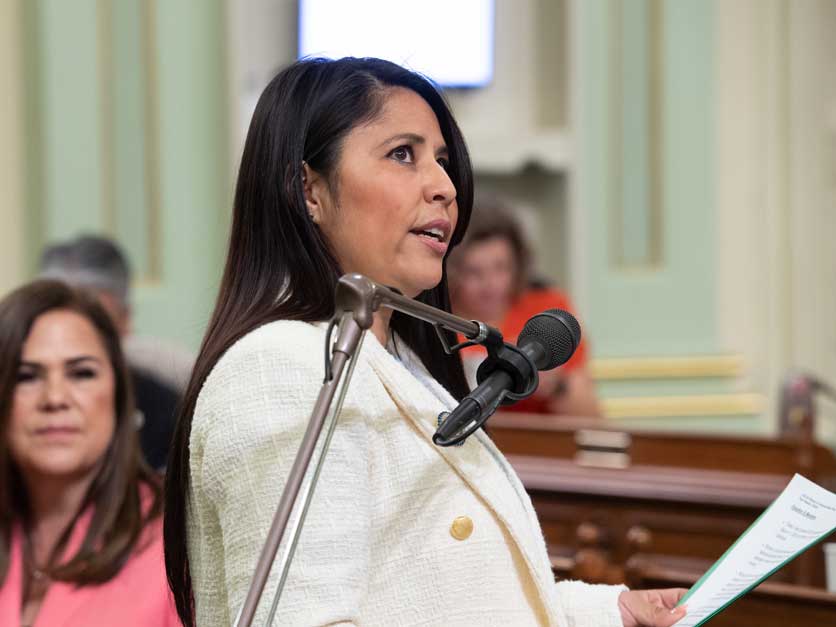 Asm. Liz Ortega, D-San Leandro (Office photo)
“AB 1136 will give workers who have been wrongfully detained and deported by ICE a necessary and humane grace period to organize their affairs and return to their jobs without putting employers at either legal or financial risk,” said Ortega, during committee debate on the bill.
She noted that Durazo had advocated for a right to return to work two decades ago as the leader of UNITE HERE Local 11. Ortega also claimed the Trump International Hotel Las Vegas and many other hotels and casinos have already incorporated a version of the AB 1136 language into their collective bargaining agreements.
While late amendments eased some of the opposition, farm and business groups remain concerned over putting employers in the position of documenting the legal status of their workers, subjecting them to federal immigration laws.
“We are in a very unique political moment under this federal administration and completely understand the state wanting to protect immigrant workers from these aggressive and often unpredictable enforcement policies,” said Ashley Hoffman, senior policy advocate at the California Chamber of Commerce, who pressed for making the provisions temporary, with the Legislature following up to ensure their effectiveness.
Ortega also has a bill on the governor’s desk that would expand farmworker heat protections. Newsom has until Oct. 12 to decide on the measures.

