
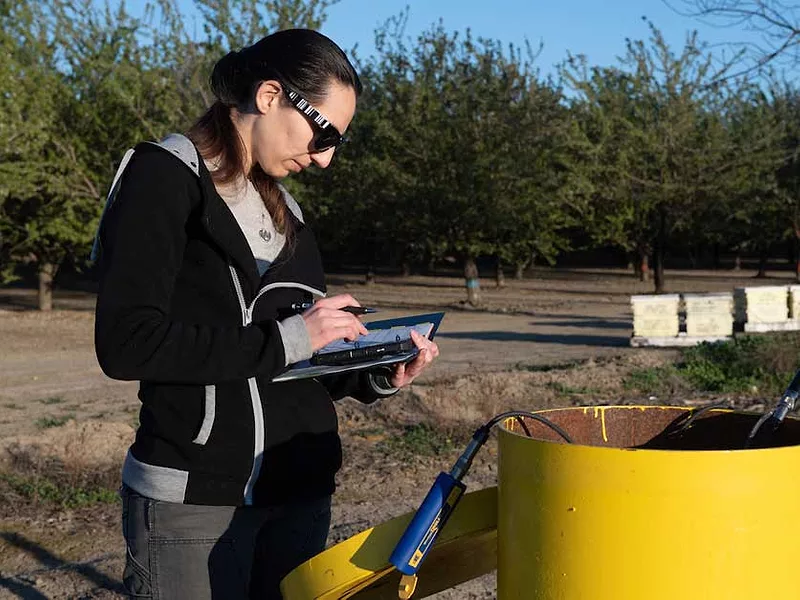
California officials are weighing a set of new policy recommendations to better align agricultural regulations across food safety and water quality programs. By cutting duplicative reporting requirements, modernizing data systems and improving compliance, the agencies could lower costs and ease paperwork headaches for farmers and ranchers.
The regulatory alignment study, a three-year project led by the California Department of Food and Agriculture, in partnership with CalEPA and the State Water Resources Control Board, reviewed programs on food safety, irrigated lands, confined animal facilities and wineries. The draft report identified 18 recommendations, ranging from immediate steps to improve coordination to long-term overhauls of data systems.
“Our goal was to answer a pretty important question,” said CDFA Undersecretary Christine Birdsong, during a recent briefing on the study. “How can we better align California’s food safety and water quality regulations to support agriculture while also maintaining the strong protections that uphold public health and environmental integrity?”
Birdsong added that the policy recommendations “are not about lowering standards. They are about making our regulatory system work better for everyone.” She emphasized the need to elevate transparency, efficiency and effectiveness at the agencies.
A study years in the making
The alignment effort has roots in a 2010 recommendation from the State Board of Food and Agriculture to pursue smarter regulation through better agency coordination. That vision was reaffirmed in CDFA’s 2023 strategic plan, dubbed the Ag Vision for the Next Decade, and echoed in executive actions from Governor Gavin Newsom calling for improving government efficiency.
CDFA contracted with Crowe LLP in 2022 to conduct the study, tapping into $8 million in state budget funding. The project team held more than 70 listening sessions with producers, conducted 40 interviews with agency staff and gathered 17 written submissions from stakeholders.
Cut through the clutter! We deliver the news you need to stay informed about farm, food and rural issues. Sign up for a FREE month of Agri-Pulse here.
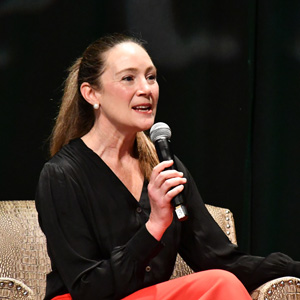 CDFA Undersecretary Christine Birdsong (Brad Hooker/Agri-Pulse photo)
Producers told the study team that existing requirements can be confusing, duplicative and administratively burdensome. The compliance requirements have weighed heavily on farmers, ranchers and processors as the industry has hurtled through a series of obstacles — droughts, floods, heat waves, labor shortages, high interest rates and rising production costs.
“While our study was not focused on the costs associated with the regulations themselves and the emerging pressures, we felt it was important to acknowledge the context of these pressures,” said Tommy Abeyta, a senior manager at Crowe, adding that the dire situation makes it even more critical for the state to streamline its compliance processes.
The analysis focused on four regulatory areas: CDFA’s Produce Safety Program under the federal Food Safety Modernization Act; the Irrigated Lands Regulatory Program covering 6.5 million acres of farmland under the state and regional water boards; the Confined Animal Facility Program regulating manure and wastewater discharges under the boards; and the Winery Order adopted by the state water board in 2021. Reviewing these programs, the team mapped more than 80 distinct regulatory requirements and identified common processes, such as enrollment, verification, monitoring, inspections and enforcement. That work provided the basis for the alignment opportunities.
Draft recommendations and examples
The report organizes the recommendations into three categories. Short-term foundational steps would expand technical assistance, create consistency across programs and strengthen coordination. Developmental opportunities would improve data sharing, simplify reporting and support regional implementation. Longer-term transformational proposals would modernize platforms with new digital tools and centralize data.
“It's critical for CDFA, water boards and CalEPA to consider these recommendations as building blocks,” said Abeyta.
One transformational proposal, for example, would allow CDFA, USDA and FDA to recognize credible third-party food safety audits as meeting federal Produce Safety Rule requirements, reducing redundant inspections. A developmental recommendation would modernize the water boards’ GeoTracker system to better support agricultural reporting, cutting down on manual submissions and providing greater transparency.
The study also suggests creating simplified nitrogen management forms for small, diversified farms that struggle to provide per-crop data. It would shift confined animal facility reporting to electronic systems rather than emailed PDFs. It would recognize industry-led sustainability programs under the Winery Order to streamline compliance and reduce fees.
As a foundational proposal, CDFA would create a regulatory support liaison to assist small and socially disadvantaged farmers in navigating multiple programs.
Data management emerged as a central theme for the Crowe analysts.
“Across nearly every solution we've identified within this draft report is the need for data governance,” said Abeyta. “It ensures information is accurate, secure and actionable to support transparency, protect proprietary information and data, and make smarter, streamlined regulation more possible for producers, agencies and the public.”
The study also acknowledges overlapping and sometimes contradictory requirements, such as erosion control practices under water quality programs that may conflict with food safety mandates requiring bare ground. To address those tensions, the report calls for stronger coordination and communication among agencies and proposes the use of liaisons to work directly with growers when conflicts arise.
Implementation and next steps
CDFA officials cautioned that many of the recommendations would require significant funding resources.
“I don't need to tell anybody that a lot of these solutions do depend on revenue from the state. They have a price tag attached to them,” said Birdsong. “That's a different strategy, different conversation that we would have to approach after the report is final.”
For now, Birdsong appreciated the tiered approach in the report for presenting “low-hanging fruit” under the foundational category that the agencies could implement more easily.
The study does not attempt to tackle underlying issues in the food safety or water quality standards, focusing instead on how the state administers the regulations. Birdsong emphasized that the recommendations need feedback from producers, environmental advocates and the public to determine which steps would be most effective.
Crowe is taking public comment until Oct. 15, and stakeholders can submit written feedback or request meetings with the team. The firm plans to deliver a final version of the report in November. CDFA, CalEPA and the water boards will then prioritize the recommendations.

