

The California Air Resources Board has rewritten its landmark truck regulation, with utilities, irrigation districts and farm groups warning the rule update could jeopardize water deliveries, grid reliability and emergency response in rural areas.
The new amendments to the Advanced Clean Fleets rule mandate that state and local government fleets transition to zero-emission trucks and vans. The changes are in line with Assembly Bill 1594, passed in 2023 to require more flexibility for irrigation districts, rural power providers and other public utilities.
While CARB is delaying key purchase deadlines until 2030, farm associations and water agencies across California say the rule still outpaces technology and infrastructure in remote regions and risks driving up costs for essential services.
Public agencies face cost and infrastructure hurdles
During a CARB hearing to approve the amendments, several board members said the agency must balance its air quality goals with the realities of keeping vital services running. CARB also repealed private fleet requirements that lost legal footing after it withdrew a federal waiver request earlier this year as President Donald Trump took office and vowed to rescind California’s waivers.
Under the rule changes, public agencies will not need to purchase any zero-emission vehicles until 2030 if they operate in low-population counties or manage fewer than 10 vehicles, and larger fleets will see their 100% ZEV purchase requirement delayed from 2027 to 2030.
CARB staff said the delay would give utilities time to plan infrastructure upgrades and ensure ZEVs can meet their operational needs. But many local agencies said that still falls short.
Nick Blair, senior policy advocate at the Association of California Water Agencies, which represents 470 water providers, called the delay “a reasonable next step” but said more changes are needed to make exemptions workable.
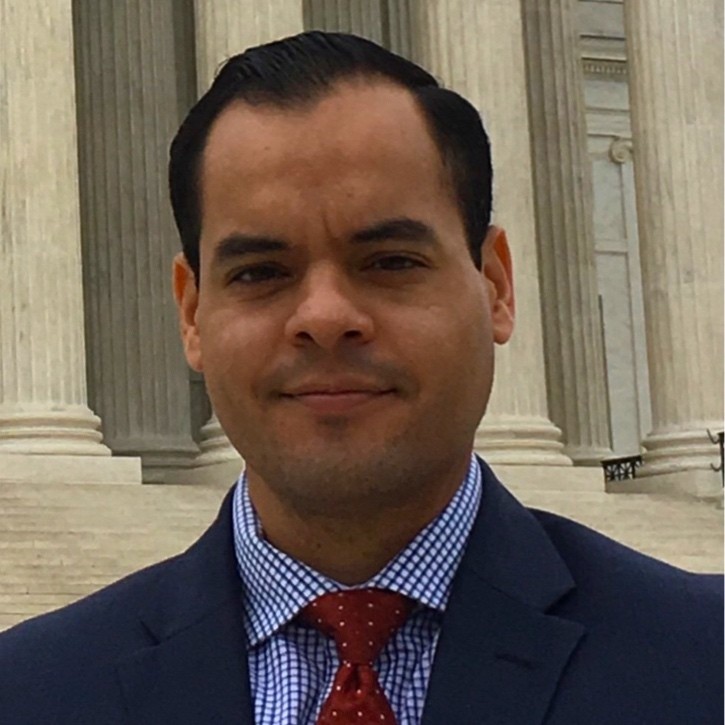 Antonio Ortega (LinkedIn)
“Public water agencies need to maintain a fleet that can respond to emergencies of any scope,” Blair told to the board, adding that many agencies still lack fast-charging access or suitable heavy-duty models.
In its comment letter to the board, the Metropolitan Water District of Southern California, which oversees a large swath of the Los Angeles region and plays a critical role in financing and maintaining water infrastructure in California and across the West, said the revisions “fall short of addressing the diverse concerns” the district raised throughout the regulatory process.
The impacts extend beyond water. The California Association of Sanitation Agencies urged CARB to recognize renewable natural gas engines as near-zero-emission options, arguing that since they are light on nitrogen oxide emissions they can bridge the gap until true zero-emission heavy trucks are commercially viable.
Sarah Deslauriers, who directs air, climate and energy programs at the association, cautioned that the state has not secured sustainable uses for the greenhouse gases emitted from landfills outside of RNG engines and said that without a clear compliance pathway, “we risk undermining SB 1383’s climate goals.”
Cut through the clutter! We deliver the news you need to stay informed about farm, food and rural issues. Sign up for a FREE month of Agri-Pulse here.
Ag and irrigation districts warn of rural impacts
Agriculture groups and irrigation districts pressed CARB to tailor ACF to rural conditions, where vehicle range, charging access and extreme heat pose steep barriers to electrification.
The Agricultural Council of California shared appreciation in its comment letter for repealing the mandates on private fleets, arguing the move “provides California farmers, ranchers and food businesses much-needed flexibility to address their trucking needs while the market continues to advance toward zero-emission technologies.”
The council also raised concerns over CARB’s provision to adjust the Low Carbon Fuel Standard to boost credits for hydrogen fueling infrastructure, saying the change could shift costs to farmers and food processors, whose fleets “remain overwhelmingly composed of internal combustion engine vehicles.”
The Westlands Water District, which manages more than 600,000 acres of farmland in western Fresno and Kings counties, told CARB the ACF rule fails to account for the operational realities of its service area. In a detailed letter, Westlands said ZEV models cannot yet meet the heavy-duty, off-road and long-distance demands of its fleet, which maintains canals and pump stations across remote terrain.
The district and its growers “uphold an inherent responsibility for the sustainability and efficient management of land and water resources,” but the “significant financial burdens” under ACF “compete for the limited funds the district allocates for capital projects to address our aging water distribution system.” Westlands pointed to long procurement times for utility-grade vehicles, inadequate charging infrastructure and potential ratepayer impacts from premature fleet turnover.
Further south, the Imperial Irrigation District, which delivers both electricity and water to the nation’s largest irrigation district as well as one of the state’s most disadvantaged regions, warned that the rule changes will “jeopardize our ability to prevent outages and restore essential services.”
“IID’s service area is vast, at 6,000 square miles, with limited to no EV charging infrastructure in place,” said Antonio Ortega, the district’s government affairs and communications officer. “We do not have the luxury to learn on the job, when every minute counts.”
IID called the rule’s 13-year vehicle threshold for exemption eligibility “arbitrary and unworkable,” noting that its own fleet retirement schedule runs seven to 10 years due to the harsh desert heat and to wear. The district also asked CARB to broaden the emergency response exemption to include urgent, nondeclared events.
IID further criticized what it described as an unreasonable administrative burden in filing exemption requests, citing excessive data collection and unclear review standards. It urged CARB to “not put critical infrastructure at risk, when manufacturers’ expected outcomes have no tested or proven field data.”
CARB holds firm on zero-emission trajectory
CARB staff defended the rule as essential to meeting the state’s climate and air quality mandates, which require steep reductions in nitrogen oxides and diesel soot to comply with federal ozone standards.
Environmental advocates, meanwhile, urged CARB not to weaken the rule. Sam Wilson, a senior analyst at the Union of Concerned Scientists, lamented that repealing the private fleet requirements means “the state will lose a massive portion of the rule’s anticipated benefits.” He recognized that keeping the state and local government requirements “still provides crucial demand certainty” for truck manufacturers. Wilson called for “dedicated, durable funding mechanisms” to expand purchasing incentives and to accelerate the buildout of high-capacity charging infrastructure for drayage trucks at freight hubs. He also pressed the board and regional districts to pursue indirect source rules and raise fees on port containers to achieve further emission reductions.
Despite the push on all sides for more changes, the board voted unanimously to adopt the changes. Board member Tania Pacheco-Werner, who represents the San Joaquin Valley, said the rural concerns indicate “this is just the beginning of this conversation.”
For more agricultural news, go to: www.Agri-Pulse.com

