
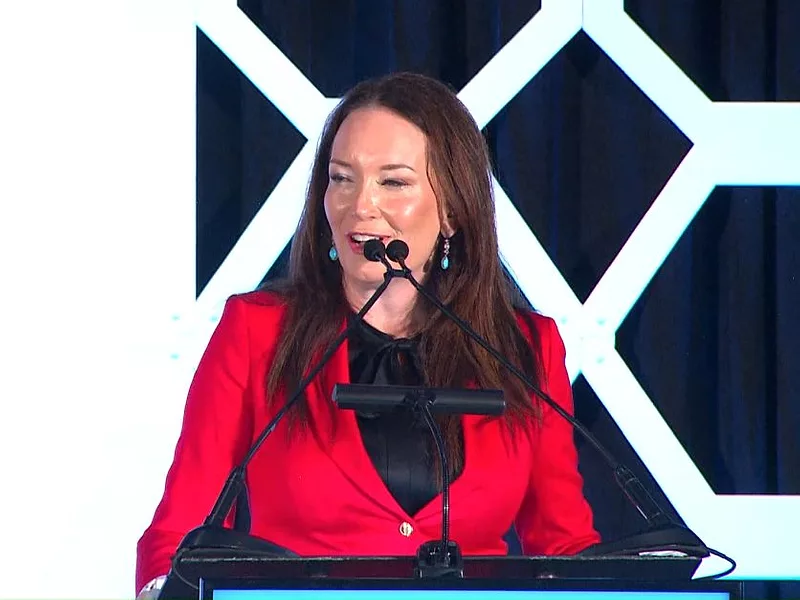
Agriculture Secretary Brooke Rollins said Thursday the administration is still assessing the full impact of likely trade losses and the size of a potential aid package.
“We're still analyzing,” Rollins told reporters at the White House. Asked how much assistance the administration is considering, Rollins said, “we still don't know. I mean, there still are so many unknowns as the negotiations are continuing.”
The U.S. tariff landscape continues to evolve by the week. Just this month, new sector-specific tariffs on lumber have gone into effect, both the U.S. and China have implemented new port fees on each other’s ships, and President Donald Trump floated additional 100% duties on China over Beijing’s expansion of export controls on rare earths.
His top trade officials have suggested the U.S. could delay those tariffs if China delays its own rare earth measures.
Rollins pointed out that the administration is also still negotiating with partners to lower trade barriers to U.S. ag products, leaving the ag trade landscape up in the air.
“We're going to have a couple of announcements next week on some good news, on some additional product moving out – our row crop commodities moving out – into the world,” she said.
Rollins said the administration has also been in contact with South American countries to increase their crushing of U.S. soybeans.
Rollins pointed out that the dust has still not settled on U.S.-China relation. A deal with Beijing that spurs Chinese buyers to resume U.S. purchases could also land at any time, she argued.
“There could be a deal tomorrow – I don't think there will be,” she said, but added that it remains a possibility. “What we have done is ensured, per the president's direction, that these farmers will have a backstop if, in fact, we're not able to move these commodities,” Rollins added.
Treasury Secretary Scott Bessent suggested earlier this month that the administration was ready to unveil a tariff assistance package last week. However, lawmakers and officials suggested that efforts were delayed because of the ongoing government shutdown. Meanwhile, the administration has quietly moved around $13 billion from the fund used to provide tariff payments to farmers in Trump's first term to the secretary's office.
Cut through the clutter! We deliver the news you need to stay informed about farm, food and rural issues. Sign up for a FREE month of Agri-Pulse here.
On Thursday, during a separate interview with Fox, Rollins repeated her previous assertion that officials would announce some farmer aid once the shutdown ends.
But in her comments to reporters, the agriculture secretary stressed that the long-term goal is to get farmers off of what she called the “hamster wheel” of assistance payments.
“They don't want these checks. They want to be able to sell their product,” Rollins said. “And as these markets are being opened up, as all these new trade deals are going into effect over the next six to eight to 12 months, you will see, hopefully, a movement away from what has been almost 100 years of this idea of these massive bailouts for these farmers.”
Ending the reliance on farm assistance will take many years, she added, but said that the Trump administration could set the wheels for that pivot in motion.
“We've got to put a 20-year plan in place to get us off,” she said.
For more news, go to Agri-Pulse.com.

