
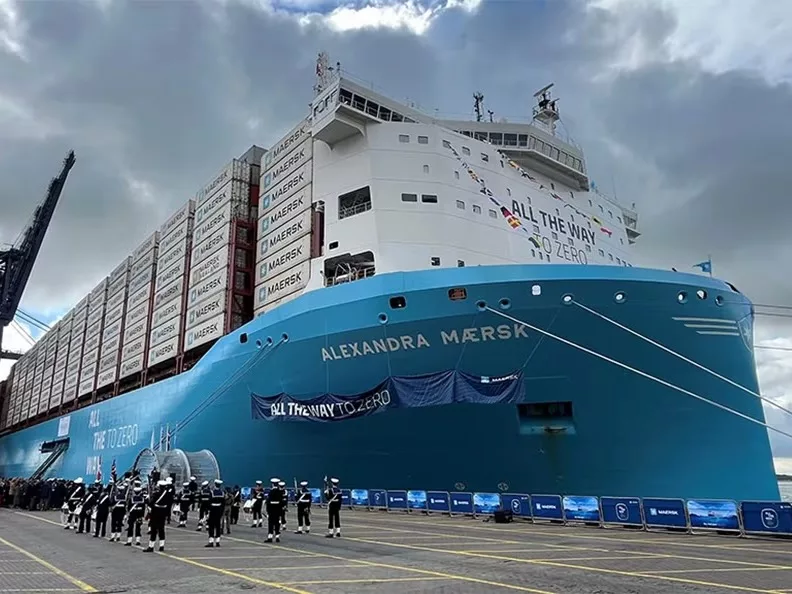
A vote on an International Maritime Organization plan intended to slash carbon emissions from ocean vessels has been delayed by a year, which is a win – at least for now – for President Donald Trump.
"This is another HUGE win for @POTUS," Secretary of State Marco Rubio said in a post on X Friday. "Thanks to his leadership, the United States prevented a massive UN tax hike on American consumers that would have funded progressive climate pet projects. Our country will continue to lead the way and put America FIRST."
The vote by world diplomats gathered in London to postpone a decision on whether to adopt the proposal, dubbed the Net-Zero Framework, came on the heels of Trump reiterating his opposition and vowing that the U.S. wouldn't abide by what he deems a "global carbon tax."
"The United States will NOT stand for this Global Green New Scam Tax on Shipping, and will not adhere to it in any way, shape, or form," Trump said on social media Thursday ahead of Friday's planned vote. "We will not tolerate increased prices on American Consumers OR, the creation of a Green New Scam Bureaucracy to spend YOUR money on their Green dreams."
Trump's rejection of the framework crafted by the United Nations' maritime agency puts him at odds with supporters who say the proposal could help shore up U.S. agriculture at a time when crop farmers are struggling with low grain prices and high production costs. Agriculture Secretary Brooke Rollins has repeatedly assured farmers they will see increased markets to make up what they may be losing due to retaliatory tariffs.
The IMO delay comes as the biofuel industry also is grappling with restrictions Trump's One Big Beautiful Bill placed on the 45Z clean fuels tax credit when it comes to sustainable aviation fuel.
The IMO's proposed rules would apply to all oceangoing vessels over 5,000 gross tons, a group that accounts for more than 85% of worldwide shipping emissions, according to the IMO, an agency of the United Nations.
Cut through the clutter! We deliver the news you need to stay informed about farm, food and rural issues. Sign up for a FREE month of Agri-Pulse here.
The Renewable Fuels Association, a trade group that represents ethanol producers, has said the plan could be "game changing" for the corn-based fuel. If that industry captured just 5% of that market, it could see a demand boost of as many as 5 billion gallons, while U.S. growers could see an increase of at least 1.5 billion bushels of corn, according to RFA CEO Geoff Cooper.
U.S. ethanol producers in particular are searching for new markets as the rise of electric vehicles poses an existential threat to liquid fuel. More than a third of America's annual corn harvest is used for making the biofuel that's then mixed with gasoline to power cars and other types of transportation.
The regulations would apply to ships that generally consume about 70 billion to 80 billion gallons of fuels annually worldwide, according to RFA.
The Trump administration's opposition appears linked in part to the idea the framework would preclude use of biofuels, but “we don’t see it that way,” Cooper said earlier this week.
On Friday, the ethanol group said it will continue to share its view that "a move to cleaner marine fuels would present an enormous and unprecedented market opportunity for U.S. ethanol and agriculture."
.webp?t=1762183428)
