
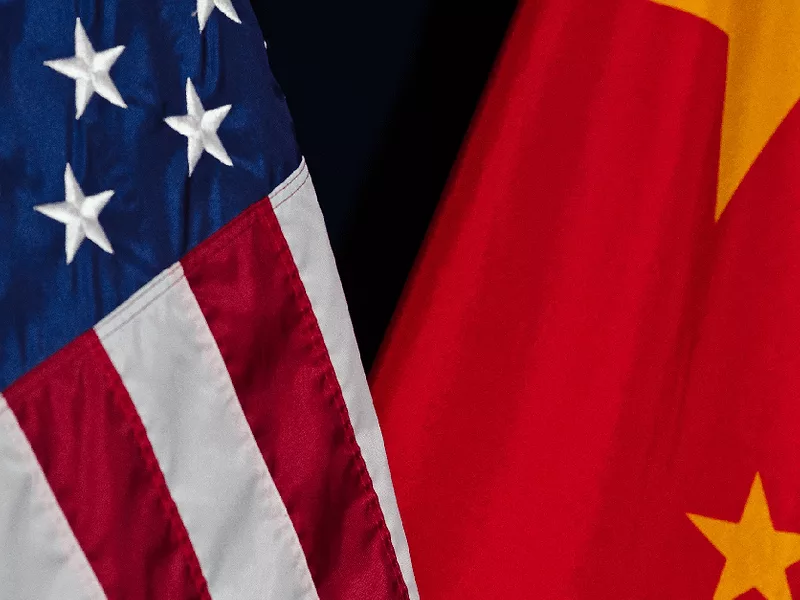
Greer and Bessent to meet with Chinese as Trump kicks off Asia tour
Top U.S. trade officials meet their Chinese counterparts today in Malaysia as the U.S. tries to resolve ongoing tensions and advance negotiations ahead of a leaders’ meeting next week.
U.S. Trade Representative Jamieson Greer and Treasury Secretary Scott Bessent will hold two-days of talks with Chinese Vice Premier He Lifeng and officials on the sidelines of the ASEAN summit.
Greer tells CNBC that he sees a “good landing zone” for both sides on trade, where trade is more balanced and limited to non-sensitive goods.
Ag commodities did not feature prominently in the last round of negotiations, which was dominated by TikTok ownership issues. But Greer said the president and other officials plan to raise China not buying U.S. soybeans and sorghum. He also accused China of “specifically trying to hurt farmers.”
Take note: Trump leaves for Malaysia tonight to join Greer and Bessent; he’ll meet with Chinese President Xi Jinping on Oct. 30 in South Korea, on a trip where he’ll also visit Japan.
But, but, but: There could be a new element to the U.S.-China talks. The New York Times reported on Friday that the administration will investigate China for not living up to its Phase One deal obligations. The probe, known as a Section 301 investigation, could serve as a legal justification for new tariffs.
For more on the Asia trip and ongoing negotiations, stay tuned for Sunday’s Washington Week Ahead.
 Glynn Tonsor (KSU photo)
The administration’s plan for boosting beef imports from Argentina came a little further into focus on Thursday when Agriculture Secretary Brooke Rollins outlined plans to expand an import quota.
The increase in reduced-tariff imports won’t affect U.S. ranchers much, an economist tells Agri-Pulse, but it also won’t do much to lower consumer prices.
Glynn Tonsor, a professor at Kansas State University, said a fourfold increase to Argentina’s reduced-tariff quota would have a “pretty small” impact on beef and cattle prices. But he added that it could still chill industry investment.
“The ag community, I think, is confused,” Tonsor said. “This announcement is a little inconsistent” with the administration’s trade policy to date.
Policy inconsistency, he said, is “concerning for anybody making business plans.”
“That part has real implications,” he added.
FSA offices open with two staff members
Farm Service Agency field offices are being staffed now with two people with limits on what they can do.
Farmers will “once again have access to core USDA services like farm loan processing, ARC/PLC, and disaster relief payments,” according to a USDA spokesperson.
Cut through the clutter! We deliver the news you need to stay informed about farm, food and rural issues. Sign up for a FREE month of Agri-Pulse here.
“Staff will perform normal functions for CCC-funded programs while accepting information (i.e., application intake) related to programs funded by alternative sources,” the spokesperson says.
Walter Schweitzer with the Montana Farmers Union tells Agri-Pulse that FSA county executive directors have been recalled to the office and told to have one staff member join them.
By the way: At the Brookings, South Dakota, FSA office Thursday, one person was visible and referred a reporter’s questions to the state FSA office.
Vilsack backs administration beef plan
The beef plan released by USDA on Wednesday has former Agriculture Secretary Tom Vilsack’s backing. But that’s not surprising, since many of the plan’s elements originated with the Biden administration.
“Glad to see it,” he said in an email, responding to a request for comment. “It will be helpful to keep folks in business.”
Vilsack says the plan continues several Biden-era initiatives, like voluntary Product of the USA labeling, remote beef grading, and the meat and poultry processing expansion program, which funds small meat processors.
Vilsack says, “the challenge is you can help lower costs and encourage herd expansion (expanded grazing permits), [which] helps the ranchers but does not translate to lower consumer costs immediately. It takes time to bring supply into better balance with the demand. As of right now, high costs are attempting to do that by discouraging consumption."
Farmers could see tariff impacts on seed costs in 2026, experts say
Former CropLife America CEO Jay Vroom projects that farmers will likely begin seeing higher seed costs in 2026 due to tariffs because of the typical once-a-year purchasing.
“One of the things that I think may have been overlooked in this current moment is the length of some of the supply chains,” he told Agri-Pulse Newsmakers.
Seed production is a global process. A tomato seed may go to five countries before being conditioned, processed, and distributed in the U.S., explained American Seed Trade Association President and CEO Andy LaVigne.
“Seed companies have done their best to try to just suck that up and not pass that on the farmers, but at some point in time it's going to have to be passed on to farmers,” LaVigne said. He estimated ASTA member companies will spend several million dollars in 2025 alone bringing seed into the U.S.
Final word
“I think the president would be better off if he would keep his mouth shut on that issue, not tweet about it.” – Sen. Chuck Grassley, R-Iowa, commenting on his weekly call with reporters on President Trump’s social media posts about importing Argentine beef.
Philip Brasher, Lydia Johnson, Oliver Ward and Noah Wicks contributed to today’s Daybreak.


