
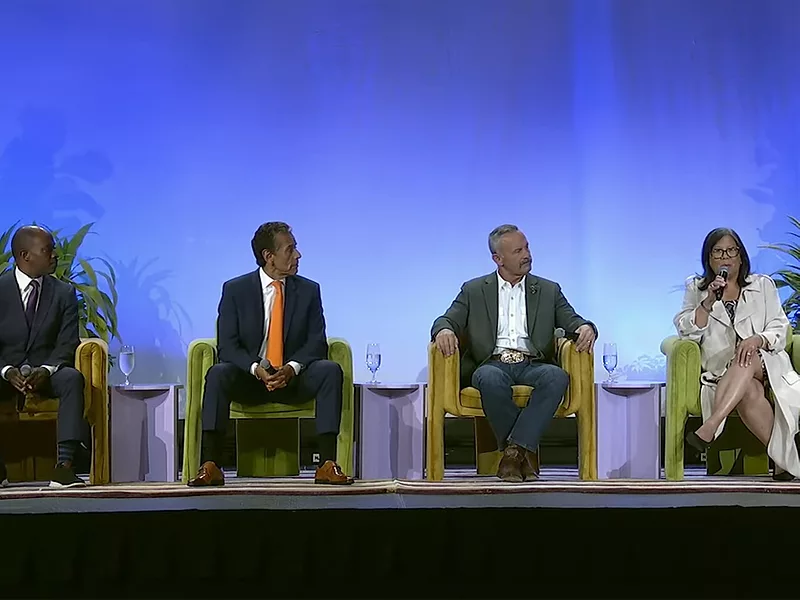
California’s leading candidates for governor are offering sharply different visions on how to balance the state’s climate goals, affordability crisis and economic development — with agriculture and rural prosperity taking center stage during the California Economic Summit last week.
The discussion, hosted by California Forward in partnership with CalMatters, brought together Riverside County Sheriff Chad Bianco, former Los Angeles Mayor Antonio Villaraigosa, former State Controller Betty Yee and State Superintendent of Public Instruction Tony Thurmond.
Contrasting visions for energy and climate
Villaraigosa called for an all-of-the-above energy strategy that keeps refineries open while expanding renewable power and investing in grid storage.
“We give away [solar power] to Arizona in the summer and sell it for two cents a kilowatt in the winter,” he said. “It's not working.”
Shutting oil refineries without replacements, he warned, could drive gas prices to $10 a gallon.
Yee said the state needs a plan that is public and accountable and that ties climate progress to measurable outcomes. She pointed to Phillips 66’s refinery in Rodeo as an example of converting oil jobs into renewable fuel careers while keeping local economies intact, despite the company taking a financial hit.
Thurmond stressed balancing climate action with economic opportunity.
“We have to turn this conversation into a win-win,” he said, calling for investments in carbon capture, battery technology and solar job training programs.
Bianco, the sole Republican on stage, rejected the state’s climate mandates altogether.
“We’re the only one punishing our residents with our lofty climate goals,” he said. “Never has government been the answer.”
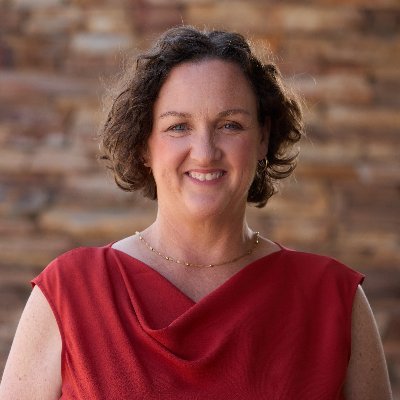 Katy Porter (X photo)
Affordability and regulation take center stage
Affordability dominated the debate. Thurmond proposed a middle-class tax credit and pledged to build two million homes by 2030.
“Government has to create the conditions that allow employers to pay more to Californians, so they can continue to afford to be able to live in this great state,” he said.
Villaraigosa said high costs are being driven by overregulation and poor coordination between labor and business.
“You can’t be pro-worker if you’re not pro-business,” he said. “We’re killing small business in this state.”
Cut through the clutter! We deliver the news you need to stay informed about farm, food and rural issues. Sign up for a FREE month of Agri-Pulse here.
Bianco argued that decades of Democratic control have made life unaffordable.
“The cost of living in California is 100% the fault of decades of failed economic policy by the same party that’s been running California for the last 60 years,” he said.
Yee countered that affordability cannot be separated from education and workforce development.
“We have got to center everything we do with an economic outcome,” she said. “Why are we not having the state incentivize business development so that we're actually building economically sustainable communities?”
On regulation, all four found some agreement. Yee called for an “all-in-government regulatory streamlining effort” to help small businesses navigate state rules.
“When [regulations] are so burdensome on a business that they have to hire experts to figure out how to sort through the piles of them to comply with, the conflicting provisions between them, that’s a problem,” she said.
Bianco added that overregulation has driven companies away.
“They're not waking up on Monday morning in their meetings and saying, ‘I know how we can be better: Let's move to California,’” he said.
Villaraigosa urged reforming the California Environmental Quality Act to align with federal environmental reviews, while Thurmond backed targeted tax credits for companies that expand jobs in-state.
Rural and agricultural priorities
When asked how rural regions could share in the state’s economic success, Villaraigosa pointed to agriculture and water.
“As the Central Valley goes, so goes California,” he said. “We’re got to provide water to farms — they produce half of the nation’s fruits and vegetables.”
Bianco said California “has never ever had a water problem. We have a water management problem.” He promised to build more storage and ease restrictions on farmers.
“The ag industry is what’s keeping California alive,” he said. “We absolutely must get out of their way. San Francisco, Los Angeles, Oakland — those cities should have absolutely no say … in the agriculture industry.”
Outside the forum, Bianco has criticized solar development on farmland.
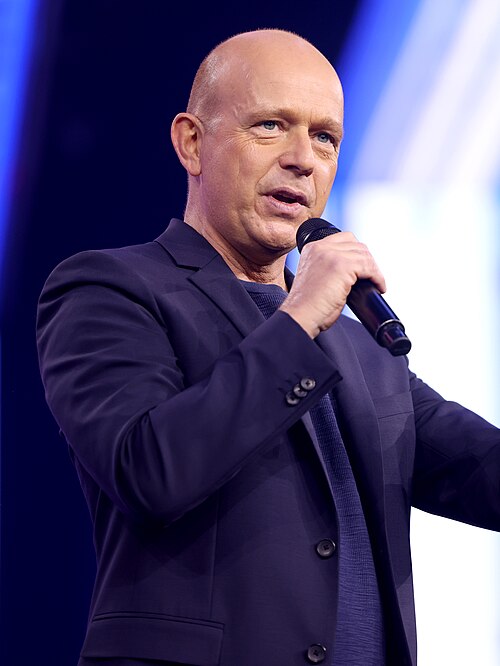 Steven Hilton (Gage Skidmore/ Wikipedia)
“You’ve got to be a moron to combine solar panels and farming and think that’s okay,” he told AgNet West. “They’re destroying farmland to serve a green agenda that benefits special interests.”
Republican candidate Steve Hilton, who did not attend the summit, has also focused his campaign on rural issues. Speaking at the Ag Breakfast Club in Fresno in March, Hilton said farmers have been “ripped off” for decades by Sacramento water policies. He pledged to replace agency leaders with “commonsense people” who will be on the side of business and helping them succeed.
Thurmond highlighted his work to close the state’s digital divide, securing $6 billion to expand broadband across rural regions. He said California must build workforce housing to help teachers, health care workers and first responders stay in small communities.
Yee emphasized that the state’s prosperity depends on rural-urban cooperation.
“We depend so much on our rural communities for much of our resources and obviously on our urban communities for services and other things,” she said. “One can't exist without the other here in California.”
Porter’s candidacy and a viral moment
Democratic contender and former Congresswoman Katie Porter, though not on the forum stage, remains a major presence in the race. Porter has yet to detail a rural or agricultural platform, focusing instead on cost-of-living and corporate accountability.
But her campaign drew unwanted attention this month after a fiery exchange with a CBS reporter went viral. When asked whether she would seek Republican votes in a general election, Porter shot back that she “did not intend for that to be the case.” The widely circulated moment raised questions about her temperament and ability to appeal beyond the Democratic base.
Yee closed the summit by promising to rebuild the supports that let Californians take risks and thrive. Villaraigosa cited his experience leading Los Angeles through economic recovery, saying, “We’ve got big challenges in this state …. The next governor needs to be someone who's done it before.”
Thurmond reflected on his own background, urging voters to choose a governor “who shares the lived experience of many of the people in our state who are struggling.” Bianco ended by casting his campaign as a rebellion against one-party rule.
“We are never going to fix our state if we do not start being real and realistic about the problems in our state being completely caused by over regulation,” he said.
The candidates will debate health care policies next week at forum hosted at the University of California, Riverside.

