

Key Republicans still want farm bailout
Key Senate Republicans still want emergency aid for farmers despite the end of the U.S.-China trade war.
The Trump administration wants to provide about $12 billion in aid using its Commodity Credit Corporation authority, and lawmakers have been planning a second tranche of assistance to augment that funding.
Even though President Donald Trump’s trade deal with China could boost soybean exports close to where they were in 2023 and 2024, for farmers “this year is going to be worse than last year,” said Senate Agriculture Committee Chair John Boozman, R-Ark.
“We’ll have to wait and see what the commodity prices do, but right now, unless something changes drastically, if you’re growing something in the ground, you’re losing money.”
Senate Ag Appropriations Subcommittee Chairman, John Hoeven, R-N.D., told Agri-Pulse the CCC aid package is ready to go. He says the only thing delaying the money is the government shutdown.
“We still need it, obviously, in my opinion, and it's teed up and good to go,” Hoeven said. “It's really up to the president and ag secretary to decide on the timing.”
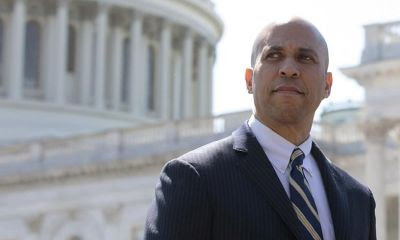 Sen. Cory Booker (Booker office photo)
Dems say China deal merely reverses Trump’s trade harms
Two Senate Ag Committee Democrats tell Agri-Pulse that President Trump’s deal with China is little more than an effort to undo his own trade missteps.
“It looks like a president trying to go back to where he was when he took office,” Sen. Cory Booker, N.J., said. He accused Trump of sowing “chaos” in American agriculture and allowing other ag-producing countries to take U.S. market share.
“And so, what has he achieved? What is better off than it was before he started his chaotic and disastrous economic policies?” Booker added.
Treasury Secretary Scott Bessent says the China deal’s centerpiece for ag is a commitment from China to buy at least 25 million tons of soybeans annually through 2028. This volume is a slight decrease from recent years, which have hovered around 26 million tons since 2022.
Committee Ranking Member Amy Klobuchar, Minn., said the announcement constitutes “a reversal of Trump policies that were hurting our farmers.”
Take note: Klobuchar sparred with Bessent on Thursday shortly after the deal was announced. The day before, Bessent called her and Sen. Elizabeth Warren, D-Mass., “failures” over their inability to persuade the administration to back down from plans to give financial support to Argentina.
Klobuchar gave a lengthy reply in which she expressed surprise at the treasury secretary’s comments and suggested it could been caused by jet lag.
“[L]et me know when you are ready to meet to discuss tariffs over some 40% more expensive coffee,” she wrote.
But, but, but: Some Republicans were elated that China would resume U.S. ag purchases. Sen. Roger Marshall, R-Kan., told Agri-Pulse that Thursday was “the biggest day for agriculture in years,” and added in a Fox News interview that farmers are “doing backflips across the state of Kansas.”
Don’t miss a beat! It’s easy to sign up for a FREE month of Agri-Pulse news! For the latest on what’s happening in Washington, D.C. and around the country in agriculture, just click here.
Meanwhile, Ag Committee Chair John Boozman, R-Ark., says the deal is a “good step in the right direction.”
Senate passes all three tariff-ending measures
The Senate voted against the so-called “reciprocal” tariffs on almost every trading partner on Thursday, the third vote in as many days to overturn parts of the president’s tariff agenda.
Senators vote 51 to 47 for the measure led by Sen. Ron Wyden, D-Ore., challenging the underlying emergency used to impose global tariffs. A previous vote on the same bill in April failed.
The same Republicans who voted Wednesday to end the Canada tariffs supported the reciprocal tariff resolution on Thursday – Kentucky Sens. Rand Paul and Mitch McConnell, Alaska’s Lisa Murkowski and Maine’s Susan Collins.
Sen. Thom Tillis, R-N.C., had voted to scrap the latest tariffs on Brazil on Tuesday, but opposed the Wednesday and Thursday measures.
Tillis, who has said he will not seek reelection, explained his vote to Agri-Pulse on Thursday. Brazil, he said, unlike many other international trading partners has a trade surplus with the U.S.
“I don't think that it's a secret that the impetus behind [the Brazil tariff] was the president's displeasure with a judicial outcome,” Tillis added. Meanwhile, he said that he was reassured that many of Canada’s exports to the U.S. are already exempt from tariffs under a North American free trade agreement.
Acting Reclamation Commissioner optimistic about prospects for Colorado River deal
Acting Bureau of Reclamation commissioner Scott Cameron said Thursday he is “optimistic” Colorado River basin states will reach an agreement on a post-2026 framework for water cuts. The agency has given states until mid-November to come up with a plan.
Cameron, in a virtual discussion with members of the Family Farm Alliance, suggested that in the 20-year agreement, states may consider doing "something different in the near term” rather than the “long term.” He emphasized the dire need for a solution, noting that the system’s two largest reservoirs, Lakes Powell and Mead, are in “unusually challenging circumstances right now in terms of capacity."
“I am cautiously optimistic, I don’t think unreasonably optimistic, that there will be a seven-state deal that will provide certainty for the future of the basin in the next 20 years,” Cameron said.
Take note: Negotiations have been gridlocked, with upper basin negotiators unwilling to commit to further mandatory cuts, which is what lower basin negotiators are demanding.
Reclamation official: 1,000 fewer employees at agency due to downsizing
Roughly 1,000 Bureau of Reclamation employees have left the agency as a result of downsizing efforts, an agency official told Western farmers and irrigation district members on Thursday.
David Palumbo, Reclamation’s deputy commissioner for operations, said at the Family Farm Alliance’s annual meeting in Reno that the agency’s staff totaled around 5,700 before downsizing began. Of those, roughly 1,000 have left due to deferred resignations and other workforce-reduction efforts at the agency, Palumbo said.
Take note: Overall, Reclamation has actually lost 2,000 employees. But around 1,000 of these were relocated to other parts of the Interior Department due to agency restructuring. While no longer technically Reclamation employees, many of these staff still help fulfill the agency’s functions, he said.
Final Word
“Many U.S. agricultural commodities benefited from new or expanded market access in both Canada and Mexico, amplified by the preservation of the zero-tariff provisions retained in USMCA. Any adjustment should be carefully considered in order to avoid negative impacts on agriculture, especially any measure that weakens the agreement and thereby lessens the strength and value of U.S. agricultural exports, at a time when U.S. farmers and ranchers are at risk of losing other export markets.” – From a letter to Assistant U.S. Trade Representative Daniel Watson from more than 120 ag groups urging the full 16-year renewal of the U.S.-Mexico-Canada Agreement.
Philip Brasher, Oliver Ward and Noah Wicks contributed to today’s Daybreak.


