

The California Department of Pesticide Regulation is advancing a landmark regulatory proposal to bring pesticide-treated seeds under state oversight, signaling a sweeping change from existing seed laws and drawing close attention from growers, seed companies and environmental advocates.
DPR officials outlined draft rules last week that would require pesticide-treated seeds planted in California to be coated only with pesticide products registered in the state. The proposal would also mandate new pesticide use reporting for treated seed plantings, bringing seed applications under the same tracking system that governs traditional pesticide spraying.
DPR Deputy Director Jennifer “JT” Teerlink said the department has been interested in treated seeds for a number of years, referring to a 2021 workshop.
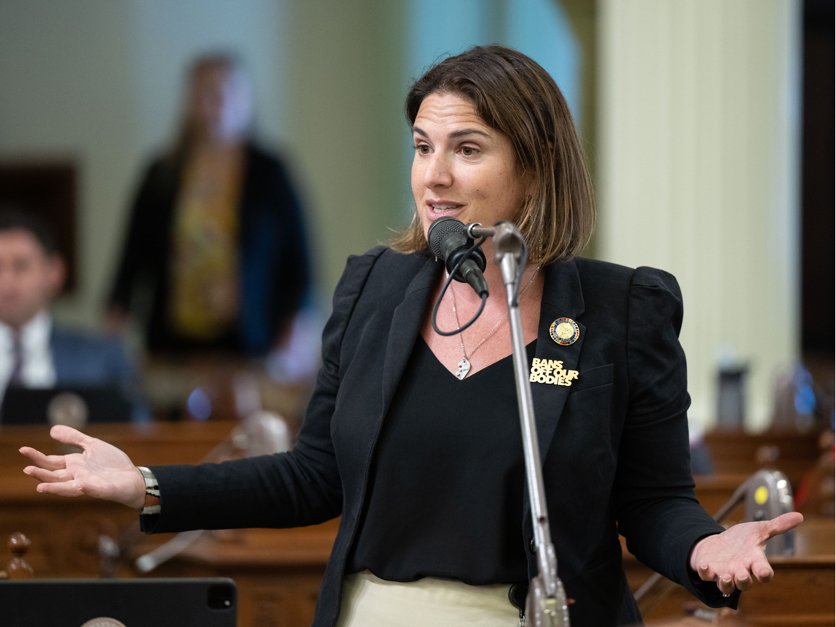 Asm. Rebecca Bauer-Kahan (Office photo)
At that time DPR was under increasing pressure from environmental groups and lawmakers. In 2020 it rejected a petition led by the Natural Resources Defense Council to regulate seeds treated with neonicotinoids. Asm. Rebecca Bauer-Kahan, D-Orinda, followed up on that decision by proposing to ban those seeds through legislation instead. DPR explained in its workshop that it had found limited information on the extent of use in California, on the commodities involved, and on the active ingredients in the treatments. Treated seeds are exempt from U.S. EPA review and do not fall under the state definition of a pesticide for review.
A month later environmental groups filed a lawsuit against U.S. EPA over treated seeds and then another against DPR in 2023, alleging its handling of the seeds “amounted to an underground regulation in violation of the Administrative Procedures Act.” DPR reached a settlement agreement last year requiring it to draft regulations. Meanwhile, Bauer-Kahan reentered the debate, convincing the Legislature and governor to approve a bill adding new labeling requirements on treated seed bags, triggering DPR to develop the new rules for tracking the amount of active ingredients entering the environment through the seeds.
Yet tailoring the rules to California’s farm landscape will not be easy. Despite a sharp rise in seed coatings nationwide, Teerlink noted that Midwest row crops like corn, soy, wheat and cotton dominate the seed treatment debate and emphasized that California’s cropping systems differ significantly.
“California has a very unique agricultural setting, with a huge diversity of commodities grown throughout the state,” she said. “I’m looking forward to setting up a new approach here.”
Don’t miss a beat! It’s easy to sign up for a FREE month of Agri-Pulse news! For the latest on what’s happening in Washington, D.C. and around the country in agriculture, just click here.
Assessing cumulative impacts
The proposal would designate treated seeds as pesticides, exempting them from registration only if they are treated with products DPR has already approved. Currently seed coatings can be manufactured and applied outside California using federally registered pesticides and planted in the state. DPR officials said the rule would close that gap and ensure treatments undergo the same human health and environmental evaluation as other pesticides.
The department underscored that seed coatings are often far lower in pesticide volume than foliar sprays. Staff noted an 800-fold difference between treated seeds and foliar sprays when it comes to fungicide applications on lettuce. While highlighting the lower application rates, DPR views reporting as critical to assessing the cumulative impacts.
Environmental groups argue seed coatings, particularly neonicotinoids, are widespread and environmentally persistent even at small doses.
“There is demonstrable exposure in the environment to pollinators and individuals in the area as a result of the application of treated seeds,” said Margaret Reeves, a scientist at Pesticide Action Network, who also questioned DPR’s proposal to exempt treated seeds near schools from existing quarter-mile restrictions.
DPR responded that its approach aligns with existing granule and pellet exemptions.
New reporting and training requirements
The draft rules would require growers to report the volume of pesticide-treated seed planted each month, along with the pesticides applied and the acreage planted, raising concerns of duplicating reporting already filed by seed companies.
DPR reasons the treatment and planting represent two different uses and clarified that it needs the data to determine the amount of pesticide applied through planting. Staff added that sales reporting through the California Department of Food and Agriculture lacks field location detail and would not allow environmental tracking tied to planting windows.
The proposal would also treat plantings as applications, triggering worker safety, training and recordkeeping rules. It means anyone planting treated seed must be trained as a pesticide handler and only a licensed pest control business can be contracted to plant them.
Seed firms raised concerns about transport obligations.
“We do a lot of seed treatment, and we ship to the port of entry,” said Josh Cordova, grower and operations manager at Emerald Seed Co. in El Centro. “When we transport these through trucking companies, are they going to have to have some kind of certification?”
DPR staff said they are focused on seed planted in California but will evaluate the logistical implications.
Grower concerns and environmental pressure
Growers and pest control advisers argued seed treatments reduce overall chemical load by preventing early-season pest and disease outbreaks and averting multiple in-season sprays.
“The treatment of the seed itself with a pesticide is critically important, and it's not a one-to-one relationship,” said Bo Howard, a PCA and farmer in the central San Joaquin Valley. “Having that initial protection to the crop on the seed coat is saving us countless insecticide applications.”
Environmental advocates pressed for more granular reporting on the fields and dates for the applications, warning that monthly countywide data may not detect water contamination or track use patterns. DPR acknowledged the reporting requirements could evolve based on their findings after gathering data on use.
Staff emphasized that the workshop is part of an early outreach effort before formal rulemaking. The department encouraged stakeholders to submit detailed comments through Dec. 1.
If adopted, California would become the first state to formally regulate treated seeds as pesticides. Industry groups warn that California-only rules could restrict seed access and raise costs.
“From a seed dealer standpoint, the implications are serious,” charged Lisa Branco, general manager of Radicle Seed Co., in a written comment to DPR. “If a seed cannot be treated or sold with any product not explicitly registered in California, we risk eliminating access to entire classes of safe, proven seed technologies. That means fewer options for growers, lower yields, and ultimately higher costs for food production.”

