
President Donald Trump emerged from a meeting with Chinese President Xi Jinping last week touting a deal between the two countries that would make U.S. farmers “very happy.”
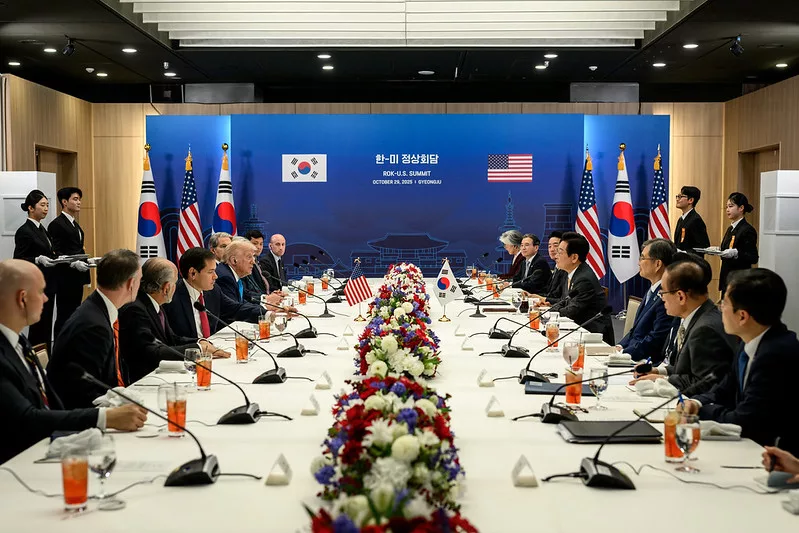
In addition to making progress on the China arrangement, his three-leg Asia trip yielded a flurry of trade announcements, including new deals with Cambodia and Malaysia, further details on ongoing discussions with Vietnam and Thailand, and clarification on the state of South Korean and Japanese negotiations.
The below list provides an updated snapshot of the provisions in agreements announced so far that would reduce trade barriers for U.S. agricultural products in foreign markets:
United Kingdom
Public documents: General terms, White House Fact Sheet, UK press release
Status: Implementing initial framework
- A tariff-rate quota for U.S. beef (13,000 mt)
- A tariff-rate quota for U.S. ethanol (1.4 billion liters)
- A commitment to work together to “improve market access” for ag products.
- A commitment to increase cooperation on export verification programs.
Japan
Public documents: Joint Statement, U.S. Executive Order on Implementation, Implementation agreement, Fact sheet on investments
Status: Implementing framework
- Purchase commitments of $8 billion per year in U.S. ag products, including corn, soybeans, fertilizers, bioethanol, and sustainable aviation fuel.
- A commitment to increase purchases of U.S. rice by 75%.
European Union
Public documents: Joint statement, EU Q&A on Joint Statement, White House Fact Sheet on initial deal, EU Explainer on initial deal
Status: Implementing the joint statement terms
- The EU will eliminate tariffs on “industrial goods” and provide “preferential market access for a wide range of U.S. seafood and agricultural goods, including tree nuts, dairy products, fresh and processed fruits and vegetables, processed foods, planting seeds, soybean oil, and pork and bison meat.”
- Commitment to work together on “non-tariff barriers affecting trade in food and agricultural products, including streamlining requirements for sanitary certificates for pork and dairy products.”
Malaysia
Public documents: Joint statement, Fact sheet, Agreement text
Status: Implementing agreement terms
- Malaysia will “provide significant preferential market access” for U.S. ag exports, including dairy, horticultural products, poultry, processed products, beverages, pork, rice and fuel ethanol.
- Malaysia has “committed to address and prevent non-tariff barriers to U.S. food and agricultural products in the Malaysian market.”
- Malaysia will accept agreed certificates issued by U.S. regulatory agencies. USTR says this will apply to U.S. meat, poultry and dairy products.
- Malaysia will “streamline” halal and facility registration requirements.
- Malaysia will adopt a regionalization approach to curbing U.S. ag exports in the event of animal diseases, particularly for pork and poultry USTR says.
- The government will also take measures to tackle illegal logging and fisheries subsidies, as well aS unregulated fishing.
- Open “market access” for U.S. sorghum.
- Malaysia committed to preserve current and future market access for U.S. meats and cheeses that use names commonly targeted by geographical indications.
- Malaysia will ensure sanitary and phytosanitary measures are “science- and risk-based” and don’t serve as disguised barriers to trade, nor will it enter into agreements with third-countries that include “non-scientific, discriminatory, or preferential technical standards” incompatible with U.S. SPS standards.
- The U.S. can terminate the agreement, after consultations, if Malaysia signs a new trade agreement with a country that “jeopardizes essential U.S. interests.”
Cambodia
Public documents: Joint statement, Fact sheet, Agreement text
Status: Implementing agreement terms
- Cambodia will “eliminate tariffs on 100 percent of U.S. industrial goods and U.S. food and agricultural products exported to Cambodia.”
- Cambodia commits to address “non-tariff barriers that affect bilateral trade.”
- Cambodia commits to “addressing import licensing” and “streamline” regulatory approvals.
- Cambodia will recognize U.S. sanitary and phytosanitary measures and “other measures for food and agricultural products.”
- Both sides “commit to address and prevent barriers to U.S. agricultural products in the Cambodian market,” including by accepting agreed certificates from U.S. regulatory authorities.
- USTR says Cambodia will recognize U.S. SPS measures, and other measures for food and agricultural products.
- Cambodia committed to preserve current and future market access for U.S. meat and cheeses that use names commonly targeted by geographical indications.
- Cambodia will ensure sanitary and phytosanitary measures are “science- and risk-based” and don’t serve as disguised barriers to trade, nor will it enter into agreements with third-countries that include “non-scientific, discriminatory, or preferential technical standards” incompatible with U.S. SPS standards.
- The U.S. can terminate the agreement, after consultations, if Cambodia signs a new trade agreement with a country that “jeopardizes essential U.S. interests.”
China
Public documents: Fact sheet, China’s Ministry of Foreign Affairs readout, China's Ministry of Finance tariff adjustment notice, China’s Ministry of Commerce briefing on the deal, Trump briefing on the deal
- Both sides say they agreed to expand agricultural trade.
- The U.S. will lower its tariffs on China by 10% and suspend for a year planned “reciprocal” tariffs on the country.
- So far, China has scrapped tariffs of up to 15% on some agricultural goods. But left a 10% retaliatory tariff in place that applies to U.S. products, including ag commodities like soybeans and sorghum.
- The White House says: China will suspend all of its retaliatory tariffs applied since March, including those on “chicken, wheat, corn, cotton, sorghum, soybeans, pork, beef, aquatic products, fruits, vegetables, and dairy products.” China says: It will make “corresponding adjustments” to its tariff rates.
- The White House says: China will purchase 12 million tons of U.S. soybeans in November and December 2025, followed by 25 million in each calendar year from 2026 to 2028.
- The White House says: China will “resume purchases” of U.S. sorghum and hardwood.
- Both sides will suspend their port fees on each other’s vessels for one year.
South Korea
Public documents: Trump Truth Social I, II, Fact sheet on investments
Status: Finalizing deal
- Trump says: “South Korea will be completely OPEN TO TRADE with the United States, and that they will accept American product including Cars and Trucks, Agriculture, etc,” according to a Truth Social post from the president announcing the deal in July. South Korea says: Officials made no concessions on rice or beef market access, including on its ban on U.S. beef from cows over 30 months old.
- Commitment to work to address U.S. producer concerns over the EU’s forthcoming deforestation rules, in recognition that U.S. commodities pose a “negligible” risk.
Indonesia
Public documents: Joint Statement, White House Fact Sheet
Status: Finalizing deal
- Tariff reductions of “approximately 99%” on “a full range” of U.S. ag exports.
- A purchase commitment of around $4.5 billion in U.S. ag products, including soybeans, soybean meal, wheat and cotton.
- Exemptions for U.S. food and ag products from import licensing regimes.
- A commitment to ensure “transparency and fairness” in geographical indicators, including meats and cheese.
- A commitment to give U.S. plant products permanent Fresh Food of Plant Origin designations.
- A commitment to recognize U.S. regulatory oversight of all U.S. meat, poultry and dairy facilities and accept certificates issued by US authorities.
Vietnam
Public documents: Joint statement, Fact sheet
Status: Negotiations ongoing
- Vietnam will provide “preferential market access for substantially all U.S. industrial and agricultural exports.”
- Both sides will “address and prevent barriers” to agricultural trade in the Vietnamese market, including through regulatory oversight and the acceptance of agreed certificates issued by U.S. regulatory bodies.
- Vietnamese companies have signed deals to buy around $2.9 billion in U.S. ag products through some 20 memoranda of understanding.
- USTR says Vietnam will “maintain access” for U.S. agricultural goods, including specialty meats and cheeses.
- USTR says Vietnam has already improved market access for U.S. peaches and nectarines.
Thailand
Public documents: Joint statement, Fact sheet
Status: Negotiations ongoing
- Thailand will “eliminate tariff barriers on approximately 99 percent of goods,” including on a range of ag products.
- Thailand will purchase approximately $2.6 billion of U.S. ag products, including “including feed corn, soybean meal, and dried distiller grains with solubles,” in “forthcoming commercial deals.”
- Both sides will “work together to address Thailand’s non-tariff barriers,” including barriers to agricultural products.
- Thailand will issue import permits for imports of U.S. ethanol for use in fuel.
- Thailand will include expedited access for U.S. Food Safety and Inspection Service-certified meat and poultry products.
- Thailand will ensure requirements on U.S. horticultural products are “science- and risk-based,” including for distillers dried grains.
- Thailand will accept some agreed certificates issued by U.S. regulatory bodies.
Philippines
Public documents: Trump Truth Social
Status: Negotiations ongoing
- Trump says: Zero tariffs on US exports, including U.S. soybeans and wheat. Philippines says: The country has not made any tariff concessions that would affect the country’s major domestically grown ag products, a special adviser to the president told reporters in October.
Note: Soybeans already have a 0-1% tariff rate in the Philippines. The tariff rate for wheat is zero, as per a 2024 executive order.
Don’t miss a beat! It’s easy to sign up for a FREE month of Agri-Pulse news! For the latest on what’s happening in Washington, D.C. and around the country in agriculture, just click here.

