
The Senate passed a temporary spending measure Monday night to end a partial government shutdown led to delayed paychecks, overrun food banks and air travel chaos across the country. Ahead of the final vote, senators affirmed the bill's new restrictions on hemp products.
The legislation to restore federal funding through Jan. 30 cleared the chamber 60-40 Monday night, the shutdown's 41st day, teeing the bill up for a vote in the House and, if passed there, President Donald Trump's signature.
A partisan standoff over health-care tax credits was resolved, at least for now, after seven Democrats and an independent senator joined Republicans Sunday in moving forward with a continuing resolution needed to reopen the government.
The deal struck includes a promise for a vote in December on expiring Affordable Care Act insurance subsidies, which Democrats want extended.
The legislation includes three FY26 spending bills, including the measure to fund USDA and FDA. In addition to the hemp restrictions, the measure would restore USDA's Commodity Credit Corporation spending authority, and the bill also includes a requirement that USDA work with the State Department to prepare a process to transfer the Food for Peace food aid program from State to USDA.
The bill also includes a one-year extension of farm bill programs that were left out of a budget reconciliation bill earlier in the year.
The agreement came together over the weekend as U.S.'s longest ever shutdown ever nears the six-week mark and leaves many Americans stranded at airports or struggling to get food.
“We were seeing lines to our food banks in northern Nevada, these were lines that I hadn't seen since the pandemic, and the stories were horrific," Sen. Catherine Cortez Masto, D-Nev., said in a late Sunday news conference after an agreement to end the shutdown was reached.
The shutdown has had other wide-reaching impacts, including delaying billions of dollars in federal aid getting out to financially strapped farmers.
The bill passed by the Senate would extend by one year farm bill programs that were left out of an earlier budget reconciliation. It also would block unregulated sales of certain intoxicating hemp-based or hemp-derived products, including Delta-8, from being sold online, in gas stations and convenience stores.
It’s easy to be “in the know” about what’s happening in Washington, D.C. Sign up for a FREE month of Agri-Pulse news! Simply click here
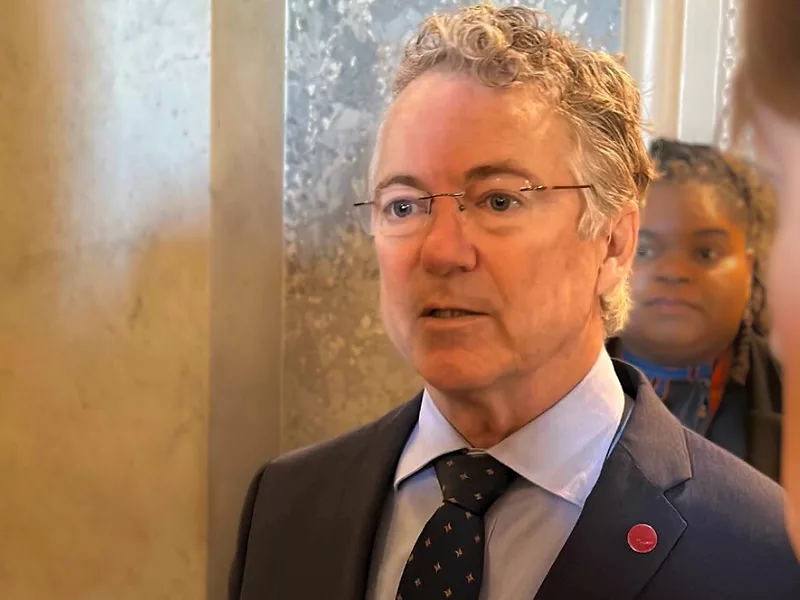
The hemp provision drew ire from Sen. Rand Paul, R-Ky., who put forward an amendment to strike the measure, prompting concern from House Speaker Mike Johnson, R-La., and others that the move could hold up a vote to end the shutdown.
"If there are bad actors selling high-potency products in gas stations, then the solution is regulation, not destroying a $28 billion industry and the rural communities who depend on it," Paul said in a post on X.
Sen. Mitch McConnell took to the Senate floor to urge lawmakers to uphold the hemp ban. The Kentucky Republican said intoxicating products are dangerously being marketed to children and stressed that sales of industrial-use hemp and non-intoxicating CBD products would still be allowed.
Ahead of the vote, groups representing the alcoholic beverage industry also appealed to senators to vote against the Paul amendment, saying it could “threaten the delicately balanced deal to reopen the federal government.”
Paul's amendment was defeated on a vote of 76-24.
In the House, which passed a CR in September, must now vote on the new bill. Speaker Johnson told Fox Business that he's called House members back to Capitol Hill, for a possible vote on Wednesday.
When asked Monday evening what was the breakthrough that led to ending the shutdown, Sen. Lisa Murkowski, R-Alaska, said, "fatigue."
And she recounted talking earlier Monday to a woman who has worked for 32 years in the Senate post office and is a U.S. citizen originally from Colombia. She told the senator she went to a food bank for the first time ever.
For more news, go to Agri-Pulse.com.
.webp?t=1762183428)
