
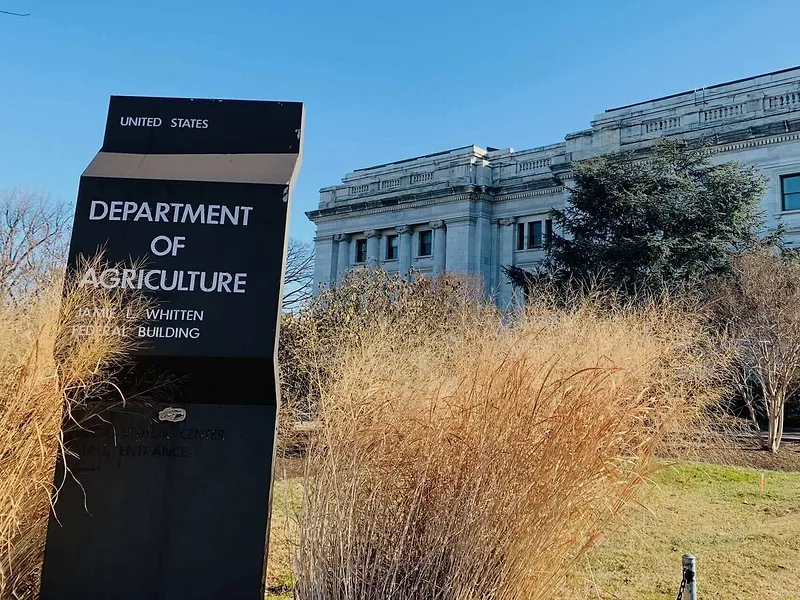
A fiscal 2026 agreement for funding USDA and FDA rejects White House proposals to gut conservation technical assistance and international food aid programs and includes a provision to block the unregulated sale of some hemp-based or hemp-derived products, including Delta-8.
The House-Senate compromise bill released Sunday also would direct USDA to work with the State Department to prepare a process to transfer the Food for Peace food aid program from State to USDA. The former U.S. Agency for International Development had managed the delivery of food commodities.
The text of the agriculture appropriations bill was wrapped into a continuing resolution needed to reopen the government. The Senate voted 60-40 Sunday night to advance the legislation.
The bill would provide $26.65 billion for FY26 discretionary programs that are funded through annual appropriations bills as opposed to laws like the farm bill. That amount would be close to what was provided in fiscal 2025 but well above the White House request of about $21 billion.
The legislation includes a provision refreshing USDA's spending authority through the Commodity Credit Corporation. USDA has been expected to use the CCC to provide about $12 billion in payments to farmers affected by President Donald Trump's trade policy.
State legislators and attorneys general have been working to restrict access to hemp products containing hemp-derived THC consumables. The 2018 farm bill legalized production of hemp to support the ag sector and industrial hemp farmers. But the law specified limits only for delta-9 THC (the psychoactive compound found in marijuana), which created a loophole for intoxicating products containing synthetic hemp-derived cannabinoids such as delta-8 THC, a form of tetrahydrocannabinol.
Cut through the clutter! We deliver the news you need to stay informed about farm, food and rural issues. Sign up for a FREE month of Agri-Pulse here.
Luke Niforatos of Smart Approaches to Marijuana and the Foundation for Drug Policy Solutions welcomed the hemp provision. “That means delta-8 and all the other intoxicating hemp derivatives will soon be banned nationwide. This is a titanic victory for public health, safety, and, importantly, children across America harmed by these dangerous drugs,” he said in a post on X.
The FY26 bill would provide $1.2 billion for the Food for Peace program, which the White House proposed to eliminate in its budget proposal. The program was funded at $1.6 billion for FY25.
The agreement would provide $903 million for conservation technical assistance, which supplements funding provided through farm bill conservation programs.
Agricultural research programs would get $3.8 billion, including $1.8 billion for the Agricultural Research Service and $1.7 billion for the National Institute of Food and Agriculture, while cutting funding for USDA’s climate hubs.
USDA's Animal and Plant Health Inspection Service would be funded at $1.2 billion for APHIS, the same amount requested by the White House, and the agency would get $13.5 million to help ranchers offset the cost of electronic ID tags.
The legislation also retains a longstanding prohibition of the closure of Farm Service Agency field offices.
For more news, go to Agri-Pulse.com

