
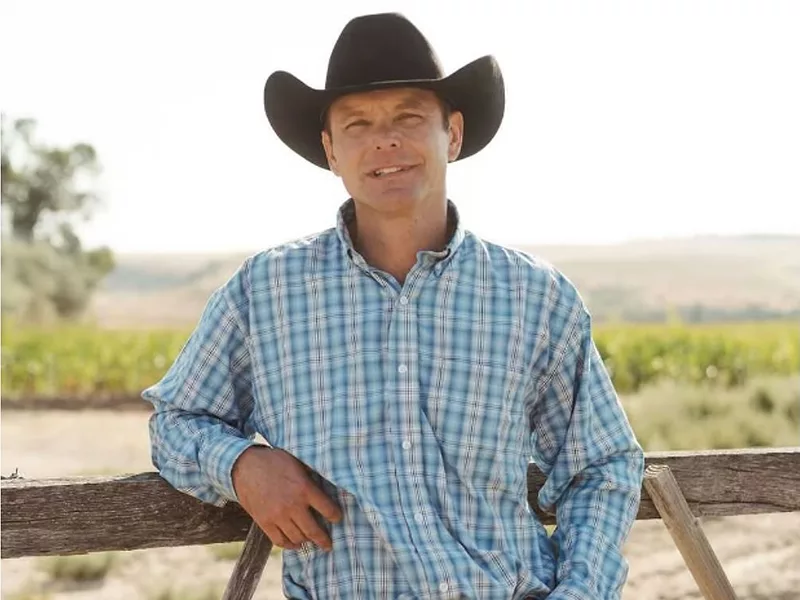
As a Montana farmer, rancher, and local small business owner, I’ve weathered drought, trade disputes, and the natural cycles of lean and plenty that define American agriculture. But I’ve never seen agriculture face a convergence of pressures like we are today. Anyone working in farm country can tell you: We’re at a turning point, and the outcome will shape not just our rural communities, but the stability of our entire food supply.
The numbers are no longer abstract. Tariffs on aluminum and steel, especially tinplate steel, have added more than $2 billion to America’s food packaging and production costs. Fertilizer prices – already volatile thanks to global politics – have isurged up to 25% in some regions. Machinery, storage bins, trucking. Every piece of the supply chain, from farm to table, is more expensive, and there’s no sign of relief on the horizon.
But what worries me even more is how these costs are colliding with the realities of farm finance. Family farmers and ranchers don’t have the luxury of passing higher input prices on to their buyers. Margins – already razor-thin – are evaporating. More and more are leaning on operating loans to stay afloat. Those loans used to be a bridge to the next harvest. Now, for far too many, it’s a pit you might never climb back out of.
It’s easy to be “in the know” about what’s happening in Washington, D.C. Sign up for a FREE month of Agri-Pulse news! Simply click here
Talk to any rural lender and you’ll hear the same thing: unless something changes dramatically, we’re staring down the largest farm sell-off in a generation by 2026. That should send a chill down the spine of anyone who cares about food security, rural jobs, or the long-term health of the American economy.
These challenges don’t stop at the county line. Every dollar squeezed from farmers and ranchers threatens the local businesses they support, the affordable groceries in every American pantry and on every American table, and the next generation’s chance to stay on the land. When we lose family farms, we risk losing the heart of rural America and a resilient, secure food system for us all.
This is not just a rural crisis. As these costs snake their way through the supply chain, everyone feels it: more than 70% of American families now say tariffs are directly raising their grocery bills. When farmers go under, it’s not just Main Street that takes the hit. We all do. We’re losing critical skills, community anchors, and the very people willing to roll up their sleeves to feed, fuel, and clothe America.
No one doubts the intent behind “America First” economic policy – we all want fair trade and strong domestic agriculture and manufacturing. But we are at a crossroads in American agriculture. The decisions made in the next two years could set the stage for renewal, or for the largest transfer of land, talent, and opportunity out of family hands in living memory. The future of agriculture – and the affordable, secure food supply every American depends on – hangs in the balance.
If Washington truly wants to stand with rural America and American families, it’s time to listen to those of us living this new reality and it’s time to act on the unintended consequences of these tariffs with a targeted approach. The farm sell-off isn’t a distant threat. It’s tomorrow’s news – unless we act now to chart a better path forward this could be the final generation to farm and ranch.
Chris Skorupa is a Montana farmer, rancher, business owner, and vice president of the Rural & Agriculture Council of America.