
It’s a tough time to be a farmer. A recent news story estimated that crop losses in the seven major crops were a cool $35 billion in 2025. This is the 4th year in a row with negative returns for the major crops. Past inflation, economic concentration in the industries that supply agriculture, and bumper crops have all contributed to our woes, but we can’t ignore the elephant in the room.
Agricultural prices have been hammered by trade policy since 2018. While it’s true that surveys still show strong support among farmers for our trade policy, that’s only possible after a determined effort by my neighbors to ignore the facts on the ground. Input prices are higher than they would be without tariffs. Crop prices are lower than they would be without tariffs.
Recently, I listened to Secretary of Agriculture Brooke Rollins explain how the administration is undertaking “a complete realignment of the world economy.” This may be a very good thing, someday, but so far the result of global realignment has been U.S. farmers losing market share in our largest market for soybeans.
The secretary went on to say that the real problem in agriculture is high input costs, and she blamed those high prices on concentration in the industries that supply agriculture. Which is true, but ignores the fact that concentration has been a problem for many years, present long before our present economic woes began. It’s a problem, but can hardly explain all of our present troubles. In a continuation of the theme, the President recently announced an immediate investigation into the four large meatpackers.
If this sounds familiar, it is because it is. In 2022, the Biden administration announced an investigation of the four largest meatpackers. They have tremendous market power and the cattle market would benefit from more competition. Having said that, cattle prices are at record levels, and the packers' market power must be less than advertised, since both the administration and the large packers would like lower cattle prices.
Some observers have speculated that the administration’s sudden interest in market concentration was a response to criticism of President Trump’s last foray into the beef market, when he moved to increase beef imports from Argentina in order to lower U.S. beef prices. Unlike soybean growers, cattlemen are perfectly happy with a protectionist trade policy. I don’t blame them, but the problem is this: when we place tariffs on imports, other countries respond by increasing their tariff barriers, or in the case of China and soybeans, quit buying U.S. products completely.
Don’t miss a beat! It’s easy to sign up for a FREE month of Agri-Pulse news! For the latest on what’s happening in Washington, D.C. and around the country in agriculture, just click here.
Even that is not a problem for folks who buy soybean meal for feed, until someone notices that a smaller market for soybeans will mean millions of acres in the U.S. presently in soybeans will in all likelihood be seeded to grass as the best alternative to a smaller demand for soybeans. Cows will graze where soybeans once grew, with a commensurate increase in cattle numbers and decline in cattle prices. Smaller demand for one ag product will eventually decrease prices for everyone in agriculture. We should be careful what we ask for.
The administration has announced a series of trade deals including agreements with China, Japan and Taiwan. The Taiwan deal guarantees $2.5 billion of ag exports from the U.S. over each of the next four years. Last year, we exported $3.8 billion of ag products to Taiwan.
The deal with Japan promised $8 billion in ag exports to Japan each year. Last year, we exported over $14 billion of ag products to Japan.
Finally, the trade deal just announced with China promises soybean export levels for the next three years that are lower than our exports were a decade ago, before we began the first trade war. Agreements with China are ... ephemeral, and there is at least some chance that they’ll treat this trade deal like they did Phase One, importing much less than they’ve promised. Even if China fulfills the agreement recently announced by the Trump administration, we will have lost half of our normal exports to China for this year.
It’s possible that there is more to these deals than the headline numbers, but our “alignment” policy needs a little work. We seem to be driving in circles. Or headed the wrong way.
After her speech, the secretary met with a small group of farmers. They were worried about low commodity prices and unhappy with the administration’s bailout of Argentina. She replied by explaining that the economic policies of the past few decades have been a mistake, and the Trump administration is returning to the economic vision held by Alexander Hamilton. Is this reassuring if your note at the bank is overdue?
If our present trade policy wasn’t enough, farmers are also challenged by Health and Human Services Secretary Robert F. Kennedy Jr. He has so far been unsuccessful in his announced goal of restricting every agricultural technology developed in the last 100 years or so, but it hasn’t been for want of trying.
It’s amazing to me that so many groups that would normally be supportive of agriculture have been willing to distance themselves from Kennedy’s war on vaccines, while accepting his claims about agricultural technology at face value. Turning back the clock on vaccines is already killing people, and while a return to pre-scientific agriculture will take longer to increase starvation, both notions are grounded in a willingness to sacrifice human lives on an altar of anti-science nonsense. If you think RFK Jr. is a crackpot about the measles vaccine, it shouldn’t take much effort to wonder if he’s just as disingenuous about the safety of glyphosate.
Lost in the shuffle of realigning the world economy, announcing trade deals that seem to be headed the wrong way, and making America healthy again is the failure to pass a new farm bill. Congress did renew the 2018 farm bill, which will soon be old enough to vote.
We should be willing to criticize officials who spin their policy mistakes in a way that makes clear they have little respect for their farmer constituents. We are being taken for granted, and it’s past time we noticed.
As a young farmer, I used to try to explain self-inflicted machinery disasters as random acts of extremely bad luck. My dad would say: “Don’t pee on my leg and tell me it’s raining.”
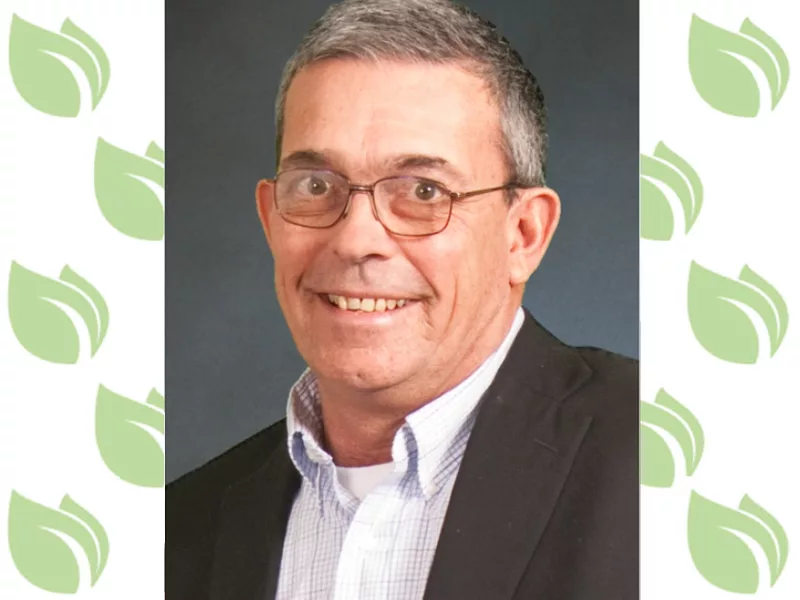
Blake Hurst is a farmer and greenhouse grower in northwest Missouri.