
Biofuel producers are hopeful that hard-to-electrify transportation like aviation, rail and marine will spur new demand growth. But there’s another sector the industry's eyed for decades that's remained stubbornly out of reach: the American farm.
Despite U.S. farmers playing a major role in establishing markets for soybean-based biodiesel and corn-based ethanol, a combination of industry growing pains, lack of engine technology and simple misinformation left a generation of growers wary of using renewable fuels in their tractors, sprayers and combines.
Momentum, though, is slowly starting to build in the push to make biofuel-powered equipment commonplace on farms. Still, challenges include ongoing pushback on crop-made fuels by some environmentalists, the rapid development of electric tractors and a dearth of needed infrastructure.
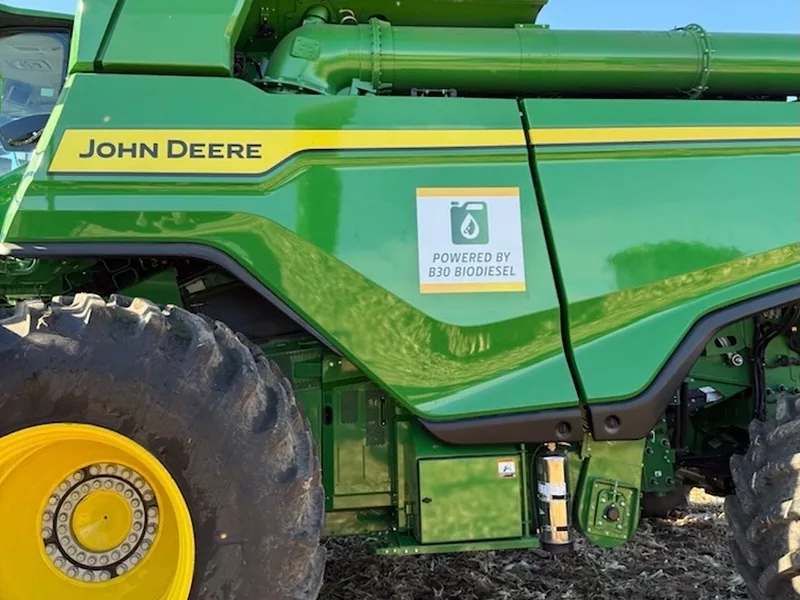
Deere & Co., the world's largest farm machinery manufacturer, has pledged to increase the use of renewable fuels in its equipment. The Moline, Illinois-based company in August unveiled approval for higher biodiesel blends across its fleet of Tier 4 non-road diesel engines. It also has quietly been getting feedback from customers on a tractor prototype that runs on 100% ethanol.
On why it's been tough for the industry in general to get more biofuels used on farms, Deere said lack of awareness is partly to blame.
 Josh Garetson (Deere photo)
"We’ve got to do more to make sure customers are aware of what’s possible," Josh Garetson, Deere's director of renewable fuels and corporate strategy, said in an interview.
There's scant data available on the use of biofuels in farm machinery and other off-road equipment. The U.S. Energy Information Administration stopped collecting sales figures for distillate fuel oil by end user in 2020. Pre-Covid data for 2019 show sales to farms at 3.5 billion gallons, roughly the same as for railroads and exceeding marine use by more than double.
"When you look at the sheer volume of fuel the ag sector consumes on an annual basis, there’s a lot of room for growth for biofuels," said Geoff Cooper, who heads the Renewable Fuels Association, an ethanol trade group. "Even a modest share of that existing demand would be a meaningful new market.”
Most biofuel used on farms and ranches is biomass-based diesel at fairly low blend levels and little to no ethanol outside of trucks and light-duty equipment.
“We expect that can change in the next five or 10 years," Cooper said. "Deere has shown that it can be done. Where there needs to be additional attention and focus is on the logistics and the infrastructure of getting the right fuels to the farm."
Don’t miss a beat! It’s easy to sign up for a FREE month of Agri-Pulse news! For the latest on what’s happening in Washington, D.C. and around the country in agriculture, just click here.
RFA is also funding a Purdue University study on blending ethanol with diesel fuel. Meanwhile, Brazil is seriously studying using ethanol in ag equipment. "It feels to me like they're a step ahead of us," Cooper said.
Whereas ethanol largely hasn't been tried on U.S. farms, biodiesel is still contending with the perception that it isn't a reliable fuel in certain farm settings, in part due to cold weather issues that industry advocates say are manageable.
Soybean producer Ryan Pederson, who farms about 25 miles south of the Canadian border in North Dakota, where bull moose are a more common sighting than people, said his father was initially reluctant to start using biodiesel due to problems he'd heard about through the grapevine. Since data on the fuel was scarce given how few farmers were using it, biodiesel started being blamed, even when some other human-caused error was the culprit, Pederson said.
“That was the challenge that we had, getting over those anecdotal stories about why the fuel doesn't work," he said earlier this year to a gathering of Clean Fuels Alliance America, which represents the biomass-based diesel and sustainable aviation fuel industries.
Another issue was some dealerships blaming engine issues on biodiesel, prompting Pederson at one point to stop using the fuel for a period so it couldn't be used as an excuse.
“It was a scapegoat," he said. Still, that doesn't mean there were never problems with biodiesel quality a couple of decades ago when the industry was still in its infancy. "We had some really good producers, and then we had some other people who were just making it whenever and however they could," Pederson said.
"Memories are long. Maybe you had a bad experience that was partially because we didn't have a good understanding of making sure fuel tanks were clean," Garetson said. "The standards have evolved and the quality levels have improved from the biofuel producers themselves. That's given us the confidence to announce higher-blend levels."
Deere, which is also busy working to commercialize battery-operated tractors, wants to give its core customers a more seamless supply chain, according to Garetson.
"It's about taking a load of corn to the ethanol plant and converting a thousand bushels into three thousand gallons and then bringing those gallons back to the farm."
.webp?t=1762183428)
