
California farm groups and ag-tech advocates are urging the Cal/OSHA Health and Safety Standards Board to slow down and rethink its new blueprint for regulating autonomous agricultural equipment, warning the proposal could chill investment and strand workers in lower-wage, higher-risk jobs.
After a year of examining the issue through an advisory committee composed of stakeholders and outside experts, agency staff laid out four options in their report, ranging from tightly limiting it to small, slow-moving robots to requiring regulatory approval for each machine before it is deployed.
That led industry advocates to criticize the report for leaning toward a restrictive, risk-averse approach that treats autonomy as inherently unsafe, instead of recognizing how sensors, software and new designs can pull workers out of harm’s way.
Old rule, new tech
At the heart of the fight is a Cal/OSHA rule written in the 1970s that requires all self-propelled equipment in agriculture to have an operator at the controls. The provision was adopted long before GPS guidance, lidar or electric tractors existed and aimed at preventing rollovers and jump-off practices that killed or injured field workers.
That language has become a brick wall for fully autonomous machines. A 2022 Cal/OSHA decision denied a petition from Monarch Tractor to strike the operator requirement. Last year the division issued a memo clarifying that driverless tractors and other agricultural vehicles can be used only if there are no workers in the zone of danger, essentially limiting robots to empty fields.
The board then convened an advisory committee of growers, manufacturers, labor unions, academics and regulators to map out a broader fix. That group met three times, including a field demonstration in Salinas this summer.
Staff: No clear injury data, but real regulatory gaps
The committee found almost no hard data on injuries involving autonomous tractors, in California or abroad, largely because accident reporting systems do not distinguish them from conventional machines.
A staff assessment of international guidelines and standards found no binding safety rules specific to self-propelled autonomous agricultural equipment. That leaves California trying to adapt a tractor rule written for human operators to machines with radar, geofencing and remote monitoring.
Don’t miss a beat! It’s easy to sign up for a FREE month of Agri-Pulse news! For the latest on what’s happening in Washington, D.C. and around the country in agriculture, just click here.
 Connie Bowen, Farmhand Ventures (LinkedIn photo)
To close the gaps, staff floated three active rulemaking paths. One would allow only lightweight, low-horsepower, slow-moving autonomous units in fields with people. Another would require a safety driver or nearby observer during testing, modeled loosely on the California Department of Motor Vehicles’ tiered framework for autonomous cars. A third, more expansive approach would require Cal/OSHA review and approval for any self-propelled autonomous equipment before commercial deployment, along with prompt reporting of accidents and near misses to the agency.
Staff also reminded the board that experimental and permanent variances are already available for companies willing to go through an intensive case-by-case process — though to date only Monarch has done so.
‘Risk-averse’ plan undercuts workforce goals
Bryan Little, senior director of policy advocacy for the California Farm Bureau, said the ban has created “an absurd situation” because it applies only in agriculture, not in parks, roadsides or other settings where similar equipment is already operating without a rider.
But the staff report, he argued, paints autonomy as a problem to be contained rather than a tool to improve safety and job quality.
“Why would any manufacturer or user of this equipment make the necessary investments of effort and capital to deploy autonomous technology in the face of this regulatory uncertainty —that exists nowhere else in the world and nowhere else in the United States?” asked Little.
He pointed to the agency’s lengthy regulatory backlog to argue it lacks the capacity to approve each machine without significant delays and pressed the board to instead update the underlying rule so autonomous machines that meet international safety standards can operate in fields much as they currently do on sports fields, campuses and rights-of-way.
Peter Ansel, a senior policy advocate at the farm bureau, reminded the board that state agencies and universities are investing heavily to make ag-tech a pillar of California’s workforce and economic strategy. He said the staff proposal reads as a “restrictive and a risk-adverse approach” that treats autonomous systems as inherently unsafe instead of acknowledging “the advancements that the engineering is bringing to worker safety.” He urged the board to move beyond a status quo where workers are “asked to remain in hazardous tasks.”
DMV as a model for innovation
Other stakeholders framed the staff options as unrealistic for early-stage companies and small growers.
Michael Miiller, director of government relations at the California Association of Winegrape Growers, told the board a DMV-style approval process might work for a handful of big auto makers but would overwhelm Cal/OSHA if hundreds of request applications landed from dozens of agricultural equipment manufacturers and robotics startups. He said the machines are already designed to international standards and that the systems are updated every few years, making a case for the board to create an interim window that allows autonomous machines to run in fields while California builds its own data set.
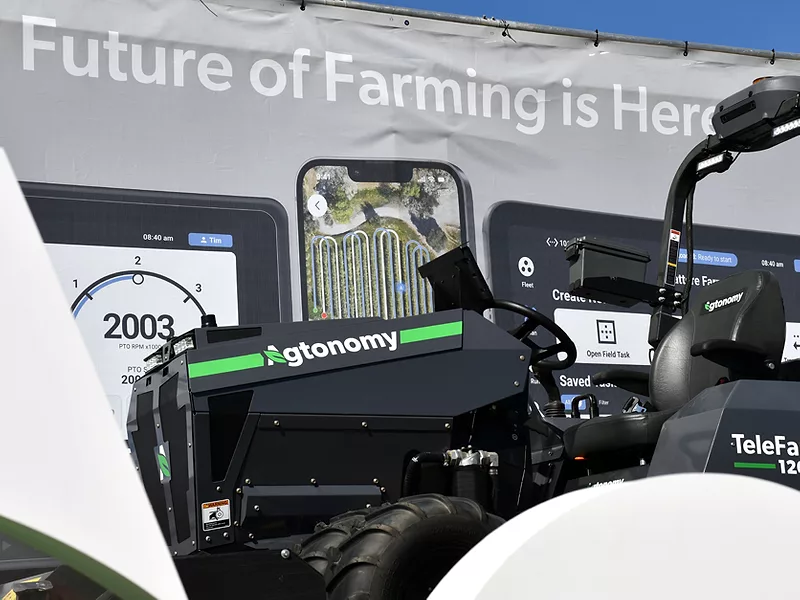
Several advocates pushed for option four, to take no new regulatory action now — paired with stronger use of existing tools. Karen Carte, CFO at Agtonomy, which demonstrated its driverless platform for the committee in Salinas and filed for an experimental variance in January, said the other three options “don’t support a sustainable nor efficient process” for how autonomy can be used around people. She warned the recommendations would add procedural and time burdens that do not match the pace of ag-tech development or the diversity of equipment already in the field.
Connie Bowen, founding partner at tech investor Farmhand Ventures and a stand-in member of the advisory committee, told the board a variance-heavy approach would pose more risks to farmworkers by tying up limited Cal/OSHA staff and slow-walking approvals for technology that can protect workers from rollovers and pesticide exposure.
“I started this firm because we're in a moment in history wherein we can actually leverage technology to empower farmworkers to earn more in safer environments,” said Bowen, noting that she has advised “well over 50 ag-tech companies.”
Early-stage companies that raise capital on 18-month timelines would go out of business if they must wait a year or more for permits before generating revenue, she argued.
Organic vegetable grower Larry Jacobs said autonomous tractors have already boosted productivity on his Central Coast farms and reduced “back-breaking work” that makes it hard to retain employees.
 John Shutske (UW photo)
“I know firsthand the benefits of this equipment,” he said. “For me as a farmer, it's increased our production efficiency. For our staff, they love the equipment. It makes their jobs easier.”
Machines that can spray on their own keep people out of the protective suits and away from potential exposure, he said.
“Automation is what’s going to save agriculture,” he said. “We’ve got fewer and fewer people who want to do this work. We're all aware of the migrant worker challenges and the challenges we face with the current administration's immigration policies.”
Labor roadblocks to tech
Labor advocates and safety experts continued to press the board to insist on better data and clear safeguards before opening the door wider.
Rob Carrion, who served on the advisory committee and represents Operating Engineers Local Union No. 3, claimed that more information on incidents and near misses will help make better decisions on autonomous tractors.
John Shutske, a biological systems engineering professor at the University of Wisconsin-Madison, had presented his findings to the advisory committee at its first meeting.
“California’s need to adopt the modern risk assessment ideas and methods we have developed in our research is critical because they have a huge influence on new ag-technology development and design,” Shutske told them. “What starts in California will most definitely influence the rest of the country.”
He and other safety experts called for a layered approach that combines robust equipment design standards, black-box recording of near misses, clear geofencing and notification rules for human workers, along with a final performance-based review for specific models that will operate near people.
Board signals patience as pressure mounts
Chair Joe Alioto stressed that the board would be making no decisions anytime soon and that the report was purely informational. He promised the board would create more opportunities for public input and “pay as much attention as necessary” before choosing a regulatory path.
The board now faces pressure from both sides of the regulatory ledger. Farm groups, winegrape growers and tech companies argue California’s approach to autonomy is already pushing investment and jobs to other states where the same machines can operate freely, even as labor shortages and tighter heat and pesticide rules make it harder to fill traditional tractor seats.
Yet worker advocates and Cal/OSHA leadership are wary of unleashing robots into orchards and vineyards without a clearer safety monitoring or standards tailored to agricultural environments. The same memo that opened the door to driverless tractors in empty fields also signaled the division’s intent to gather more evidence and update the rules through a deliberative public process — regardless of how many years it takes.

