
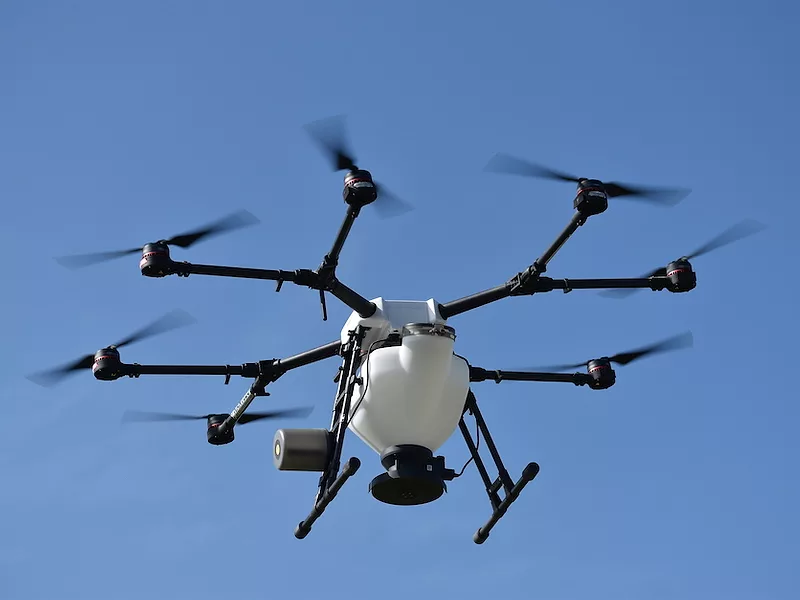
Lawmakers have reintroduced a bipartisan bill in Congress, dubbed the PRECISE Act, to dramatically expand access to advanced agricultural technologies for farmers by plugging into existing federal conservation programs.
Led by Reps. Ashley Hinson, R-Iowa, Jimmy Panetta, D-Calif., Brad Finstad, R-Minn., and Adam Gray, D-Calif., the PRECISE Act — short for Producing Responsible Energy and Conservation Incentives and Solutions for the Environment — would allow farmers to tap into loan, loan-guarantee and cost-share programs to purchase precision-ag yield monitors, GPS-guided equipment, soil mapping sensors, aerial imagery tools, data management systems and similar precision technologies.
Don’t miss a beat! It’s easy to sign up for a FREE month of Agri-Pulse news! For the latest on what’s happening in Washington, D.C. and around the country in agriculture, just click here.
Under the bill, the federal loan and loan-guarantee program within the USDA’s Consolidated Farm and Rural Development Act would be revised to explicitly cover adoption of precision agriculture practices and technology acquisition. Cost-share payments under major conservation initiatives such as the Environmental Quality Incentives Program and the Conservation Stewardship Program would also be expanded to cover up to 90% of the costs for farmers adopting precision tools for conservation and efficiency purposes.
Backers argue that lowering the financial barriers to high-tech equipment would help farms large and small boost productivity, reduce input costs and improve environmental performance. The lawmakers said increased access to advanced tools could play a critical role in improving yields, strengthening rural economies and helping agricultural operations meet growing demands for sustainability.
“Farmers across the nation and on the central coast of California are currently facing difficult challenges from everything from inflation, tariffs, labor challenges, burdensome regulations, shrinking markets, to Mother Nature,” said Panetta, who called for making the technology more accessible and useful to support those farmers.
Previous iterations of the legislation failed to advance out of committee or win final passage out of the House. A companion measure awaits action in the Senate Agriculture Committee.

