
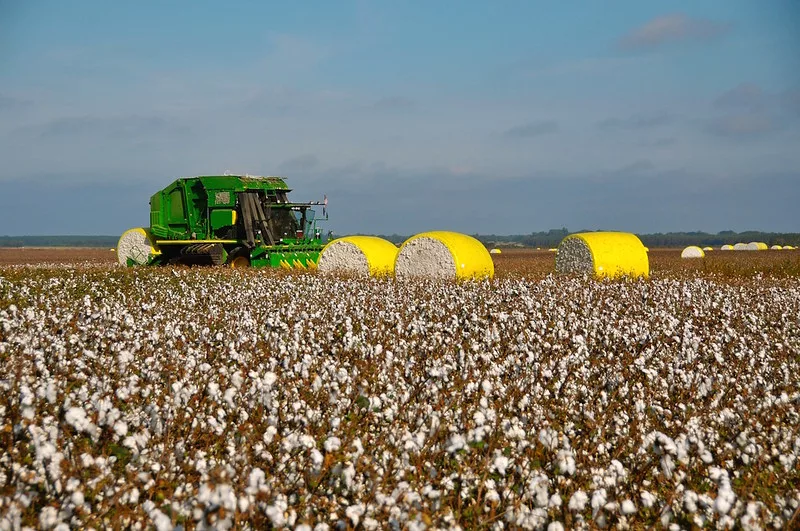
Growers of rice and cotton will receive the highest per-acre payments from the $11 billion in bridge assistance funding announced earlier this month.
Rice growers eligible for payments will get $132.89 per planted acre, while cotton growers will get $117.35, the department’s news release says.
“President Trump committed to increase certainty in the farm economy, and farmers can count on these payment rate calculations when going to the bank as they plan for the spring planting season,” Ag Secretary Brooke Rollins said. “Farmers who qualify for the [Farmer Bridge Assistance] Program can expect payments in their bank accounts by Feb. 28, 2026.”
The total amount of the assistance is $12 billion, but $1 billion is set aside for specialty crop growers. Those rates have not been set yet.
The payments “are based on 2025 planted acres, Economic Research Service cost of production, and the World Agriculture Supply and Demand Estimate Report,” USDA’s news release says. “Double crop acres, including all initial and subsequently planted crops, are eligible. Prevent plant acres are not eligible.
“All intended row crop uses are eligible for FBA except grazing, volunteer stands, experimental, green manure, crops left standing and abandoned or cover crops,” the release says.
Interested in more news on California agriculture, labor, water and rural issues? Sign up for a four-week free trial to Agri-Pulse West. You’ll receive our content - absolutely free - during the trial period.
“Crop insurance linkage is not required,” but USDA “strongly urges producers to take advantage of the new risk management tools provided for in the One Big Beautiful Bill Act (OBBBA) to best protect against future price risk and volatility.”
Row crop groups that responded to the announcement had differing reactions. In a news release, National Cotton Council Chairman Patrick Johnson called the payment rate for cotton growers "a welcome and much-needed level of assistance."
"This support is critical for producers struggling to manage current economic pressures and will give lenders and growers the confidence to continue to invest in cotton," Johnson said.
National Sorghum Producers Chair and Kansas farmer Amy France said the payments "provide near-term certainty while longer-term improvements to the farm safety net and risk management tools take effect. That stability matters as growers plan for the upcoming planting season and work through the impacts of a year of lost international trade."
However, the American Soybean Association said the rate for soybean growers isn't high enough.
The $30.88/acre for soybeans "will not cover the significant financial damage soybean farmers sustained this year due to the high cost of production and losses sustained during the China trade war," an ASA press release said.
“ASA is grateful to the Trump administration and USDA for recognizing the economic losses farmers are experiencing, but due to significant trade losses this year, the payment rate for soybeans will likely not be enough for soybean farmers to keep their operations financially solvent as we move into the next planting season,” ASA President and Ohio farmer Scott Metzger said.
Here’s the full list of per-acre payment rates:
• Barley: $20.51
• Canola: $23.57
• Chickpeas (Large): $26.46
• Chickpeas (Small): $33.36
• Corn: $44.36
• Cotton: $117.35
• Flax: $8.05
• Lentils: $23.98
• Mustard: $23.21
• Oats: $81.75
• Peanuts: $55.65
• Peas: $19.60
• Rice: $132.89
• Safflower: $24.86
• Sesame: $13.68
• Sorghum: $48.11
• Soybeans: $30.88
• Sunflower: $17.32
• Wheat: $39.35
For more news, go to Agri-Pulse.com.
This story has been updated with reaction from farm groups.

