
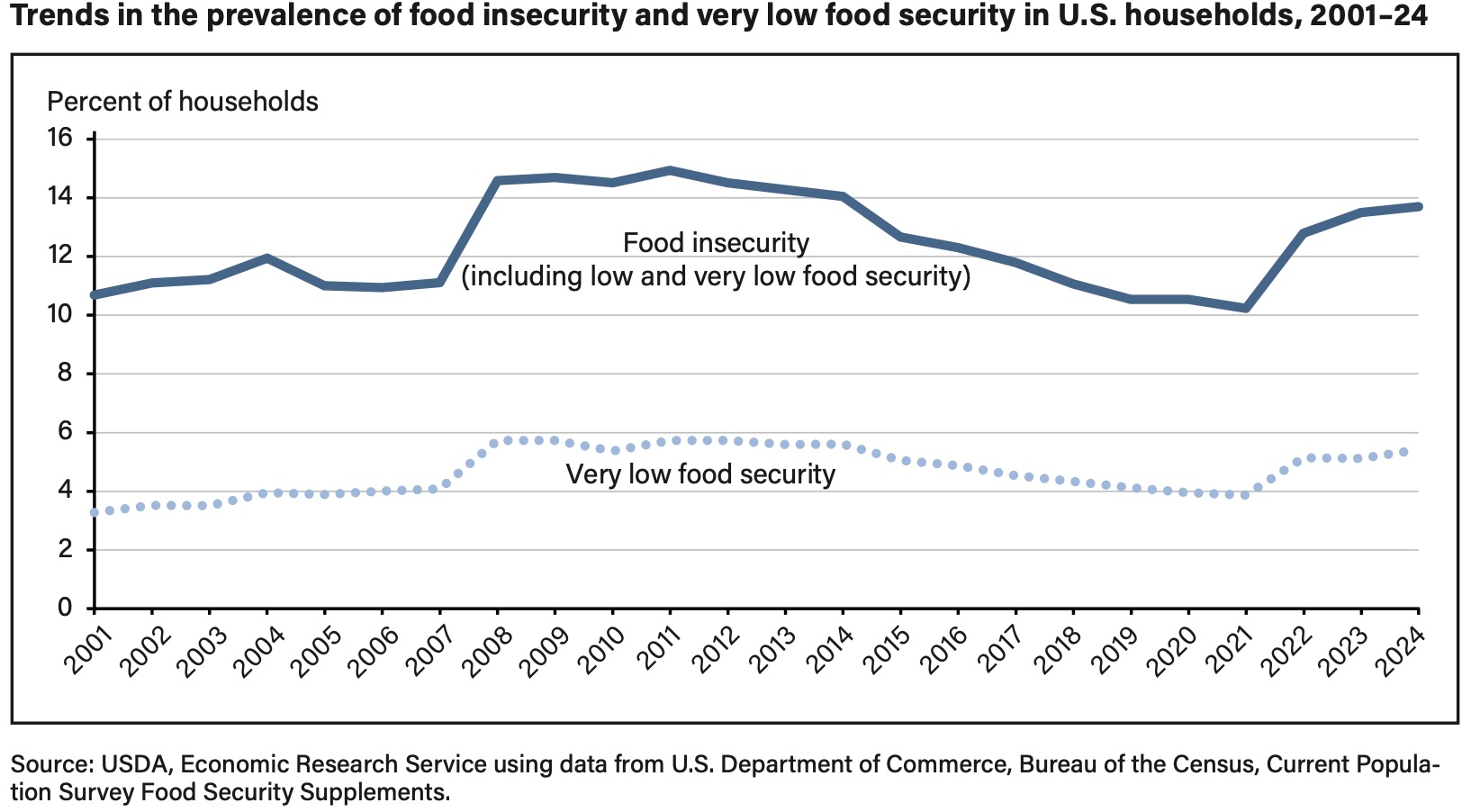
The last survey of U.S. food security that the Agriculture Department is scheduled to produce found that 13.7% of households were food insecure in 2024, the highest rate since 2014.
The Trump administration announced in September that it was ending the annual survey, asserting it was “overly politicized” and was improperly intended to help expand the Supplemental Nutrition Assistance Program. USDA subsequently placed a dozen Economic Research Service employees on leave as it investigated a leak connected with the cancellation of a report.
The 2024 report, which covered the final year of the Joe Biden administration, was released this week. The release was delayed from October due to the government shutdown.
Households are considered food secure if they have “access at all times to enough food for an active, healthy life for all household members,” according to the ERS.
As measured by the survey, household food insecurity fell from 14% in 2014 to 10.2% in 2021 before rising to 12.8% in 2022 and 13.5% in 2023. The 2024 report says the increases from 2023 and 2022 were not statistically significant.
Some 5.4% of households were classified as having very low food security in 2024. The rate had been 5.1% in 2022 and 2023. The increase wasn’t statistically significant, the report says.
“Very low food security is the more severe range of food insecurity where one or more household members experience reduced food intake and disrupted eating patterns at times during the year because of limited money or other resources for food,” ERS says..
In 2024, children were food insecure at times during the year in 9.1% of the households that have children nationwide. The comparable rate was 8.9% in 2023 and 8.8% in 2022. “These households with food insecurity among children were unable at times to provide adequate, nutritious food for their children,” the report says.
Based on a three-year average, six states have food insecurity rates that are statistically significantly above the national average: Arkansas, Kentucky, Louisiana, Mississippi, Oklahoma and Texas.
Sixteen states and the District of Columbia have food insecurity rates that are statistically significantly below the national average: Colorado, Delaware, Hawaii, Iowa, Massachusetts, Maryland, Minnesota, North Dakota, New Hampshire, New Jersey, Pennsylvania, Rhode Island, South Dakota, Utah, Vermont and Washington.
The elimination of the survey followed the July enactment of the One Big Beautiful Act, which will cut the projected cost of SNAP by $186 billion over 10 years, in part by expanding work requirements to adults as old as 64 and to parents of school-age children. States will also for the first time be required to start sharing the cost of SNAP benefits.
Anti-hunger groups continue to criticize the cancellation of the survey.
"For more than three decades, this report has been the gold standard for understanding the struggle that millions of families face to put food on the table,” the Food Research and Action Center said in a press release.
“Yet, the Trump administration has announced that after this year it will no longer issue this annual benchmark, which will impact the ability to track food insecurity in the U.S. and the impact of the SNAP cuts included in the budget reconciliation law.”

