
|
• The Trump administration has intervened in the Potter Valley dam removal, urging federal regulators to halt PG&E’s decommissioning plan. • California farmers see the project as a cautionary test case, citing past dam removals where promised water-supply protections for agriculture collapsed. • The outcome could shape how federal agencies balance dam removal, environmental restoration and long-standing agricultural water uses. |
The Trump administration has inserted itself into a contentious Northern California water battle, urging federal regulators to halt Pacific Gas and Electric Co.’s effort to decommission the century-old Potter Valley Project and remove two dams that have long diverted water from the Eel River into the Russian River watershed.
In a formal filing with the Federal Energy Regulatory Commission last month, USDA asked the agency to reject or pause PG&E’s application to surrender its hydropower license, arguing the proposal is incomplete and fails to account for sweeping agricultural, economic and community impacts. The move represents one of the most direct federal interventions to date in the Potter Valley dam removal process and signals growing concern within the administration over the loss of water infrastructure that supports irrigated agriculture.
Agriculture Secretary Brooke Rollins said allowing the project to proceed as proposed would cause “profoundly negative and irreversible” harm to farmers and rural communities that rely on Eel River diversions for irrigation, groundwater recharge and local economies.
 Alexandra Biering, CAFB (Brad Hooker/ Agri-Pulse)
“Water is the lifeblood of farming,” Rollins said in a statement announcing the filing. “Without it, crops fail, businesses close and rural communities crumble.
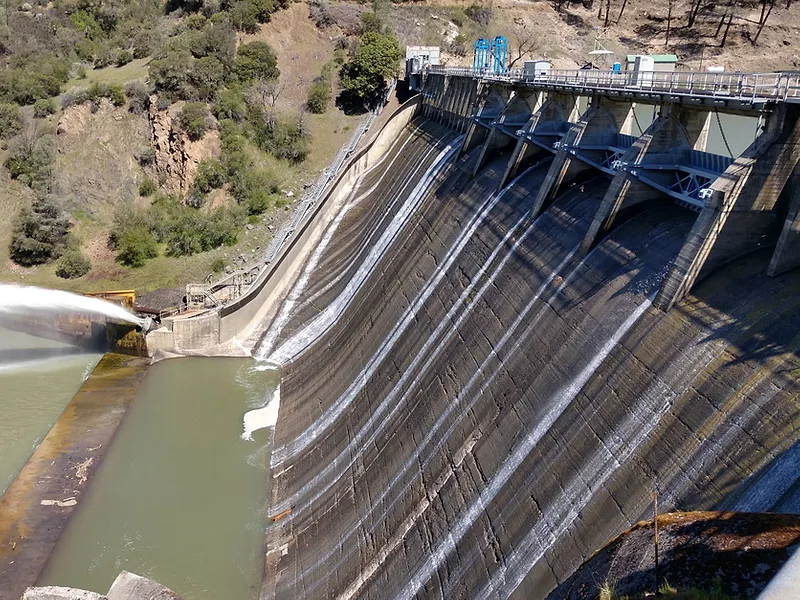
The Potter Valley Project consists of two dams — Cape Horn Dam, completed in 1908, and Scott Dam, completed in 1922 — along with a diversion tunnel that transfers water from the Eel River basin into the Russian River. While originally built for hydropower generation, the project has evolved over more than a century into a water supply system for agriculture and municipalities in Mendocino and Sonoma counties.
PG&E’s federal license for the project expired in April 2022. The utility has since operated under annual licenses while it pursues a full surrender and decommissioning of the project, citing high maintenance costs, seismic concerns at Scott Dam and minimal power generation value. Last July PG&E formally filed its surrender application with FERC, a move that would eventually allow for dam removal and the draining of Lake Pillsbury, the reservoir behind Scott Dam.
Interested in more news on California agriculture, labor, water and rural issues? Sign up for a four-week free trial to Agri-Pulse West. You’ll receive our content - absolutely free - during the trial period.
USDA’s intervention sharply challenges that trajectory. In its filing, the department argued PG&E failed to adequately analyze impacts on agricultural water supplies, groundwater recharge, wildfire response, recreation and USDA-funded programs across the region. The department also warned that dam removal could trigger cascading regulatory consequences under state and federal water laws, compounding losses to farming communities.
The federal move comes as agricultural leaders in California increasingly view the Potter Valley fight as emblematic of a broader national shift away from water infrastructure — and as a potential replay of earlier dam removal battles that left farmers with fewer protections than promised.
Farm bureau warns of ‘cautionary tale’
Those concerns were laid out in stark terms last month at the California Farm Bureau’s annual meeting, where the Potter Valley dam removal was framed as part of a troubling pattern emerging across the West, with the recent Klamath River dam removals serving as a cautionary tale for what can happen when infrastructure is removed without enforceable guarantees for agricultural water users.
In the Klamath basin, a sweeping negotiated package once paired dam removal with water-supply assurances, economic support and habitat restoration funding. But when Congress failed to act by a key deadline, the portion of the deal that would have stabilized water allocations for agriculture collapsed — while dam removal ultimately proceeded anyway under a revised framework that stripped out most community benefits, explained CAFB policy advocate Alexandra Biering.
“Politics overtook the narrative and killed the deal that had connections for farmers,” she said. “Dam removal still went ahead anyway — at a much cheaper cost. The approach is now a model for other efforts, like some fear it would be.”
That experience has left growers wary of assurances surrounding Potter Valley, where multiple local and regional agreements envision removing the dams while maintaining some form of Eel-to-Russian river diversion through winter pumping and new infrastructure. Biering cautioned that once dams come out, regulatory leverage often shifts decisively away from agriculture.
She also warned that dam removal can invite intensified regulatory scrutiny upstream and downstream, particularly when agencies seek to lock in minimum flows or reinterpret water quality and fish protection mandates.
“This is the world we’re living in now,” said Biering, pointing to increased flow requirements in Klamath tributaries under Assembly Bill 263 following dam removal elsewhere.
 Adam Gaska, Mendocino County Farm Bureau (Brad Hooker/ Agri-Pulse)
“A slow train wreck”
For growers closest to the Potter Valley Project, the sense of urgency is growing.
Adam Gaska, executive director of the Mendocino County Farm Bureau, said the region has reached what he described as a crisis point.
The Potter Valley Project, he explained, was initially built to generate power by diverting Eel River water into the Russian River. But over time, hydropower became secondary to water supply. As environmental requirements mounted during relicensing cycles, PG&E was forced to reduce diversions by more than half and make costly upgrades that ultimately led the utility to walk away from the project altogether.
Local water agencies, including the Inland Water & Power Commission, have since worked to develop a post dam removal framework that would preserve some diversions. But Gaska said the options on the table are far from ideal.
Under tentative plans, dams would be removed, winter diversions could continue via pumping from the Eel River, and agricultural users would need new storage capacity to manage seasonal supplies. The approach would also require payments to a tribe to forbear its water rights, introducing new financial obligations for growers.
“It’s been basically a slow train wreck,” Gaska said. “You don’t realize it’s really happening until it’s right in front of you, and at that point it’s too late to really do much.”
The uncertainty has already caused tension within the community, he said, with farmers divided over whether to pursue compromise solutions or push harder for federal intervention to keep the dams in place.
Groundwater and SGMA concerns
Beyond surface water losses, growers fear dam removal could intensify groundwater challenges under California’s Sustainable Groundwater Management Act.
In Potter Valley, the local groundwater basin has been designated as a basin of concern, in part because of its shallow aquifer and likely hydrologic connection to surface waters, explained Gaska. He and Biering worry that losing consistent surface water diversions could reduce natural recharge and expose growers to tighter pumping limits or additional regulatory oversight.
“SGMA is not just a groundwater problem — it’s a surface water problem,” said Biering, arguing that constrictions on surface supplies often drive new groundwater conflicts.
They also cautioned that the groundwater laws rarely account for the cumulative impacts of dam removal, water quality mandates and groundwater sustainability requirements on rural economies.
“No one ever had to account to the impact to communities, and to regions and to people, because it was just a law that was passed,” said Biering, noting that no state or federal environmental reviews were required for the legislation to pass.
That concern resonates with USDA’s filing, which argued FERC must evaluate not only the immediate environmental effects of dam removal but also the broader economic and regulatory consequences for agriculture.
Two-basin solution under strain
USDA’s intervention lands amid ongoing negotiations over a two-basin solution, a framework championed by California Democratic Rep. Jared Huffman that seeks to balance Eel River restoration with continued water deliveries to the Russian River basin.
The concept has drawn support from tribes, environmental groups, Humboldt County and several water agencies and envisions dam removal paired with alternative diversion infrastructure and habitat restoration investments.
But Biering and Gaska say key agricultural questions remain unresolved, particularly around cost, reliability and long-term regulatory exposure.
Once dams are removed, they argue, farmers lose a physical asset that has historically anchored water rights, operational flexibility and political leverage. What replaces it, they fear, is a patchwork of permits, agreements and pumping schemes vulnerable to future legal and regulatory challenges.
USDA echoed those concerns in its filing, arguing that PG&E’s surrender application fails to provide enforceable commitments to protect agricultural water users or account for USDA investments across multiple programs.
Environmental advocates counter that maintaining aging dams is not legally viable and say the Federal Power Act does not allow FERC to force a private utility to continue operating unprofitable infrastructure. They argue dam removal offers ecological benefits, including restored fish passage and improved river health, that outweigh the costs.
For more news, go to: www.Agri-Pulse.com

