

|
California water agencies now have 15 years to deliver 9 million acre-feet of new supply, a deadline written into law under Senate Bill 72 that is forcing the state to rethink everything from surface storage and groundwater recharge to who gets a seat at the planning table.
The law, signed by Gov. Gavin Newsom in October, fundamentally rewrites the state’s infrastructure playbook under the California Water Plan, shifting it from a long-running inventory of conditions into an action-driven framework aimed at water reliability in an era of climate extremes. State officials have outlined early implementation plans, signaling an accelerated rollout and setting the stage for disputes over funding, environmental safeguards and which projects count toward meeting the 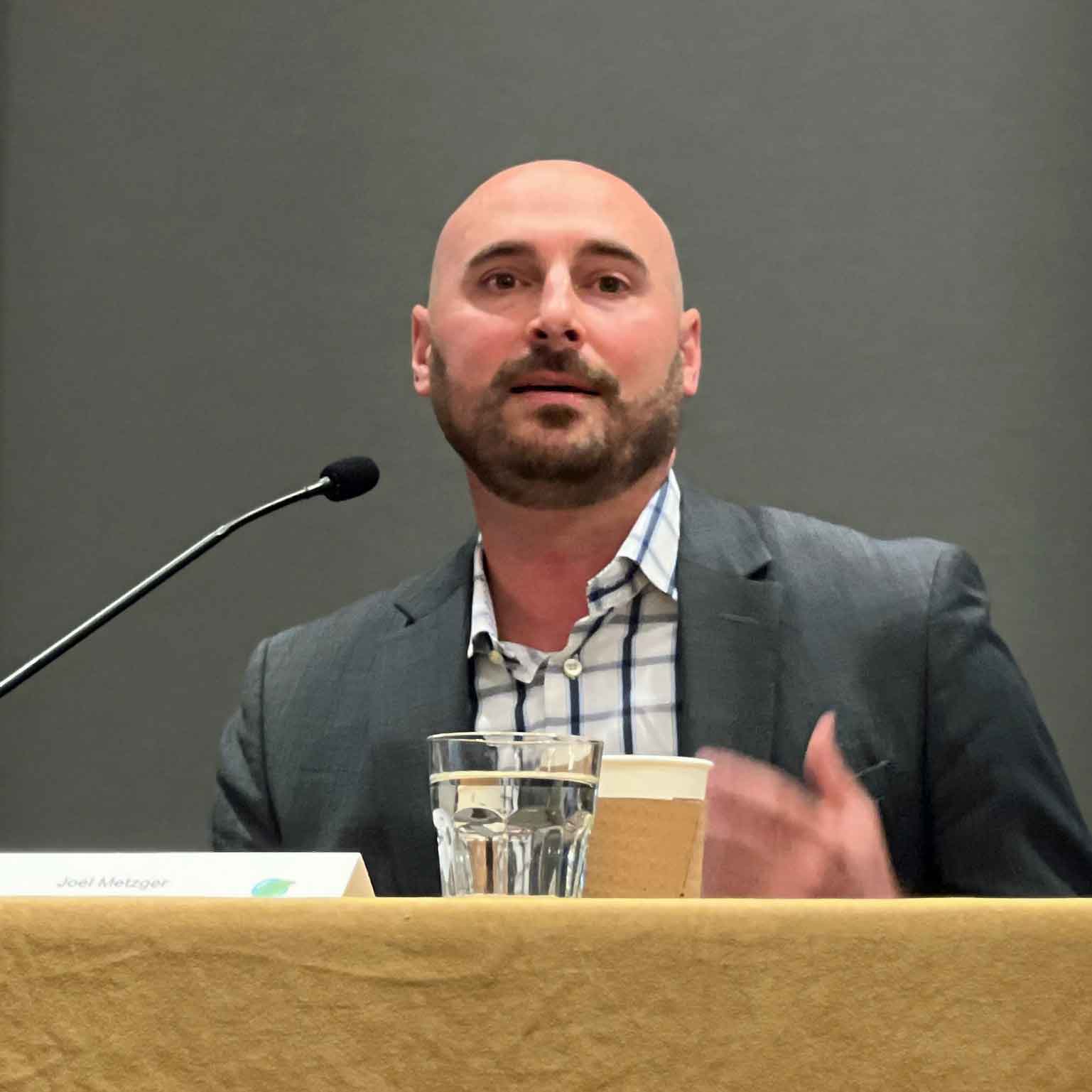 Joel Metzger, DWR (Brad Hooker/ Agri-Pulse)state’s new target.
With the clock already running, state water planners are moving quickly to stand up advisory committees, regional workshops and technical workgroups required under SB 72, even as major questions remain unresolved — including how the state will pay for new infrastructure, how environmental protections will be weighed, and whether California’s permitting system can deliver projects at the pace the law demands.
From mandate to implementation: rewriting the Water Plan
SB 72 was the second attempt by Sen. Anna Caballero, D-Merced, to impose a long-term water supply planning mandate on the state. A similar proposal, SB 366, cleared the Legislature in 2024 after a two-year push but was vetoed by Newsom over budget concerns — but not policy objections, according to administration officials. Caballero returned last year with revised language that narrowed fiscal impacts while preserving the bill’s core objective: forcing California to plan for future shortages rather than react to drought.
That effort succeeded amid growing concern over the state’s vulnerability during consecutive dry years. At the peak of the last extreme drought in 2022, several urban regions came close to exhausting local supplies, while agricultural communities faced deep allocation cuts. That prompted nearly 200 organizations, including water districts, farm groups and tribes, to press again for legislation as a unified voice.
“My sense from the group is that it was unacceptable for the fourth-largest economy in the world to have only a couple years of bad droughts and then be out of water,” said Joel Metzger, deputy director of statewide water resources planning at the Department of Water Resources, at the annual conference for the California Irrigation Institute in Sacramento on Monday. “What we need is reliability — not just in the short term but over the medium and long term.”
For decades the California Water Plan primarily cataloged water conditions and infrastructure without prescribing action, he explained. SB 72 changes that by establishing a statewide interim target of 9 million acre-feet by 2040, followed by a more refined, watershed-based target for 2050. Metzger acknowledged “that's a very ambitious target” and that “we haven't shown in this state the ability to build projects that would achieve that kind of water in that timeframe.”
The law directs DWR to modernize the plan into an operational framework grounded in climate modeling, water balance analysis and region-specific strategies.
“We need a modern plan. We need a new era of planning. We need to take a different approach,” Metzger told the California Water Commission last week.
Interested in more news on California agriculture, labor, water and rural issues? Sign up for a four-week free trial to Agri-Pulse West. You’ll receive our content - absolutely free - during the trial period.
DWR’s approach relies on three work streams: improving supply and demand data, applying climate scenarios at the watershed scale, and identifying adaptation strategies for each region. Those strategies will incorporate a mix of surface and groundwater storage, conservation, recycling, stormwater capture, desalination, conveyance, water transfers and demand management.
Implementation is already underway. DWR expects to launch statewide outreach in February, form advisory committees in the coming weeks, and release draft elements of the 2028 Water Plan in 2027. Final adoption is targeted for late 2028.
“This legislation was just signed on Oct. 1 and the water plan is due in a few years, but we really only have about a year of technical work,” said Metzger.
Funding remains uncertain. While early planning dollars were included in the governor’s January budget proposal, state officials cautioned that the scale of modeling and coordination required under SB 72 will depend on sustained legislative support.
High stakes, high tension: infrastructure, opposition and engagement
State and regional water leaders framed SB 72 as necessary, but many warned that planning alone will not overcome long-standing obstacles to building infrastructure.
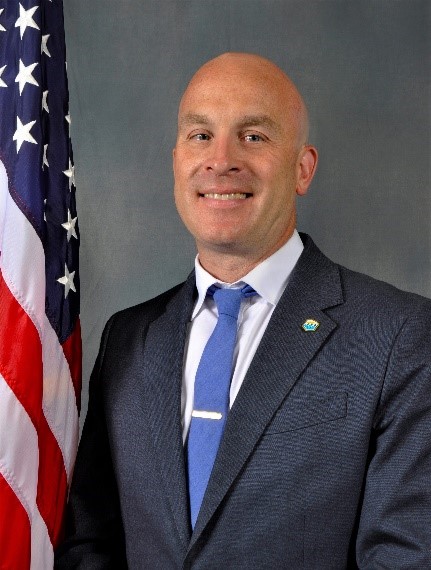
Adam Nickels, acting Mid-Pacific regional director for the U.S. Bureau of Reclamation, pointed to the Sites Reservoir project proposal as an example of delay-driven cost escalation.
“We issued a notice of intent to file a NEPA document for the construction of Sites Reservoir in 2001,” said Nickels. “We signed that record of decision last Friday. Twenty-five years to get a project like that.”
Nickels said inflation and prolonged permitting pushed estimated costs from roughly $2 billion to nearly $7 billion.
“That shouldn’t have taken 25 years to do,” he said.
In the Central Valley, water agencies emphasized the structural vulnerability of regions south of the Delta.
“There’s only one reservoir south of the Delta that has the ability to store Central Valley Project water, and that’s San Luis Reservoir,” said Federico Barajas, executive director of the San Luis & Delta-Mendota Water Authority.
 Adam Nickels (Reclamation photo)
The authority is pursuing an expansion that could add roughly 130,000 acre-feet of storage, layered onto a federally required dam safety project. Barajas said regulatory requirements — including highway mitigation demands — had inflated costs before recent legislative intervention reduced them.
“Water infrastructure investments in California have been lacking, to say the least,” said Barajas. “Even though you have proposals out there that provide funding, the funding hardly ever materializes.”
Urban water suppliers stressed that SB 72 establishes direction rather than dictating projects.
“Where we’re going to build and stand up those projects and programs to develop those 9 million acre-feet is yet to be determined,” said Heather Dyer, CEO and general manager of San Bernardino Valley Municipal Water District, who emphasized the role of the advisory committee required under the law.
Dyer was one of a handful of regional water leaders who brought together the SB 72 coalition. Their goal was to “develop a mandate that would persist beyond any given administration,” requiring state agencies to pursue “a shared, collective goal that wouldn't get derailed.” She explained that around “35 different great ideas” for major water projects have emerged since the 1960s that fell by the wayside when a new governor came in.
Yet environmental pushback surfaced early during public comment before the Water Commission.
“This legislation seeks to replace the existing California Water Plan with arbitrary new water supply targets that ignore the need for water to remain in California’s rivers,” Cintia Cortez, policy program manager at Restore the Delta, told commissioners.
The group has set up legal roadblocks delaying construction of the Delta tunnel project and was one of about a dozen conservation and sportfishing groups that had opposed SB 72.
Others questioned how DWR will reconcile statewide targets with watershed-level findings.
“It is not only possible but quite likely that after DWR does its rigorous analysis … the need will be less than the target established in the statute,” said Dennis O’Connor, business coordinator at the Mono Lake Committee.
State officials said broad participation will shape how those tensions are resolved. DWR plans to begin tribal consultations in early February, followed by regional workshops, advisory committee meetings and public briefings before the Water Commission.
“We want to hear from all of you across the state, and we want to incorporate your feedback into this plan,” said Metzger.

