
|
As U.S. agriculture awaits further details on a new U.S.-India deal, some are looking at a recently inked free trade deal between New Delhi and Brussels for clues on the possibilities – and limitations.
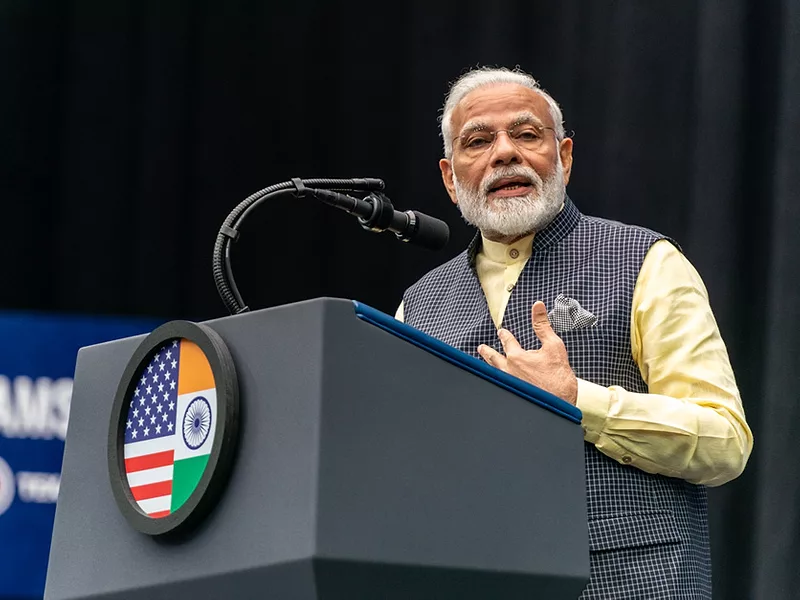
President Donald Trump said Monday that the U.S. and India had reached a deal to lower tariffs. As part of the deal, the U.S. will lower its reciprocal duty from 25% to 18% and drop an additional 25% tariff imposed on Indian exports over its continued purchases of Russian oil. Meanwhile, India will up purchases of U.S. products, including ag, and lower tariff and non-tariff barriers – although neither side has provided further details on what trade barriers would be reduced.
The deal comes on the heels of EU and India concluding their own free trade agreements, which both sides’ officials have dubbed “the mother of all deals.”
The sweeping free trade deal will reduce trade barriers on more than 90% of both countries’ exports, according to a fact sheet from the European Commission, with particularly deep Indian tariff cuts for EU manufacturing exports.
Agriculture saw much narrower market access commitments, with both sides excluding sensitive industries from the deal, which is likely to be replicated in a U.S. deal.
 Richard Rossow (CSIS photo)
India has become “pretty deal friendly,” Rick Rossow, India and emerging Asia economics chair at the Center for Strategic and International Studies, told Agri-Pulse in a recent interview. “But they do have red lines, which is agriculture market access for staple grains.”
In the EU deal, Indian President Narendra Modi left the country’s trade barriers in place for the milk and cheese, beef, poultry and cereals sectors, the Indian government said. Meanwhile, the EU left its protections for beef, sugar, poultry and rice untouched.
Nonetheless, some agricultural provisions made it into the deal. The pact featured Indian tariff reductions for olive oil, margarine, processed food including bread and pasta, fruit juices, kiwis, pears and other specialty fruits, pet food, sheep meat and alcoholic beverages.
Becky Rasdall Vargas, senior vice president for trade and workforce policy at the International Dairy Foods Association, told Agri-Pulse last week that she sees some optimism for the U.S. dairy sector in the EU’s dealmaking. Milk and cheese are missing from the arrangement, she said, because India has a domestic industry it needs to protect. But the inclusion of some dairy ingredients and composite products – including whey and milk proteins and infant formula – offers a signal on which products the county needs and what liberalization may be achievable in a U.S. deal.
Accordingly, Rasdall Vargas said she sees no reason why the U.S. wouldn’t be able to secure similar market openings as the EU.
Fiercer competition?
The U.S. whiskey industry is also eyeing the new EU-India deal as a benchmark for what the Trump administration could negotiate with New Delhi. Under the terms of the EU-India FTA, tariffs would fall from 150% to 75% once it comes into force and could fall as low as 40% in the following years. The United Kingdom secured an identical arrangement for its whiskey exports as part of its FTA signed last year.
If the U.S. accepts anything less than identical tariff treatment, Rob Maron, senior vice president for international trade and market access at the Distilled Spirits Council of the United States, said it could roll back recent U.S. export gains and award both the Irish and Scottish industries a tariff advantage over U.S. products, once their respective deals are implemented.
U.S. whiskey exports to India from January through October 2025 were 54% up on the previous year, said Maron – albeit from a relatively modest volume of less than $6 million. The boost came after India cut tariffs on U.S. whiskey from 150% to 100%.
Maron said officials are aware of the Indian opportunities and will want to secure at least the same tariff treatment as the EU and UK, “if not better.”
Some U.S. industries are already anticipating increased competition in the Indian market from European suppliers.
Northwestern U.S. fruit producers have been angling for improved terms of trade in the Indian market. U.S. apples currently face a 50% tariff, while pears are subject to 30% duties – among the highest in the world.
 Tracey Chow (LinkedIn photo)
The U.S. currently supplies less than 1% of the Indian pear market, for example.
“There is stuff going but clearly not to the degree that it should be,” Tracey Chow, federal government affairs director at Western Growers, told Agri-Pulse.
Under the new EU-India deal, a certain volume of EU pear exports would face a significantly reduced tariff. But high trade barriers continue to weigh on U.S. fruit exports.
“Are we potentially looking at increased orchard crop competition?” Chow said.
Timeline is key to U.S. benefits
U.S. agriculture will be keen to learn the details of the U.S.-India deal, but the timeline for implementation will also be a key determinant for whether U.S. products see increased competition in the Indian market.
The EU-India deal still has a number of hoops to jump through before the deal can be fully implemented and the benefits realized. After a legal revision and translation of the text into the EU’s languages, both the European Council and Parliament will have to approve it.
Recent EU-U.S. and EU-Mercosur deals have shown how long and turbulent this process can be. The Mercosur deal, for example, could be months, or even years, away from being fully implemented.
The lack of sweeping agricultural provisions in the India deal could help smooth the path, however, as the kind of farmer pushback that almost derailed the Mercosur deal should be avoidable this time around.
Trump said that Modi had requested a U.S. deal to be “effective immediately,” but as of Tuesday the White House had not issued any directives to adjust any tariff rates.
Former EU agricultural trade negotiator John Clarke laid out exactly what might be at stake for U.S. agriculture in an op-ed in the EUobserver last week, if the European Union deal is implemented before the U.S. and India finalize and adopt their own deal.
The “EU gets first-mover advantage in a potentially massive market and that two billion people are turning their back on an increasingly untrustworthy USA,” he wrote.

