
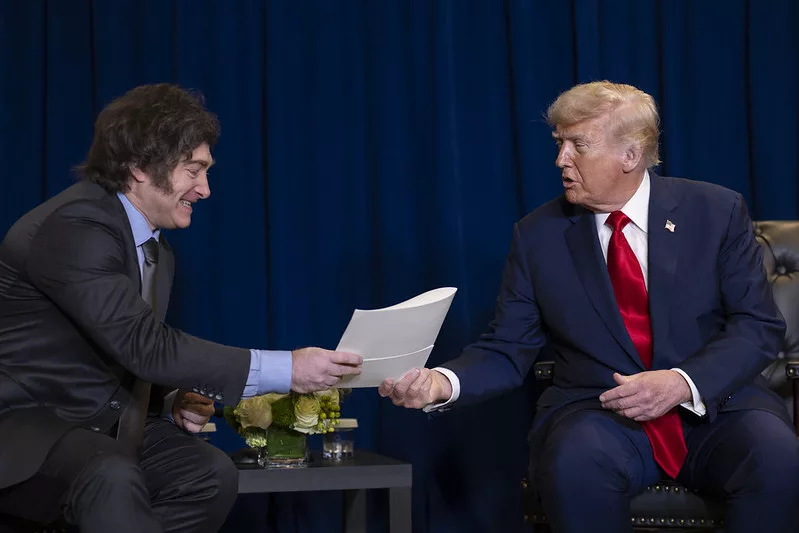
The U.S. and Argentina on Thursday signed a reciprocal trade agreement that would allow the U.S. to export 80,000 metric tons beef to the country duty-free, along with other commodities like cheese, almonds, pistachios, and potatoes. But the deal leaves the thornier issue of U.S. beef imports to further discussions.
The agreement text says that Argentina will establish a tariff-rate quota for 80,000 metric tons of U.S. beef. President Trump suggested that the U.S. could offer a similar TRQ to beef imports from Argentina last October to help bring beef prices down, sparking outrage from U.S. ranchers.
Instead of offering Argentina a tariff-rate quota, the two sides said they would "finalize negotiations with respect to market access for beef" at a later date, according to a fact sheet.
Trump administration spokespeople gave Agri-Pulse competing accounts on Thursday of what beef provisions had been agreed as part of the deal. But the agreement text makes no mention of a U.S. tariff-rate quota for Argentinian beef, of the kind Trump floated last year.
The new U.S. beef quota will be administered on a "first-come, first-served basis," the agreement says, in four 20,000-metric ton quarterly tranches.
In addition, the agreement also sets up Argentinian duty-free quotas for 1,000 metric tons per year of U.S. cheese as well as 870 metric tons per year of almonds, 40 metric tons of shelled pistachios, 40 metric tons of unshelled pistachios, 690 metric tons of frozen potatoes, and 1,100 metric tons of unfrozen potatoes.
“The deepening partnership between President Trump and President Milei serves as a model of how countries in the Americas, from Alaska to Tierra del Fuego, can advance our shared ambitions and safeguard our economic and national security,” USTR Jamieson Greer said in a release.
“The U.S.-Argentina Agreement lowers long-standing trade barriers and provides significant market access for American exporters, ranging from motor vehicles to a wide array of agricultural products," he added.
Beyond tariff reductions, Argentina also agreed to allow U.S. poultry exports to resume within a year, after prohibiting imports over avian flu concerns, according to a USTR fact sheet. The Milei government also agreed to protect U.S. exporters' use of geographic indications for cheese and meat names – a provision which has appeared in several recent Trump trade deals.
Argentina also agreed to recognize USDA's Food Safety Inspection Service oversight over meat and poultry products, and its export certifications.
In return for Argentina's ag concessions, the Trump administration agreed to lift tariffs on a slate of products not available in the U.S., including corks, spices, aircraft parts and pharmaceutical products.
For more news, go to Agri-Pulse.com.


