
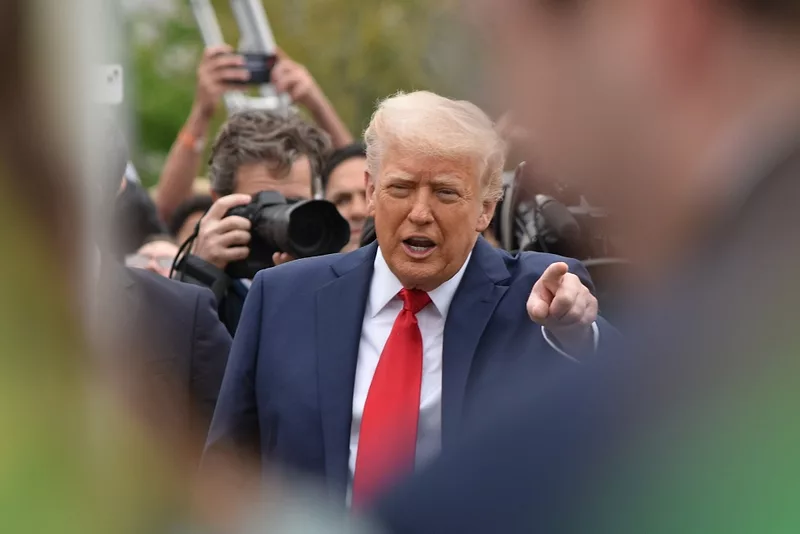
President Donald Trump told reporters on Sunday evening that the U.S. could buy more Argentinian beef to reduce the costs of beef for U.S. consumers.
“We would buy some beef from Argentina,” the president told reporters aboard Air Force One. “If we do that, that will bring our beef prices down.”
U.S. beef prices have hit record highs in recent weeks due to low cattle inventory and strong domestic demand. The president told reporters last week that his administration had cut a deal to lower prices but did not provide details.
"The only price we have that's high is beef, and we'll get that down," Trump said Sunday.
Argentinian President Javier Milei was also at the White House last week, where Trump referred to him as his “favorite president.” The Trump administration has taken a particular interest in supporting the Argentine economy ahead of its legislative elections this month, extending a $20 billion currency swap and working with the private sector to add another $20 billion in support.
Argentinian officials have been briefing their domestic media since the visit that the U.S. and Argentina are on the cusp of announcing a trade pact. The White House, Agriculture Department and Office of the U.S. Trade Representative did not respond to questions from Agri-Pulse on Friday on whether this was an accurate portrayal of the state of discussions.
Argentina is a major global beef exporter, with around $3 billion in annual sales globally. U.S. imports of Argentinian beef have also been growing in recent years, jumping by 37% between 2023 and 2024 to hit around 99 million pounds, according to USDA data.
U.S. soybean producers have already expressed their dismay that the administration is extending financial support to a key foreign competitor.
Parts of the U.S. beef industry are indicating they are also dismayed at Trump’s suggestion that higher Argentinian beef imports could be used to lower domestic prices. The beef industry has been a rare bright spot in the U.S. farm economy, with economists and lawmakers pointing out that strong beef profits are masking the challenges other commodities are facing in macro-level economic data.
“Please stop,” Texas rancher Quentin Shieldknight said in a post to X on Monday morning. “For once in my lifetime we are finally making real money. It’s not fair to punish us and say our product is too high because it’s not. It’s actually finally where it needs to be for us to make a living with all the inflation and input prices.”
Cut through the clutter! We deliver the news you need to stay informed about farm, food and rural issues. Sign up for a FREE month of Agri-Pulse here.
Economists are already anticipating that the U.S. cattle herd will rebuild, and are expecting a shift in the cattle cycle next year.
“[L]et it happen naturally,” Shieldknight said. “Do NOT screw this up. Our beef is safe and better than anywhere else. Do not import a problem and screw us over. It’s the one ag sector of our country that is running correctly.”
Farm Action, a farmer-led watchdog group, panned the idea of using imported Argentinian beef to lower U.S. prices as a betrayal to farmers.
"After crashing the soybean market and gifting Argentina our largest export buyer, he’s now poised to do the same to the cattle market," Christian Lovell, Farm Action's senior director of programs and an Illinois-based cattle producer, said in a statement.
"Importing Argentinian beef would send U.S. cattle prices plummeting—and with the meatpacking industry as consolidated as it is, consumers may not see lower beef prices either," Lovell added. "Washington should be focused on fixing our broken cattle market, not rewarding foreign competitors."
Colin Woodall, CEO of the National Cattlemen's Beef Association, was similarly unimpressed. He questioned why the administration would want to further contribute to the large U.S. beef trade deficit with the country.
"Argentina has a deeply unbalanced trade relationship with the U.S," Woodall said in a statement. "In the past five years Argentina has sold more than $801 million of beef into the U.S. market. By comparison, the U.S. has sold just over $7 million worth of American beef to Argentina."
"Although beef prices have increased, consumer demand for beef remains strong because of the work American cattle producers have done to improve the quality and safety of U.S. beef," Woodall added. "We call on President Trump and members of Congress to let the market work, rather than intervening in ways that do nothing but harm rural America."
U.S. Cattlemen’s Association President Justin Tupper made a similar appeal in his own statement.
"[G]overnment intervention is not needed in an industry that is already correcting in response to years of market pressure," Tupper said. "USCA supports affordable food prices for American families. But we do oppose policies or loopholes that manipulate the market to address a solution that will be solved through natural market behavior. This approach weakens our industry’s foundation and undermines rural America."
For more news, go to Agri-Pulse.com.

