

Government subsidies are keeping the nation’s farm economy afloat even more than last year. USDA is forecasting that farm income will be relatively stable this year only because of increased government payments.
Net farm income is forecast at $153.4 billion this year, a 2.6% decline from 2025 when adjusted for inflation. Direct government payments to farmers are expected to jump $13.8 billion to $44.3 billion this year.
Take one: The cattle sector continues to be the one major bright spot in the industry. Revenue from cattle and calves is projected to rise 4.1% this year to $5.2 billion on continued increases in cattle prices.
CattleFax CEO Randy Blach told cattle producers Thursday to expect the nation’s historically small herd to start expanding this year: “This will be the low in slaughter production in 2026. The cattle herd will begin that long, slow growth.”
Reporter’s Notebook: Brazilian ethanol industry celebrates first DDGS shipment to China
Agri-Pulse Trade Editor Oliver Ward is traveling in Brazil this week and provides this report.
Brazil’s Inpasa sent the country’s first shipment of dried distillers grains to China this week, in what the industry hopes is the birth of a new and lucrative market. Inpasa is the largest producer of corn-based ethanol in Latin America.
The two countries agreed to trade ethanol byproducts last year, paving the way for DDGS exports to start. Inpasa, which accounts for more than 15% of Brazil’s total production, sent some 62,000 tons this week – the first such shipment.
Bruno Maier, corporate sustainability and advocacy manager at Inpasa, told Agri-Pulse and other reporters on Thursday that the new Chinese sales are “remarkable” after years of negotiations over sanitary conditions.
“China is very protective in this sense. So, it’s really remarkable it happened,” he said.
Take note: Fresh Brazilian exports are only likely to increase the challenges for U.S. exporters in the Chinese market. China once accounted for more than half of U.S. DDGS exports, but its share has slipped since Beijing imposed antidumping duties of 3% on the U.S. product following a 2015 investigation.
The U.S. has replaced the Chinese market with other export destinations, but overall, DDGS exports were lower in 2024 than they were in 2015, according to Census Bureau data.
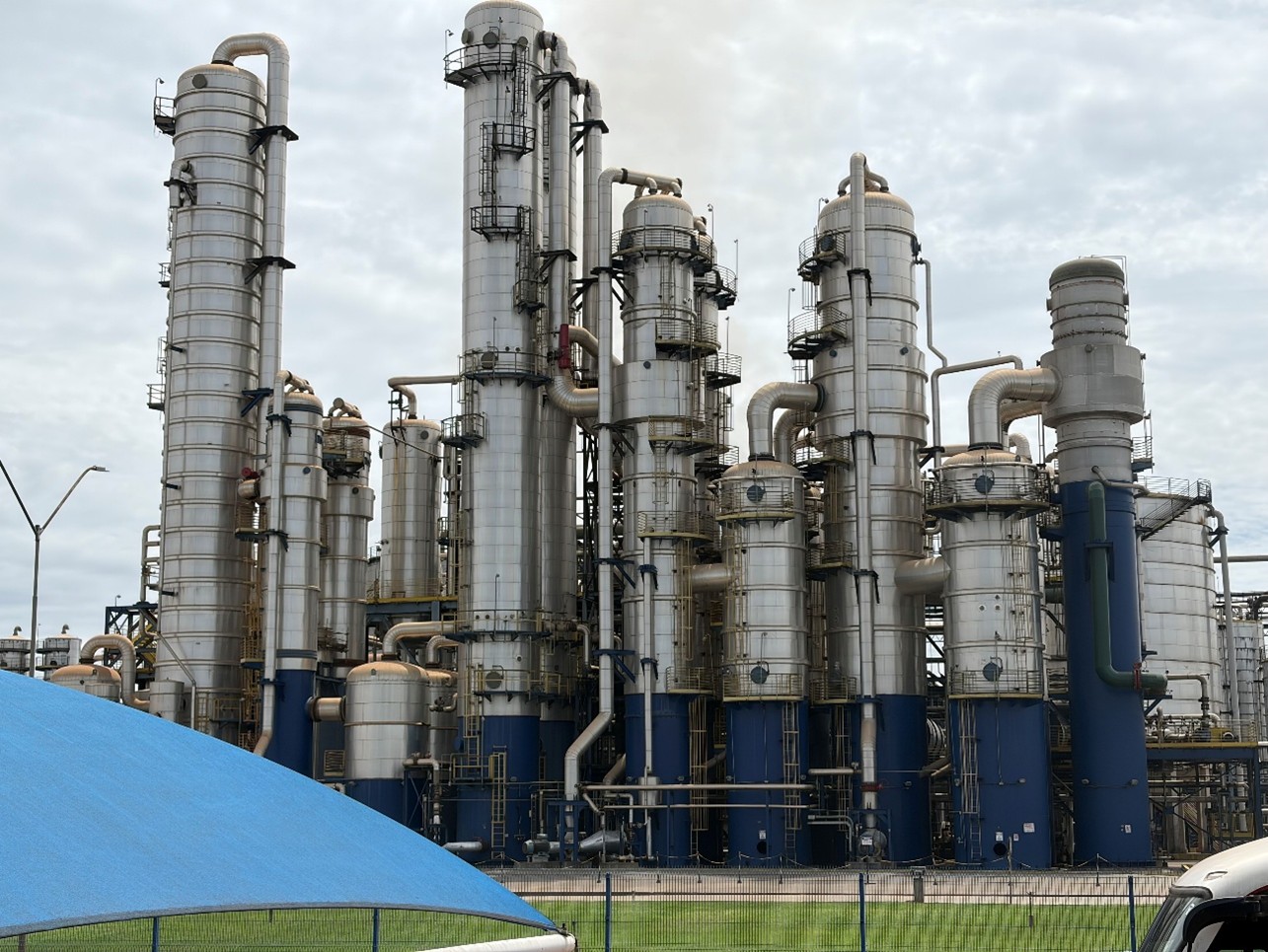 Inpasa’s corn ethanol production facility near Sinop, in the Brazilian state of Mato Grosso. It is the largest corn ethanol biorefinery in the world.
RFK Jr.: Trump administration wants a successful beef industry
Health and Human Services Secretary Robert F. Kennedy Jr. says the Trump administration is working to expand the U.S. beef industry and grow cattle herds. Kennedy was on stage Thursday with National Cattlemen’s Beef Association President Buck Wehrbein at CattleCon in Nashville, Tennessee.
"We're doing everything we can to encourage people to increase the size of the herds in this country," Kennedy said, urging producers to stop slaughtering breeding cows due to market uncertainty.
Kennedy touted the administration's commitment to domestic beef production and received applause when stating, "Nobody in the administration wants to eat imported beef."
He praised the new Dietary Guidelines for Americans, particularly the placement of animal protein atop the food pyramid.
New report highlights difficult state of American farmers
American farmers are facing unprecedented pressures according to a new report from the Modern Ag Alliance, which echoes recent warnings from ag leaders about a potential “collapse” of the U.S. agriculture industry.
Rising input prices, low commodity prices and regulatory uncertainty are causing a lack of confidence in the ag community, the report says. Six in 10 farmers, for example, “say that without a course correction, farming may ‘cease to exist as we know it,’ and only about half would recommend farming as a career to their children.”
“This data shows that economic pressure and regulatory uncertainty are colliding on the farm,” MAA Executive Director Elizabeth Burns-Thompson said in a news release. “Policymakers need to understand what this means in real terms — for farmers’ ability to stay in business and for the affordability of America’s food, fuel, and fiber.”
MAA was founded by glyphosate manufacturer Bayer and now includes more than a hundred state commodity groups.
Judges question DOJ attorney on frozen grant funding
A government attorney urged a skeptical federal appeals court panel Thursday to reverse a lower-court injunction requiring the Agriculture Department and four other agencies to resume processing funds that had been frozen by the Trump administration.
Justice Department lawyer Sean Janda said that a nationwide injunction issued by a district court judge in Rhode Island that stopped the agencies from withholding some program funds “goes well beyond what was necessary to address” harms expressed by a coalition of groups that filed the suit.
Janda acknowledged there is evidence of individual grants or programs being frozen, but said there was no evidence to show that USDA and other agencies were following “agency-wide, categorical, no-discretion-left freeze.”
However, the judges of the 1st Circuit Court of Appeals seemed skeptical. One said Janda’s argument implies “that the secretary just stayed mum, but the lower-level people in the agency individually made judgments to follow the executive order.”
In response, Janda said, “No, my point, your honor, is just that I’m sure word filtered through the many, many levels in between the president and these line-level officials. But there’s just not evidence in the record about exactly how that happened."
Rail merger must show “substantial” benefits to be allowed to proceed, House members say
Forty-Seven House members are warning the Surface Transportation Board that a proposed merger between Union Pacific and Norfolk Southern should not proceed unless the companies can demonstrate “clear, measurable, and substantial benefits” for a number of industries, including agriculture.
In a letter, the lawmakers say they are already hearing initial concerns about a “lack of serious and meaningful commitments to enhance competition and protect against service meltdowns” by the companies.
They also noted that the industry once had 30 Class I railroads, but that number has been reduced to six since it was partially deregulated in 1980. They warned that past mergers have resulted in “tremendous backlash from rail customers, employees, passenger rail operators and riders” over worries about increased market power and major service disruptions.
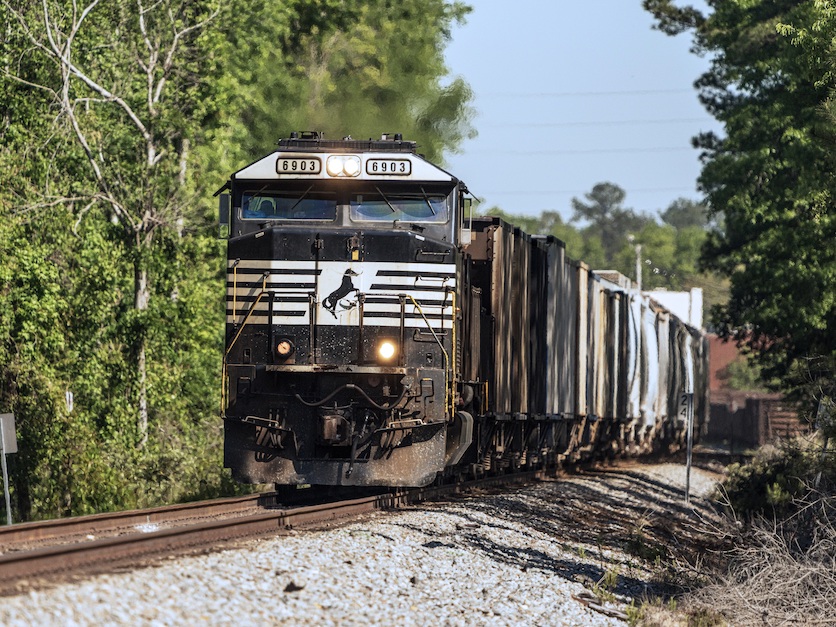 A Norfolk Southern train. (Norfolk Southern/Union Pacific photo)
Sustainable ag and the 45Z blues
Former USDA Chief Economist Seth Meyer says he’s a "bit disappointed" in how a plan aimed at boosting farmer revenue was handled in the 45Z biofuel tax credit guidance released this week by the Trump administration.
"We put a lot of effort [at USDA] into addressing the producers' concerns, getting everything in order and really putting out there a solid concept," Meyer said at the Iowa Renewable Fuels Summit. "They could have referenced our preliminary rule ... but they didn't."
In proposed rules for the tax incentive meant to encourage domestic production of crop-based fuels, the Treasury Department referred to a January 2025 USDA proposal that was one of the former Biden administration's last actions. It focused on how certain regenerative ag practices, including no-till, cover crops and efficient fertilizer use, could reduce the carbon intensity of growing corn, soybeans and sorghum. The base value of 45Z is based on the carbon footprint of a biofuel throughout its full production supply chain, replacing a flat $1-a-gallon credit.
In the 45Z proposal released Tuesday, Treasury indicated that it would fold the guidelines into the rules, but didn't provide timing or other specifics.
Troy Bredenkamp, senior vice president of government and public affairs for the Renewable Fuels Association, says he hopes the administration will ultimately embrace the agriculture proposal.
Senate Finance schedules USMCA hearing
The Senate Finance Committee will hold a hearing next Thursday focusing on the U.S.-Mexico-Canada trade agreement.
The hearing will feature former House Ways and Means Chairman Kevin Brady, now a consultant at Akin; Eric Gottwald, policy specialist for trade and international economics at the AFL-CIO; Paul McCarthy of the Vehicle Suppliers Association, and Ted Vander Schaaf, owner of Vander Schaaf Farms in Idaho.
Final Word
“We do not need to apologize for this. Most of us in the room have been involved in this industry for our lifetimes, our families, generations, and this is what we work for.” – CattleFax CEO Randy Blach, speaking Thursday at CattleCon about the strong beef sector.
Oliver Ward, Philip Brasher, Noah Wicks, Steve Davies, Lydia Johnson and Kim Chipman contributed to today’s Daybreak.

.webp?t=1762183428)


