
|
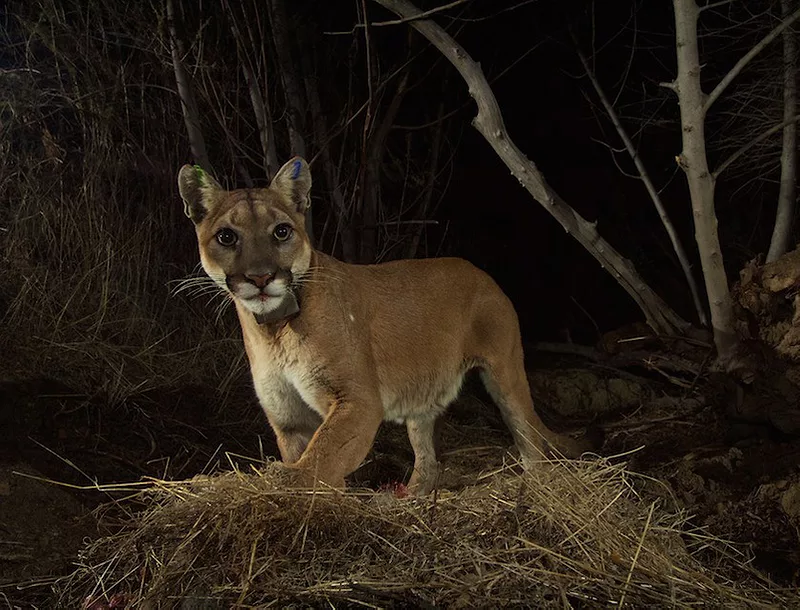
The California Fish and Game Commission voted this month to list a population of mountain lions in Southern and Central California as threatened under the state’s Endangered Species Act, setting up new regulatory guardrails that have ranchers warning of heightened wildlife conflicts.
After a lengthy six-year process, the commissioners agreed with the environmental groups behind the petition, finding that the coastal and peninsular mountain lion populations face enough threats — ranging from habitat fragmentation to inbreeding, vehicle strikes and rodenticide poisoning — to justify CESA protection.
 Abby Carlson, CAFB (LinkedIn photo)
While ranchers have already been living under temporary CESA protections during the review period, they say the listing adds another layer of complexity to an already fraught relationship between producers and state officials.
The California Farm Bureau and the California Cattlemen's Association both urged caution, arguing that a CESA listing could complicate livestock protection and increase costs for producers operating in lion habitat.
“CESA requires substantial evidence that a species is at risk of extinction,” Abby Carlson, assistant director of legal advocacy at CAFB, told the commission. “The department's own status review does not establish that.”
Carlson pointed out that the statewide population estimate varies too much for a reliable count and that the California Department of Fish and Wildlife’s review acknowledges the results should not be interpreted as evidence of decline. The temporary protections, she added, have created more conflicts and uncertainty for ranchers.
“As deer populations decline, lions are moving directly into working lands and rural communities,” she said. “Farmers and ranchers are experiencing repeated depredation events, wiping out years of breeding decisions, financial investments and forcing producers to absorb losses they cannot easily recover from.”
CCA Vice President Kirk Wilbur argued mountain lion populations have been stable since voters approved special protections under Proposition 117 in 1990 and argued a listing would deviate from the will of those voters.
Local ranchers have grown weary of the increasing mountain lion presence.
“I've grown up here with the mountain lions, and they have never been as thick and as brazen as they are right now,” said Kern County rancher Abby Bolt, who relayed her struggles with trying to obtain depredation permits after “dragging [her] dead animals off — if you even find them — while trying to meet a burden of proof with the state.”
Despite the commission’s approval of the listing, CCA is optimistic the agency will maintain Proposition 117 provisions allowing CDFW to issue depredation permits when lions are found to be stalking, injuring or killing livestock. Like Bolt, however, it criticized the state’s three-strike policy that requires ranchers to attempt nonlethal approaches before obtaining a permit, which can significantly delay the removal of problem lions.
Commission staff later confirmed the exemptions for lethal removal remain intact.
Still, ranchers worry that in practice, listing could mean additional scrutiny, documentation and mitigation requirements — particularly if projects for fencing, water developments or range improvements require incidental take authorization.
For producers in coastal counties where land values are high and margins are thin, even incremental regulatory burdens can influence decisions about whether to keep land in agriculture.

